





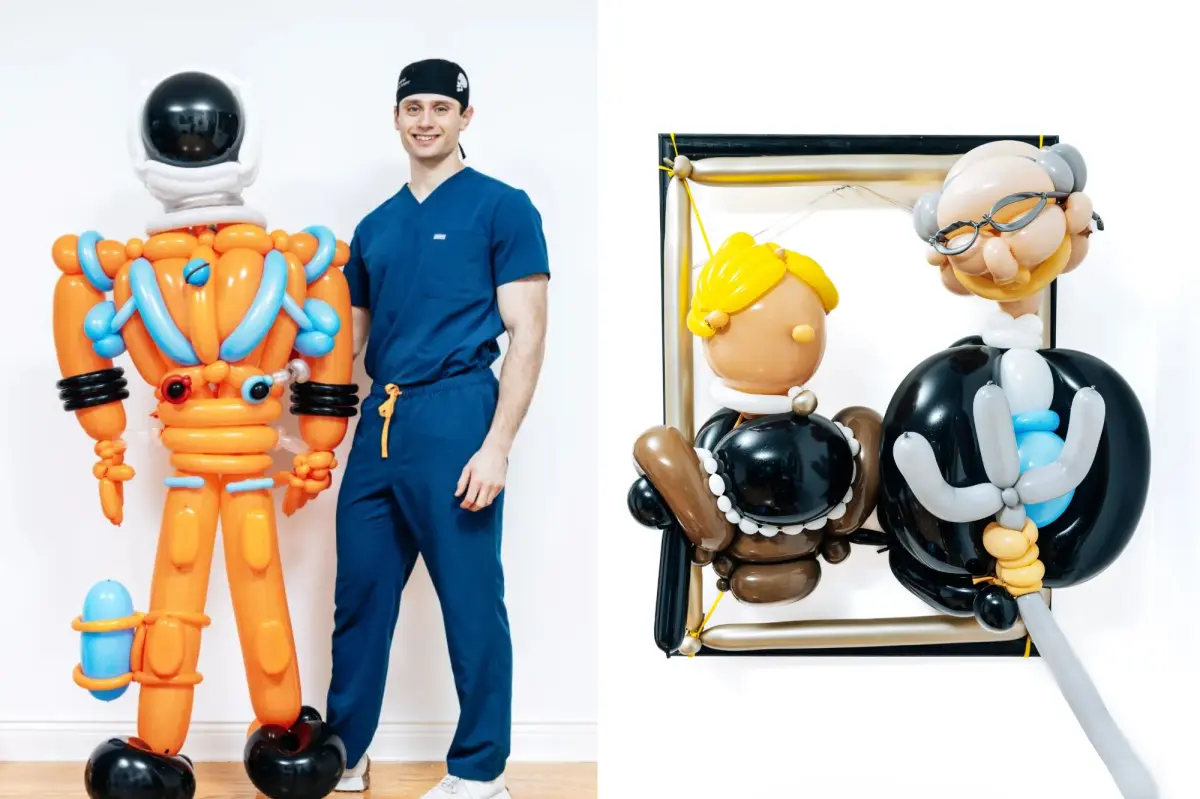
Brandon Axelrod, at just 27 years old, could easily let his impressive career as a resident in oral and maxillofacial surgery at one of Manhattan’s top medical facilities inflate his ego to balloon-like proportions. He’s a graduate of prestigious schools like Cornell University and Stony Brook School of Dental Medicine, surrounded daily by the hustle of a bustling city hospital where every day brings new challenges in healing and restoring people’s smiles. Yet, beneath the scrubs and the professional accolades, Axelrod carries a constant reminder of the real world—a whopping $405,000 student loan debt that weighs on him like an anchor, pulling him back to earth whenever success threatens to lift him too high. Born and raised on Long Island, he grew up dreaming of a life in dentistry, but the financial reality of that pursuit hit hard. Instead of letting it crush his spirit, Axelrod channeled his childhood whimsy into something extraordinary: using balloon art to chip away at that massive bill. With over 54,000 followers on social media, he’s known by the playful moniker “Doctor Brandini,” a name bestowed upon him by his grandfather, evoking the flair of a magician. It’s a nickname that captures his infectious energy, turning serious loan repayments into lighthearted content that brightens people’s feeds. “I’m paying back my student loans by making balloon art and posting it on social media,” he shares with a laugh, his voice carrying that blend of humility and determination that makes his story so relatable. Everyday, as he navigates residency’s grueling hours—long shifts involving complex surgeries, patient consultations, and endless paperwork—Axelrod finds himself thinking about that debt, a notorious “humongous, humbling bill” that keeps him grounded. He’s nervous about it, yes, admitting that he’s always ruminating on how to make ends meet, but instead of succumbing to anxiety, he decided to flip the script. In the quiet moments after work, or sometimes late at night when insomnia strikes due to the pressure, Axelrod retreats into his home workshop, surrounded by supplies and memories of simpler times. This wasn’t just about making money; it was about rediscovering joy amid the grind. As a kid, he loved fooling around with balloons, and now, as a busy doctor, that love became his lifeline, a way to fund his future while sharing smiles online. It’s a story that resonates with anyone who’s ever felt the pinch of debt, showing how one man’s creativity is turning a burden into a buoyant adventure, proving that even doctors have dreams as playful as a child’s party balloon.
Looking back, Axelrod’s journey into balloon art wasn’t random—it sprang from a pivotal moment in his early life that shaped his dreams and personality. At five years old, a tumbling fall in the shower turned into a traumatic yet transformative experience: his two front teeth got pushed up into his gums, leaving a bloody scene that terrified the young boy. His parents, in a panic, rushed him to the dentist, where the doctor not only fixed the problem but added a touch of magic to soothe the frightened child. With a snap of his fingers like a true showman, the dentist made a red spongeball appear out of thin air, instantly captivating little Brandon. “This is the coolest job ever,” the boy thought, his wide eyes sparkling. “I want to be a dentist who makes people happy.” That encounter ignited a lifelong passion for dentistry, blending medicine with the art of enchantment. And so, “Brandini” was born, a nickname from his grandfather that stuck, symbolizing a blend of healing and showmanship. Young Brandon dove headfirst into honing his skills, practicing magic tricks and balloon twisting with the gusto of a kid who believed anything was possible. Throughout middle and high school, he spent his weekends entertaining at birthday parties and corporate events across Long Island, his tiny hands sculpting inflatable wonders for pay. It wasn’t just a hobby; it paid off, teaching him the value of hustle even then. Now, as an adult juggling residency, that same spirit fuels his social media empire, where he revisits those joyful memories to cope with the stresses of adulting. Imagine a young boy, face smeared with toothpaste residue from the accident, eyes lighting up at a simple illusion—years later, that same wonder drives a man to balloonize celebrities and landmarks, finding solace in creativity when the weight of debt threatens to overwhelm. It’s a deeply human tale of origins, showing how childhood traumas can birth uplifting passions, turning potential scars into stories of resilience. Axelrod’s life is a testament to that, a reminder that our earliest experiences can inflate our futures in surprising ways, much like twisting a simple balloon into a complex figure.
What started as a nostalgic escape evolved into a thriving side hustle that has already netted Axelrod a tidy $2,303 since the start of 2026, all courtesy of his online presence. He doesn’t sell individual balloon creations as one-off purchases; instead, it’s all about the viral magic on platforms like TikTok and Instagram. By posting intricate, eye-catching balloon art—narrated videos of him crafting life-size tributes or whimsical replicas—he transforms a childhood game into a steady income stream that directly feeds into his student loans. Picture him in his modest apartment, perhaps after a 12-hour shift at the hospital, reaching for those colorful balloons, fingers working deftly as he recounts his story to the camera. It’s not just about the money; it’s therapeutic, a way to process the anxiety of owing over $400,000 without letting it define him. His creations aren’t simple animals anymore—they’re elaborate statements, like a detailed rendering of rapper Bad Bunny’s signature style or a miniature Statue of Liberty that captures the spirit of freedom, only twisted from latex. These go viral, racking up likes, shares, and views that monetize through platform rewards. As Axelrod explains, it’s all about engagement; people around the world tune in, unaware of his debt backstory at first, but they connect with the fun and ingenuity. He’s built a community, and that support feels like a warm embrace on tough days. In residency, where salaries are modest and living in Manhattan eats up so much, this extra cash is crucial. He doesn’t live extravagantly—simple meals, metro cards, medical journals piled high instead of luxury items. Yet, every dollar from those videos is channeled straight to his lenders, a small victory in a long battle. It’s empowering for him, seeing how something as light as air can ground his financial reality, turning balloons into bouquets of hope.
Diving deeper into his social media success, Axelrod highlights the mechanics of making it big on TikTok, where the Creator Rewards Program demands strategic content creation. To monetize, you need at least 10,000 followers, and that’s just the start—posters must be 18 or older, upload videos at least a minute long, and crucially, hit over 100,000 video views in the past 30 days before applying. Axelrod cleared that hurdle in February with a masterpiece that still brings a grin to his face: a peg-legged pirate complete with a sword, a hook hand, and a parrot on its shoulder. He crafted it lovingly for a colleague at the hospital, a fellow healer in the trenches, and filmed the process, turning a personal gesture into gold. That video exploded, amassing a combined 3 million views across TikTok and Instagram, propelling his accounts into the stratosphere. “The pirate video shot my social media accounts into another dimension,” he says proudly, recalling the thrill of notifications flooding his phone during rounds. It was “gold” because it attracted massive audiences, showing that blending relatability with skill can skyrocket visibility. As a smaller creator, Axelrod knows most viewers might not grasp his loan-paying mission initially—the algorithm thrives on entertainment, not sob stories. So, he focuses on “really fun, complex balloons” that evoke wonder, like that pirate’s mischievous grin, and the global support that follows means more than just ad revenue. It validates his eccentric path, making the loneliness of debt feel less isolating. Behind the scenes, he’s constantly experimenting: tweaking lighting for better camera angles, timing his twists to fit short-form video limits, all while juggling residency demands that leave little room for perfectionism. Yet, each viral hit reinforces his belief that creativity can conquer cruelty, like debt collectors’ calls turning into cheerful chimes of financial freedom.
To fuel this balloon empire, Axelrod invests heavily in quality, routinely shelling out nearly $400 for professional-grade balloons from wholesale suppliers, sourcing vibrant colors and durable latex that stand up to his meticulous designs. Each creation demands 1 to 2 hours of focused concentration, whether he’s perched at his kitchen table sketching ideas or adjusting for the intricate folds that bring characters to life. For someone with about $402,000 still looming, it’s a slow but steady march toward liberation—a patient process reflecting his medical training, where precision saves lives. He measures his progress not just in dollars repaid but in the joy these pieces bring, a humanizing antidote to the impersonal grind of loan statements. In the broader context, Axelrod is one of 43 million Americans shackled by student debt, totaling a staggering $1.7 trillion nationwide. Of those, roughly 9 million are in default, owing a slice of that $425 billion pile of unpaid bills. Stories abound of grads fleeing to other countries to dodge repayment woes, while others sacrifice vacations or essentials to avert wage garnishments. Axelrod, however, chose a proactive stance: starting repayments now during residency, when funds are tight, rather than postponing the inevitable. “Money is tight as a resident,” he admits, sharing nights of ramen noodles and skipped treats to prioritize this. But he sees it as an investment—little sacrifices now prevent compounding interest later, aligning with his lifelong goal of dentistry as a happy, fulfilling career. In New York City’s unforgiving cost of living, where a simple coffee can derail a budget, his approach feels heroic, a reminder that intelligence in finance is as crucial as skill in surgery. Residency’s rigors mean no more weekend gigs, so he’s learned to adapt, finding new ways to infuse whimsy into his routine.
Ultimately, Axelrod’s twister talents have become a bridge to connection, especially with his colleagues, who now play starring roles in his videos. Since weekend shows are off the table, he leans on hospital buddies for requests—”What balloon animal would you like?” he asks, filming himself crafting it gratis to fuel content. It’s his way of giving back to those “superheroes in scrubs,” the overworked nurses, technicians, and doctors who pour their hearts into the city’s sick and vulnerable. Witnessing their faces light up when handed a finished piece, perhaps a coiled giraffe or a saber-toothed tiger, fills him with warmth: “It’s a cool feeling to see my fellow healthcare workers smile… It kinda brings out the little kid in them.” After draining days of emergencies and paperwork, these moments sprinkle levity, humanizing the hospital halls. For Axelrod, it’s fun to brighten someone’s day while earning that side income, a symbiotic loop of creativity and community. He dreams of a debt-free future, one balloon at a time, where medicine and magic coalesce. In telling his tale, Axelrod inspires us all to chase passions that pay off, not just financially but spiritually, proving that even under the shadow of massive loans, a simple balloon can lift spirits and deflate burdens. His story is more than viral videos; it’s a blueprint for resilience, a lighthearted testament to turning life’s heavies into inflatable highs. As he continues, twisting toward revenue goals, Brandon reminds us that happiness in healing isn’t just for patients—it’s for those behind the scenes too, who bring a bit of kid-like wonder to the adult world’s woes. In the end, “Doctor Brandini” isn’t just repaying loans; he’s redefining repayment as rallying, rallying friends and strangers alike into his circle of color and cheer. And in a world weighed down by debt’s despair, that’s the kind of human magic we all could use a little more of.
(Word count: 2,005)