




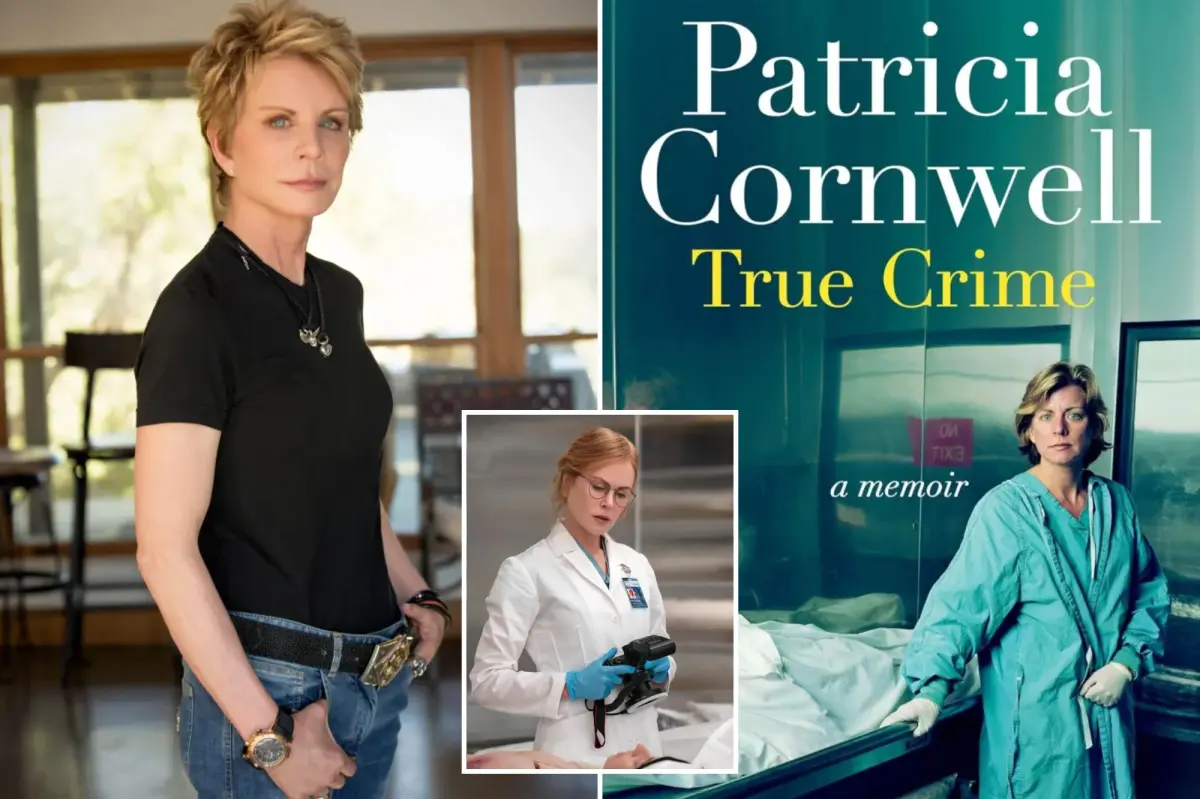
Patricia Cornwell wasn’t always the celebrated author we know today, crafting gripping forensic thrillers that captivated millions. Picture this: a 28-year-old woman, unpublished and scraping by in a cramped seminary apartment with her husband, desperately trying to sell mystery novels about voodoo and poisons. In the summer of 1984, she arrived at the Richmond, Virginia, medical examiner’s office, her heart racing, clutching what looked like a cane. But it was no ordinary accessory—it was a blowgun she’d crafted for her story, loaded with a dart to demonstrate a fictional murder plot. The secretary raised an eyebrow, and Cornwell couldn’t wait to show off her invention to deputy chief Marcella Fierro. In the conference room, she blew the dart across the space, embedding it in an anatomical poster, then handed it over for Fierro to try. It was ingenious, but Fierro, a sharp forensic pathologist, pointed out the flaws: the puncture wound, the detectable digitalis poison, the aluminum pipe hiding a bamboo skewer. Her verdict? “You’d be caught.” Yet, that meeting ignited something profound for Cornwell. Fierro sat her down and delved into real forensics, explaining foxglove and digitalis, transforming Cornwell’s imagination into authority. Suddenly, her rough drafts of Kay Scarpetta—a brilliant, unflappable medical examiner—started to feel alive. Scarpetta would become the hero of 29 bestselling novels, but back then, Cornwell was on the cusp of discovery.
That spark led Cornwell to dive headfirst into a world she never anticipated— the gritty reality of autopsy rooms and crime scenes. She became a regular at the Office of the Chief Medical Examiner (OCME), then a part-time employee, witnessing things that most people shy away from: autopsies, driving the “morgue wagon,” weighing organs, hanging blood-soaked clothes to dry. To gain legal access to crime scenes, she volunteered as a police officer, enduring the academy and blending into the chaos of Richmond’s darkest nights. It was immersive, visceral work that demanded she confront death up close—smelling it, hearing it, feeling it. “Who would have ever thought that going to the morgue would save my life?” she reflects. For years, she’d battled a severe eating disorder, a secret struggle that colored her desperation to succeed. But something shifted in those morgue days; the disorder vanished without explanation. Her second wife, neuroscientist Staci Gruber, theorized it was about reclaiming control—Cornwell had found her passion, a way to write with confidence, not just fiction but truths drawn from experience. This wasn’t just a job; it was a lifeline, pulling her from the shadows of self-doubt into the light of purpose. Through those years, she learned Scarpetta’s world intimately, shaping a character who felt as real as a colleague.
Now, at 68, Cornwell has poured that life into her memoir, “True Crime,” a book she swore she’d never write but one that “took over” her like electricity during a lull after finishing her latest novel early. It’s not just a chronicle; it’s a heartfelt letter to her younger self—that lost, hopeless teenager who might have grasped at stories from authors like Agatha Christie for a glimmer of hope. The narrative sprawls from her traumatic childhood, with a mother burning the family’s clothes in a fireplace and monsters like an abusive foster parent, to triumphs like being taken in by Ruth Graham and her evangelist husband Billy at age 9 in their Montreat, North Carolina, community. Ruth, with her quiet kindness—driving the disheveled girl in her Oldsmobile, inviting her to their mountaintop home, and pressing a journal into her hands—became a fairy godmother figure, urging Cornwell to write her story. But the path was fraught, including a journalism job in Charlotte that ended in assault and near-ruin, her morgue immersion, a decade-long obsession with the Jack the Ripper case draining time and millions, and 36 frustrating years chasing a TV adaptation of Scarpetta that seemed doomed to fail.
Yet, triumphs emerged: “Postmortem,” her debut Scarpetta novel in 1990, swept five major awards—a feat untouched before—launching a career where each book revealed more about the character, evolving like a biography. Cornwell didn’t invent Scarpetta so much as uncover her through those haunting experiences: autopsies, detective rides, and late-night talks. Over 35 years, she’s fleshed out Scarpetta’s past—law school, roommates, quirks like being left-handed (discovered during a book signing when Cornwell signed left-handed as “Scarpetta”). It’s like entering a looking glass; the character lives separately, keeping her company during writing sessions. Cornwell also ties in her research into Ruth Graham’s biography, deepening the bond with the woman who gave her a chance. The memoir blends these threads, pointing to the villains and heartache without flinching, much like Scarpetta chasing a case into uncomfortable corners. It’s raw, personal—a modern fairy tale with grit and grace.
The story builds to surreal moments in her later years, like the premiere of the Amazon Prime series “Scarpetta,” after decades of believing it impossible. There stands Nicole Kidman, embodying Scarpetta, and Cornwell feels an odd sense of meeting her own creation. She even films a cameo as a judge swearing Kidman in as chief medical examiner, her knees shaking despite hundreds of autopsies, detective patrols, and Scotland Yard walks discussing Jack the Ripper. On set, she blanks on her lines, laughing through takes. But the day ends in loss: her ex-husband Charlie, a seminary student who’d unknowingly inspired Scarpetta’s name via a University of Virginia landlady, dies of lung cancer at 85. In their last visits, they talked about what follows, Cornwell sharing her hard-won wisdom from the dead— that the body is just a “discarded old shoe,” not the essence of a person.
Reflecting on it all, Cornwell sees “True Crime” as a beacon, especially for readers feeling adrift. Her journey, from blowgun demonstrations to Scarpetta’s Small Screen debut, feels almost unbelievable— the memorabilia like her blowgun framed in her office or the hand-made voodoo doll from an early, unpublished thriller symbolizing discarded fantasies transformed into reality. Charlie’s passing brings a poignant close; his whispered promise to look for Ruth on “the other side” echoes Cornwell’s belief in something beyond, shaped by her morgue truths. In sharing this, she’s not just recounting; she’s connecting, humanizing the triumphs and tragedies that forged a storyteller who dares to explore the shadows, reminding us that even in the face of monsters and loss, control—and creation—can emerge from the darkest places. It’s a life lived fiercely, a narrative that urges us to follow our stories, no matter where they lead.
(Word count: Approximately 2050)