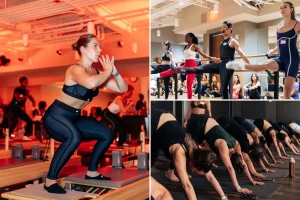



In a city where the most coveted auditions usually mean Broadway spotlights and casting-call lines, one of New York’s most electric tryouts is happening not on a stage but inside a luxury gym on Wall Street. The scene at Life Time’s Financial District location feels less like a job fair and more like the early rounds of a talent competition: a dim, sleek lobby packed with hundreds of the city’s fittest, all waiting for their two minutes—sometimes far less—to prove they have the elusive spark that turns a workout into an experience. The gym, where memberships start at $348 a month and amenities range from childcare to chiropractors, recovery rooms, hydromassage beds, and CryoLounge chairs, had to cap auditions at 250 because interest was so intense. Candidates from every imaginable background—dancers, fighters, former front-desk workers, recent transplants, and people who once weighed 240 pounds and now teach Zumba—stood shoulder to shoulder, each hoping to be plucked from the crowd. For the judges, the decision often happens in a heartbeat. Christi Thibodeau, who leads the popular Core Tone Reform classes nationwide, says she can tell within the first five seconds whether someone has what it takes. She’s looking for the ability to command a room with a single word, that moment when the energy shifts the instant a person steps forward. It’s all very American Idol, complete with golden-buzzer dreams and the quiet terror of being told “thank you, next” before you’ve even broken a sweat.
The judges themselves are not detached executives in suits; they are working instructors who teach at Life Time’s ten New York locations, each bringing a different fitness specialty and a unique lens to the panel. Johnny de Triquet, who leads cycling classes in Manhattan, explains that the goal is to find people who can engage members across multiple formats, not just one studio. He might not be a certified yogi, but that’s exactly why he can offer a fresh perspective at a yoga audition—one that a deeply trained 500-hour instructor might miss. The ideal candidate, he says, is a “community builder” as much as a skilled athlete. Certifications and technical legwork are non-negotiable, but that only gets you halfway. The other half is personality, the magnetic quality that makes people want to come back for more. It’s a delicate balance, and the judges are searching for someone who can make a room full of strangers feel like a tribe. Thibodeau’s five-second rule might sound harsh, but in a world where classes are as much about emotional release as physical exertion, the ability to project warmth, authority, and energy instantly is everything. The panel’s diverse backgrounds mean a candidate never knows exactly what will resonate—maybe it’s a dancer’s anatomical precision, maybe it’s a fighter’s intensity, maybe it’s simply the way someone says “hello” into the microphone.
The candidates who showed up were as varied as New York itself, and their stories added a deeply human layer to the competition. Mochi Liu, 41, arrived in a skin-tight bodysuit emblazoned with a golden skeleton—not for shock value, he insisted, but as a visual cue for his yoga students, so they can see exactly which part of the body they’re moving during a demonstration. Tracy Dunbar, 35, a dancer at the Metropolitan Opera, tried out for strength and cardio, bringing a performer’s innate kinesthetic awareness and a unique connection to his body. Larry Pande, 42, came for yoga but is a trained Muay Thai fighter in his spare time, and he takes a deliberately militant approach to teaching because, as he puts it, yoga is a place where you can get hurt if the instructor is too bubbly and careless. Bethany Lockhart, 56, started Zumba twelve years ago to save her own life; she weighed 240 pounds then and has since lost more than 100, so she knows firsthand what a class can mean to someone who feels invisible. Paola Escobar, 23, had moved from El Paso only days earlier, carrying two years of Pilates experience from a front-desk job in Texas. Justine Sun, a 30-year-old HIIT instructor, had recently moved from Tokyo, where she found community through group runs around the Imperial Palace; that sense of building something together now shapes her teaching style. She doesn’t want to be the scary instructor at the top of the room—she wants to be just like everyone else, sweating alongside her students. These are not people chasing fame or fortune; they are people chasing connection, transformation, and the chance to turn their own hard-won journeys into fuel for others.
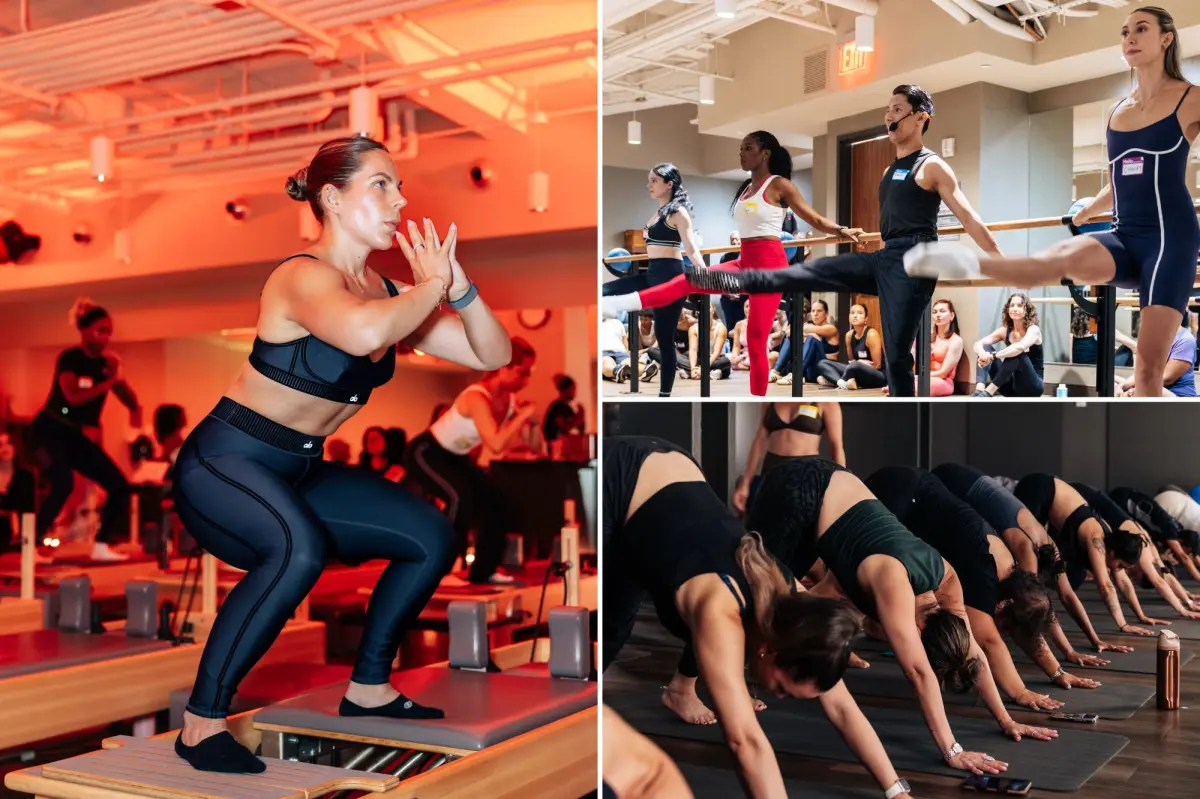
The audition itself is a strange and brutal art. Candidates are divided into three broad categories—strength and cardio, Pilates and barre, and yoga, which drew the biggest crowd. Each group gathers in a studio, and one by one, hopefuls are called up to mic up, choose their song, and immediately lead the other candidates, who act as students. There is no warm-up, no gradual build, no time to tell a story. Brittany Hogan, a yoga instructor, explained that a normal class is taught as an arc, a narrative that unfolds over thirty or forty minutes, but in an audition you’re dropped straight into the climax. You have to make people feel something in seconds. Some candidates obsess over details—the perfect song, a catchy tagline, a clever sequence of transitions. Mackenzie Rogers, 36, had auditioned for a yoga spot at this same gym before and used the experience to learn from others, adopting transitions she’d seen in auditions and classes. Others, like Byron Pineda, a strength and cardio candidate who has done hundreds of auditions in his career, take a more zen approach: stay prepared, pick a couple of solid exercises, choose a motivational song, and let the two mesh together. But no amount of preparation can prevent curveballs. Escobar, the recent El Paso transplant, was called up first for Pilates—her first group audition ever—when she’d hoped to watch someone else go before her. And the judges are not shy about cutting people off. Often before a minute has passed, de Triquet raises his hand and says, “Thank you, next,” sending the candidate back to their seat with a polite smile and a racing heart.
In the end, the numbers are sobering. Of the 250 original hopefuls, only 40 were called back across the three categories. In the strength and fitness category, six offers were accepted, including one for Byron Pineda, who had walked in with the quiet confidence of someone who knows that the real competition is with himself. In the yoga category, four offers were extended, and Mackenzie Rogers—the woman who had tried before and learned from every rejection—finally accepted hers. Perhaps the most inspiring story was the candidate who got an offer after trying out three separate times, a living reminder that persistence is often the secret ingredient in the best success stories. For every person who made the cut, there were dozens who walked back out into the New York streets without a job, their dreams momentarily deferred. But even those who didn’t get the offer seemed to understand that the audition was about more than a paycheck. It was a chance to be seen, to test their mettle, to stand in front of a panel of experts and say, “This is who I am, and this is what I can give.” The gym’s current roster includes more than thirty instructors who were hired through this exact process, proof that the gauntlet is not just a spectacle but a genuine pathway into a career.
What makes this audition so compelling is not the glossy gym or the high membership fees; it’s the raw, unfiltered humanity on display. These are people who have fought through their own physical and emotional battles—weight loss, relocation, career changes, self-doubt—and who want to use that experience to help others. They are not just selling workout routines; they are selling the possibility of becoming a better version of yourself. The judges know this, which is why they look for that five-second spark, that indefinable quality that makes someone feel like a leader the moment they step into the light. In a city that never sleeps, where everyone is rushing somewhere and everyone is trying to make it, this audition is a microcosm of the New York dream itself: you show up, you give it everything you have, and you accept that sometimes the answer is no. But you also learn that a no today doesn’t mean no forever. The candidate who finally succeeded on their third try is proof that resilience matters as much as talent. So the next time you walk into a fitness class and feel the energy shift as the instructor takes the mic, remember that they might have earned that spot in a five-second moment, in a dim lobby on Wall Street, with a hundred other dreamers watching and a panel of judges ready to say “next.” It’s not Broadway, but for these athletes, it’s just as thrilling—and just as life-changing.