





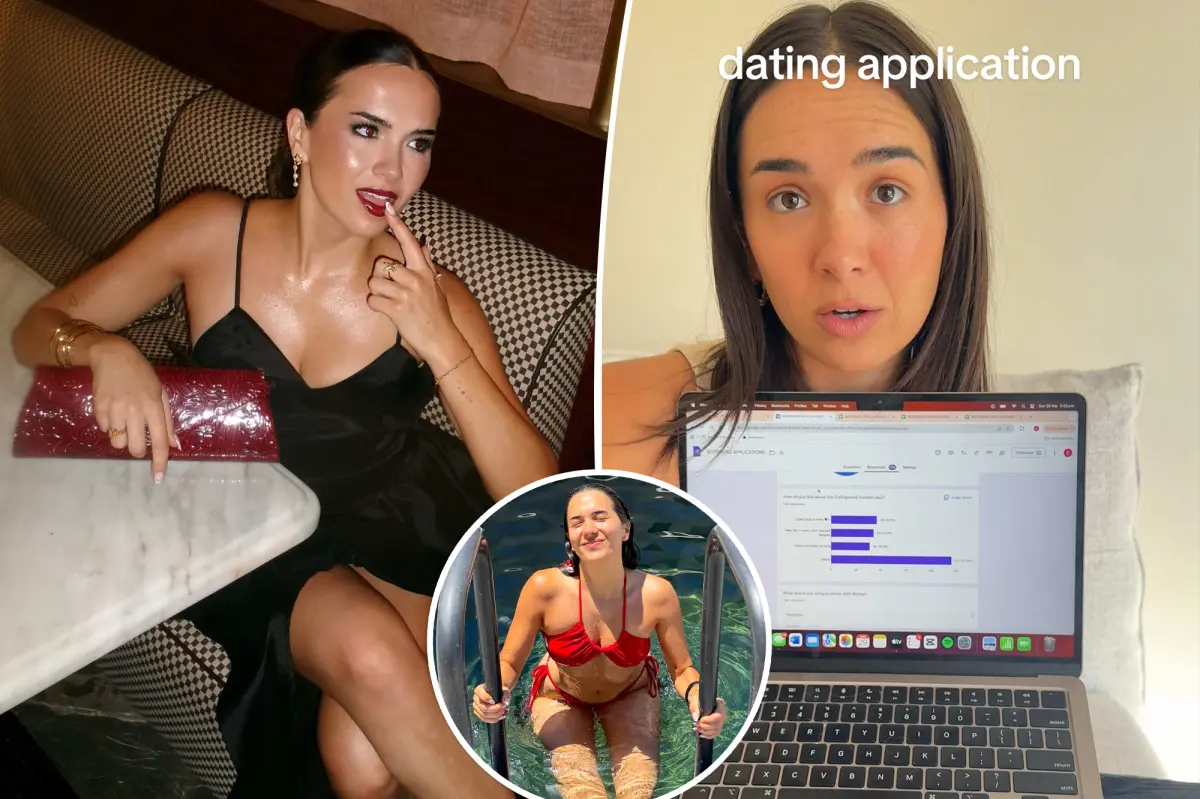
In the bustling, chaotic world of modern dating, where endless swipes on apps like Tinder feel like a never-ending treadmill of superficial connections and awkward small talk, it’s no wonder many of us start craving something deeper, something more genuine. Celeste Joan, a vibrant 29-year-old comedian and content creator from Melbourne, Australia, was no different. Fed up with the avalanche of random messages flooding her social media inbox—guys who barely bothered to read her profile before sliding into her DMs—she found herself dreaming of a way to filter out the noise and attract men who were serious about building a real relationship. It was exhausting, this digital dance of hope and disappointment, where profiles often hid more than they revealed. Celeste, with her sharp wit and infectious laugh, had always been the type to turn life’s frustrations into opportunities for humor, but this was personal. As someone who valued authenticity, she wanted partners who shared her values, like family, faith, and specific quirks, rather than just someone who looked good in a filtered selfie. Little did she know, her “genius” idea would not only transform her dating life but also spark a viral sensation that captured the hearts of thousands online. Imagine the scene: Celeste, lounging on her couch after another late-night scroll through dating profiles, sipping coffee and pondering why traditional apps kept serving up the same tired archetypes—guys who couldn’t string a sentence together or respect her boundaries. She chuckled to herself, picturing a recruitment process more like applying for a dream job than a casual fling. That spark of inspiration led her to create a Google Form, a quirky but stringent questionnaire designed to weed out the unserious and spotlight the standouts. Who knew that in a sea of lukewarm left swipes, a digital resume could be the key to unlocking love worth fighting for? Celeste felt a thrill of empowerment as she crafted it, knowing this was her way of taking control in a dating landscape that often left women feeling powerless. And oh, how humans crave control in the mess of modern romance!
As Celeste posted her Google Form on social media, she never anticipated the tidal wave that followed. What began as a lighthearted experiment—a fun riff on her content style, which includes hilarious reenactments of her Italian grandmother, or Nonna—quickly snowballed into something monumental. Over 260 men submitted their “romantic resumes,” each one hoping to impress her enough for a first date. Celeste shared with me how overwhelmed she felt at first, laughing about how she hadn’t even planned for the response. “I thought it might get a few replies from curious guys, but hundreds? I was floored!” she said, her eyes lighting up with that signature mischief. Picture her hitting refresh on her notifications, her phone buzzing non-stop as submissions poured in from all over—men eagerly filling out details about themselves, from their hobbies to their hidden talents, all to win a chance with a woman who giggled at the absurdity of it all. It wasn’t just about dates; it was about human connection in its rawest form. Each application represented a stranger’s vulnerability, a guy laying out his best self without the facade of carefully curated photos or AI-enhanced charm. Celeste, being the empathetic soul she is, took it all in stride, reading through them with a mix of skepticism and genuine curiosity. She admitted she was burned out on apps that felt like a hamster wheel,algorithms endlessly spitting out carbon copies of men who didn’t excite her. This form was her rebellion, a testament to how we all long for personalization in a world of mass-produced everything. As the submissions stacked up, she realized something profound: under the humor, these men were seeking the same depth she was— a partner who saw beyond the surface. It was empowering to know that by flipping the script, she’d tapped into a collective yearning for authenticity. And let’s not forget, in the comfort of her Melbourne home, Nonna—her wise, hilarious grandmother—became an unexpected judge in this human drama. Celeste’s videos have always celebrated their bond, with Nonna’s fiery Italian spirit shining through in exaggerated outbursts. This time, she leaned on that for inspiration, turning the process into a storytelling escapade that resonated far and wide.
Diving into the nitty-gritty, Celeste’s Google Form was a masterclass in clever curation, blending the serious with the silly to really get to know her suitors on multiple levels. It wasn’t just random questions slapped together; it was a carefully thought-out sieve designed to reveal compatibility and character. Basic but crucial inquiries like “Do you have a driver’s license?” and “Are you employed?” set the groundwork, ensuring potential partners were stable and responsible—because who hasn’t dealt with a flake who ghosts after promissory meetups? But then came the curveballs: “Are you a convicted felon?” a stern nod to safety in an era where trust is hard to come by. Celeste, always the jokester, tossed in her humorous deal-breakers too—”Do you like cats?” or “Are you a fan of the Collingwood Football Club?”—admitting that anyone checking the wrong box would be swiftly eliminated, no questions asked. It’s endearing, this blend of practicality and playfulness; she wasn’t playing games, but she wasn’t taking herself too seriously either. As a woman of faith, she weaved in questions about spiritual alignment, like whether suitors attended church regularly, seeking men who might match her values and share those quiet, meaningful moments of reflection. The real kicker, though, was the Nonna-themed question: “If I invited you to my Nonna’s house for dinner, what would you bring?” Inspired by her viral videos where she channels her grandmother’s sassy commentary, this query unearthed a treasure trove of humor and insight. Reactions ranged from charmingly thoughtful to hilariously clueless, each response a peek into the suitor’s personality. Celeste spent hours poring over them, her laughter echoing through her apartment as she imagined these men nervously typing, hoping to impress an entire family dynasty. It was vulnerable, it was fun, and it was human—proving that behind every swipe app was a person longing for connection beyond the binary of yes or no. In a time when deep conversations feel rare, this form bridged the gap, turning strangers into stories worth telling.
Ah, the responses—where the true magic and mayhem unfolded! Celeste shared some of the standout submissions with her audience, turning it into a comedy goldmine that had viewers in stitches. One thoughtful guy won Nonna’s virtual heart by suggesting he’d bring a “Bible and flowers,” to which Celeste’s reenactment had her Nonna declaring with gleeful approval, “Marry him now! He will love you and kiss your feet!” It was pure, unfiltered joy, that maternal blessing capturing the essence of old-world Italian romance mixed with modern wit. But not all were triumphs; there were flops that highlighted the perils of online matchmaking. One eager applicant thought bringing “Mama’s lasagna” would win points, only for Nonna to recoil dramatically in the video: “They wanna bring their mama’s lasagna into my house?! No way!” It was a perfect storm of cultural clash and overconfidence, showing how assumptions can derail even the best intentions. Celeste reveled in the comedy, but beneath the laughs, she saw the humanity in each reply—a guy risking awkwardness for a shot at love, Echoing her own journey through dating’s disappointments. Imagine the emotions: the hopefulness of a well-thought-out answer, the cringes from missteps, and the warm glow of connections forming. Nonna’s opinions, both reenacted and real, held weight for Celeste. “She is wise and knows what’s right for me,” she confided, her bond with her grandmother adding layers of authenticity. These exchanges weren’t just entertainment; they were moments of shared storytelling that made Celeste feel less alone in her quest. As she sifted through, she connected with guys who seemed genuinely interested, their answers revealing compatibilities she might have missed in a quick app bio. It was messy, funny, and profoundly human—the kind of chaos that reminds us why relationships are worth the effort. In a digital age, where filters hide imperfections, this raw dialogue felt revolutionary, pulling back the curtain on real suitors with real flaws and charms.
Peeling back the layers of data, Celeste uncovered some eye-opening truths about the modern dating pool that left her both amused and slightly unsettled— truths that stat-ify the frustrations so many of us feel every day. With over 260 submissions in hand, she analyzed patterns that painted a picture of today’s single men: 5% straight-up admitted to having a criminal record, a revelation that sent shivers down her spine and sparked conversations about safety in dating. “It’s concerning,” Celeste admitted thoughtfully, reflecting on how easily red flags can hide behind charming smiles online. Then there was the 11% who didn’t hold a driver’s license or own a car—a logistical hurdle that she joked about, picturing awkward bike rides to romantic dinners. “With petrol prices today, fair enough,” she quipped, but it underscored broader issues like financial stability and life stage alignment, factors crucial for long-term compatibility. Beyond mere numbers, the experiment shed light on the apps’ shortcomings: repetitive profiles that fail to provide the vetting power she craved, leaving users guessing about a person’s true character. Celeste felt a mix of empowerment and empathy, imagining the stories behind those stats—guys navigating life’s bumps, perhaps not criminals but survivors of hardship, or workhorse bachelors too busy to hit the DMV. It humanized the process, reminding her that behind every percentage point is a person with dreams and dents. Yet, it also reinforced her choice to sidestep the algorithms, which looped her into cycles of the same “types.” This wasn’t just data; it was a mirror to broader societal shifts, where convenience trumps depth, and vulnerability is sacrificed for efficiency. For Celeste, it was a wake-up call to prioritize intuition and detail, fostering connections rooted in reality rather than curated illusions. She emerged grateful for the insights, wiser about trust in an unpredictable world, and more attuned to the subtle signs of genuine partnership.
In the end, Celeste hailed her Google Form experiment as an unmitigated triumph, a spark of creativity that not only redefined her dating experience but also inspired a wave of believers worldwide. Despite minor oversights—like forgetting to ask for photos or age ranges—she connected with an abundance of “lovely men” she might have overlooked in the app wilderness, proving that a little effort can yield monumental rewards. “This is your sign!” she beams at fellow daters, urging them to ditch the swipes and embrace personalized vetting. Her advice rings true in an era where love feels commodified: take charge, infuse humor, and honor your values. For Celeste, Nonna’s wise counsel and the experiment’s lessons converged into a hopeful outlook on relationships, one that blends tradition with technology. As she ponders future adventures—perhaps refining the form or sharing more viral clips—she embodies resilience, turning dating’s drudgery into delight. Humans like us, tired of the grind, need reminders that love is out there, waiting for those bold enough to innovate. Celeste’s story isn’t just about finding ‘the one’; it’s a testament to reclaiming joy in the journey, one heartfelt query at a time. In a world craving connection, her approach feels like a breath of fresh air, proving that sometimes, the best matches come from the unlikeliest forms. And who knows? In time, she might just find her happily ever after, all thanks to a simple spreadsheet turned snowball of love. Truly, it’s a masterclass in humanizing the hunt for heart and soul.