

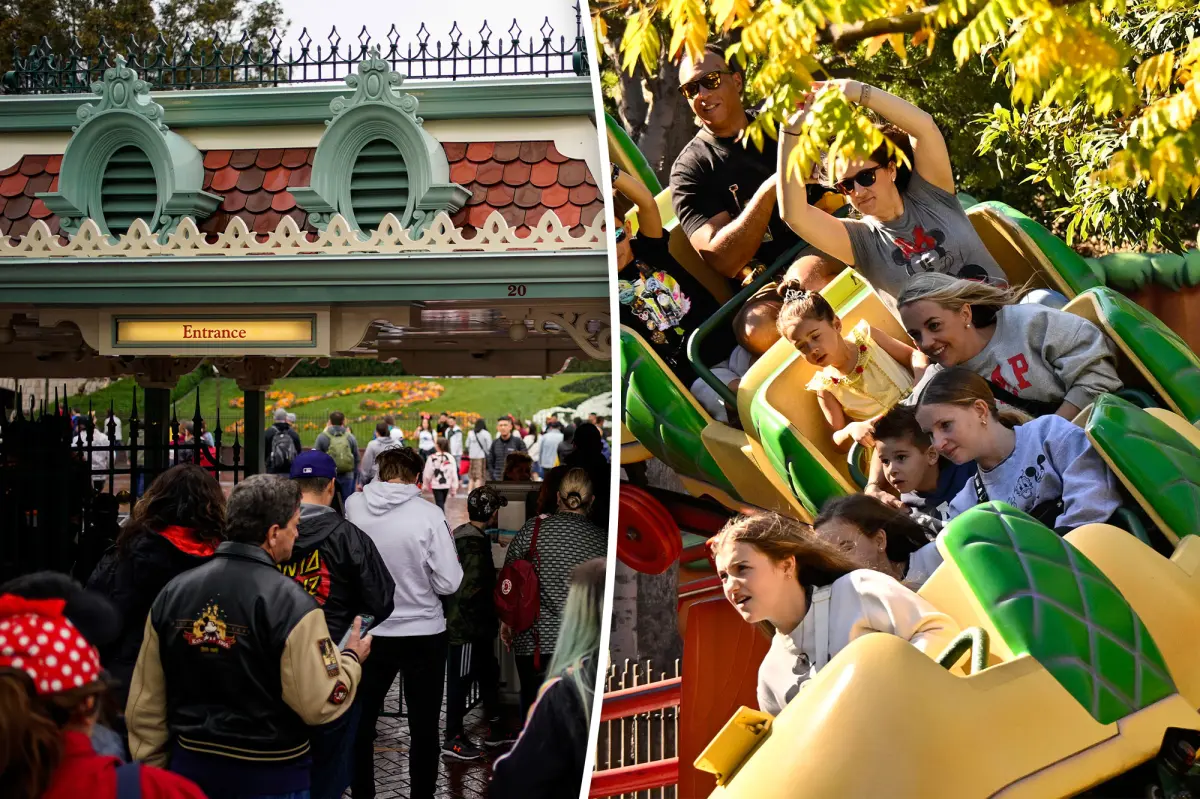
There is a reason they call it the happiest place on earth, but happiness, it seems, does not come cheap — and it’s about to get even more expensive. As October approaches, Disneyland and Disney World fans are bracing for what has become an annual ritual: another round of ticket price increases. For years, Disney has historically raised prices at the beginning of October, coinciding with the start of its fiscal year. This year is widely expected to follow the same pattern. Disney blog MousePlanet has predicted that the next price hike will land on October 7, while MickeyVisit has floated October 6 as another possible date. If those predictions are correct, the window for grabbing tickets at current prices is shrinking quickly. The last three increases came on October 11, 2023, October 9, 2024, and October 8, 2025, which means October has essentially become the month when Disney fans hold their breath and check their wallets. There is a certain emotional whiplash in all of this. The same season that brings pumpkin spice, Halloween decorations, and the beloved Oogie Boogie Bash also brings the quiet dread of refreshed price tags. For families who have been dreaming of a Disney trip for months, these hikes can feel like a personal punch, especially after they’ve already been saving up. The hope is always that maybe, just maybe, prices will stay put — but the pattern says otherwise. It is a strange kind of magic: one that arrives with a calendar and a calculator. Between the ticket tiers, the parking fees, the Lightning Lane add-ons, and the cost of meals, a Disney vacation has become as much a financial planning exercise as a magical getaway. The parks continue to draw enormous crowds, and demand remains high, which means Disney can keep nudging prices upward without much fear of empty turnstiles. But for the average visitor, the math is getting harder. What was once a once-in-a-lifetime trip is becoming a recurring budget conversation. And with each October announcement, the dream gets a little more expensive. This year is unlikely to be any different, and the only real question is how much more it will cost to meet Mickey.
For anyone hoping to beat the increase, the advice from Disney experts is simple: buy now. MousePlanet put it plainly in a recent post, warning that vacation planners are always scrambling in the days after a price hike to find tickets at old prices. The site urged readers to use this moment wisely, noting that now is a really good time to plan a Disneyland visit and get tickets sorted if possible. And the numbers explain why. Right now, one-day passes for Disneyland are selling for anywhere between $104 and $224 on Disney’s website, depending on the date and tier. That is a massive range, and it reflects the complex way Disney has restructured pricing over the years, with peak days costing far more than value days. Tickets purchased today through Disneyland’s website or app are valid through December 2027, while multi-day tickets purchased now must be used within 13 days of first use or by January 12, 2028. In other words, you can buy at today’s prices and hold onto those tickets for a surprisingly long time, giving you flexibility to plan around work, school, or family schedules. That is not just a helpful tip; for many, it is the only way to feel like they are beating the system. There is something almost empowering about locking in a price before the inevitable increase, like grabbing the last souvenir on a shelf before someone else can. It also requires a leap of faith, because not everyone knows in October whether they can actually get to Disneyland by December 2027. But the option is there, and for families willing to commit, the potential savings can be significant. The difference between today’s ticket and next month’s ticket might only be a few dollars per person, but when you multiply that by a family of four or five, plus parking, food, and hotel, the cost of waiting starts to add up. It might not be the romantic version of planning a Disney trip, but in the current climate, it is the smart one.
Last year’s increases offer a glimpse of what might be coming. Ticket prices for Disneyland and Disney California Adventure rose by an average of 3.3% in 2025, according to the Orange County Register. That might not sound like much at first, but on top of Disney’s already steep base prices, even a small percentage translates into real dollars. The most expensive single-day, single-park ticket at Disneyland climbed to $224, while a top-tier one-day parkhopper ticket hit $314. At the other end of the spectrum, the cheapest single-day, single-park ticket has remained frozen at $104 since 2019, which sounds like good news until you realize that those cheap tickets are often limited to low-demand weekdays, while weekends and holidays land at the higher end of that $104-to-$224 range. The cheapest one-day parkhopper ticket, meanwhile, rose to $174 in 2025. For a family trying to visit on a Saturday, those budget-friendly options can disappear quickly. Disney, of course, sees things differently. After last year’s price hikes, a Disneyland spokesperson emphasized that the parks offer a full day of experiences each day, with ticket, hotel, and dining options designed to suit a wide range of needs and budgets for all who visit. The spokesperson added that Disney’s commitment to creating magical experiences for everyone remains at the heart of what they do, and that will never change. It is a polished and reassuring message, but it does not always land that way for guests who are stretching their savings to afford a single day at the park. The gap between corporate messaging and consumer experience is perhaps nowhere more visible than in the cost of a family vacation. When a day at Disney feels like a luxury purchase, it is hard to remember that it is supposed to be a simple trip to a theme park. And with every passing year, the difference between the least expensive day and the most expensive day grows wider, creating a two-tier system where the magic is available only to those who can pay a premium for the privilege.
It is not just tickets that are going up, though. The most magical place in California has also been quietly increasing prices on more than 800 menu items across 178 dining locations in both parks and the resort hotels. The average increase is around 8%, which is noticeably higher than the ticket increase and enough to make even the most devoted snack enthusiast wince. Beloved staples like churros, funnel cakes, Mickey beignets, and even plain Dasani water have all gotten more expensive. Some of the steepest hikes hit the bean-and-cheese burrito and the wedge salad, each of which rose by more than $3. That might not sound like a lot for one item, but food costs have a way of compounding over the course of a Disney day. A family of four grabbing breakfast, lunch, dinner, and the obligatory snacks will feel the difference immediately. It used to be that you could walk around the park with a churro in hand and feel like you had mastered the Disney dining game. Now, even that simple pleasure comes with a little sting. The price increases are spread across the parks and resort hotels, meaning there is no real escape from the new reality. Quick-service meals, sit-down dinners, and those famous themed popcorn buckets all cost more than they did just a year ago. For many visitors, the magic is not in the lavish restaurants but in the simple sensory experiences: the smell of waffle cones, the crunch of a Mickey-shaped beignet, the cold comfort of a bottle of water on a blazing hot afternoon. Those small joys are exactly the ones that feel the squeeze when prices creep up. It is tempting to ask where the line is — how much is too much for a funnel cake and a memory? But Disney is betting, so far correctly, that the line keeps moving. Inflation has touched everything from groceries to gas, so an 8% increase at Disney might not seem out of step with the rest of the economy. But when the rest of the economy is also a source of stress, it only adds to the feeling that a Disney vacation is becoming an indulgence for the few.
The price increases have sparked a familiar but growing chorus of frustration among Disney fans. On social media, one X user lamented that Disney should be ashamed of themselves, a sentiment that has echoed across comment sections and forum threads for years. Others have started to vote with their wallets, or at least look for workarounds. One person pointed out that there is a Blaze Pizza across the street, a reminder that you can leave the Disney bubble and find cheaper food without venturing too far. Another commenter said the prices had reached the point of packing lunches again, conjuring images of backpacks stuffed with sandwiches and fruit snacks to avoid paying inflated park prices. There is something almost poetic about that shift. Disneyland is built on the promise of escape, yet visitors are increasingly forced to think like budget travelers, checking prices before indulgence and strategizing meal times. The frustration runs deeper than the price of a burrito or a bottle of water. For many, Disney represents nostalgia, childhood joy, and the hope of passing that joy on to the next generation. When the cost of a family day becomes prohibitive, it feels less like a simple business decision and more like losing a beloved tradition. That is why the online anger can be so visceral. It comes from a place of genuine affection. People are not angry because they hate Disney; they are angry because they love it and feel priced out. At the same time, there is a growing sense of resignation. Each year, the prices go up, and each year, the parks remain crowded. There are always families willing to splurge, first-timers saving up for a bucket-list trip, and devoted fans who have made peace with the cost. But for others, the workaround becomes part of the routine: eat outside the gates, skip the souvenirs, pack your own snacks, and focus on the rides and shows rather than the food. It is a different kind of magic, but it is still magic.
When asked for comment, Disney Parks did not offer a response to The California Post’s request, which is perhaps not surprising. Disney has long avoided discussing pricing strategy, preferring to let the new rates speak for themselves each October. But the silence does little to soothe frustrated fans, and the broader context only deepens the concern. Disney is not alone in raising prices. Theme parks, movie theaters, and even fast-food restaurants have all been adjusting to inflation and shifting consumer behavior. But Disney occupies a special place in American culture, and its pricing decisions feel more personal. A price increase at a theme park chain might be met with a shrug; a price increase at Disney feels like a commentary on what we value and how far we will go to preserve a little bit of joy. For many families, that joy is still worth the cost. The parks are magical, and the memories made there can last a lifetime. But the decision to go is becoming more complicated, requiring savings, planning, and a tolerance for ever-rising prices. The advice from Disney bloggers is clear: if you want to avoid the next hike, buy your tickets now and lock in the current price. That is practical, but also a little sad. It means the official strategy for experiencing a place of wonder is to act before the price goes up, to race the calendar, to treat a family vacation like a limited-time discount. Still, there is hope. If you can get through the gate, the magic remains. The parades still sparkle, the rides still thrill, and for a few hours, you can forget about the cost of everything around you — until the churro stand reminds you. As October approaches, Disney fans will once again hold their breath, refresh their browsers, and wait for the news. And no matter what happens, they will keep showing up, because the happiest place on earth is still, at least for now, worth fighting for.