






When we think of the places we call home, we often dream of clean air, walkable streets, vibrant green spaces, and a general sense of communal well-being that heals rather than harms. However, the stark reality for millions of Americans living in major metropolitan areas is far less picturesque, characterized instead by smog-choked horizons, dusty streets, overflowing landfills, and neighborhoods blanketed in trash. To shed light on this pressing environmental and social crisis, a comprehensive and deeply revealing survey conducted by the landscape care company LawnStarter has mapped out the grittiest, most polluted corners of the United States. Assessing over three hundred of the nation’s most populous cities, this extensive study went far beyond looking at merely visible trash; it gathered and synthesized critical data from highly respected government and public health organizations, including the Environmental Protection Agency (EPA), the Centers for Disease Control and Prevention (CDC), the United States Census Bureau, and the County Health Rankings. By categorizing their vast findings into four primary pillars—physical pollution levels, inadequate living conditions, substandard local waste infrastructure, and overall resident dissatisfaction—the researchers calculated a comprehensive score out of one hundred for each municipality, where a higher score directly correlates with poorer environmental hygiene. This study provides a startling, humanized look at the systemic challenges facing urban centers across the country, illustrating that dirtiness is not merely an aesthetic inconvenience but a biological and psychological hazard. When a city fails to manage its waste or clear its air, it creates a cascade of physical ailments and mental health struggles for its inhabitants, proving that the health of an ecosystem is directly tied to the health of the citizens who breathe its air and walk its streets every single day. This data tells a story of human struggle, where socioeconomic status, geography, and municipal policy dictate the very quality of the air that children put into their expanding lungs.
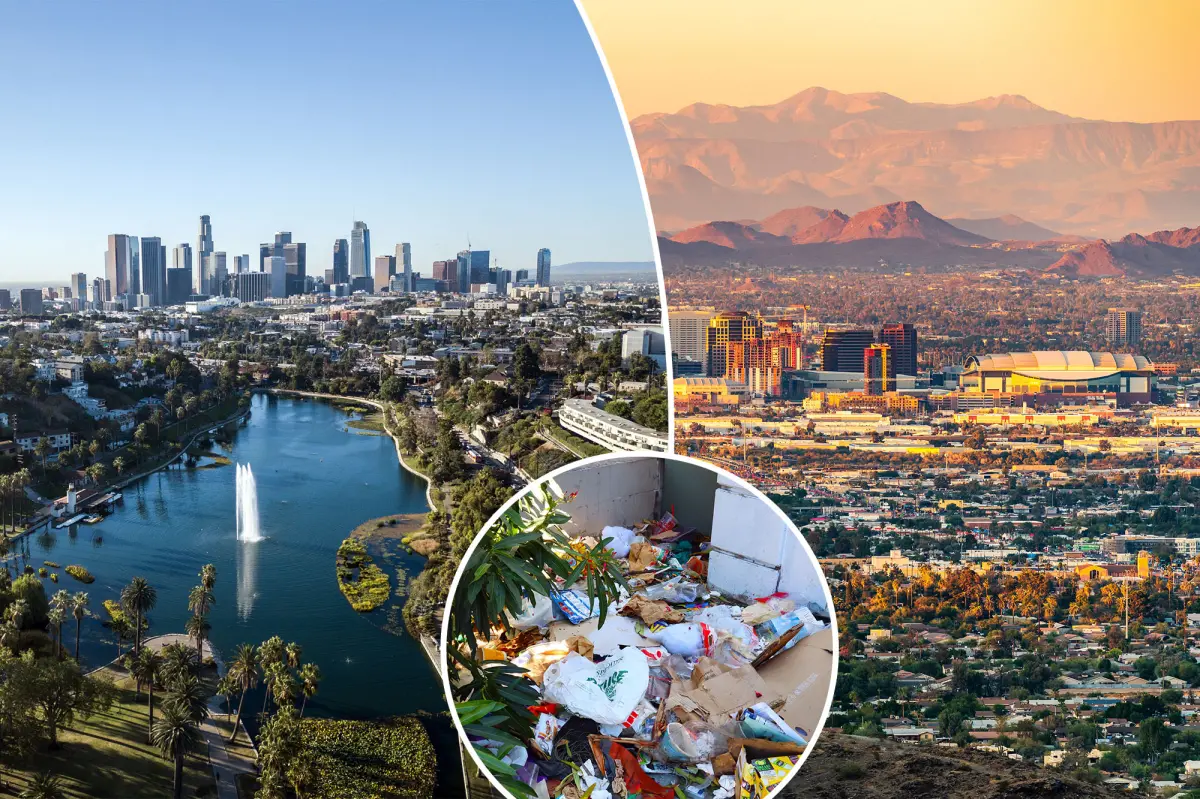
Perhaps the most shocking revelation of the study is the overwhelming presence of California cities at the very top of the list, shattering the pristine, postcard-perfect image of the Golden State. Rather than sunny beaches and clean coastal breezes, many California residents are dealing with a severe public health crisis. San Bernardino secured the unenviable title of the dirtiest city in America for the second consecutive year, driven primarily by its exceptionally poor air quality, a high prevalence of local junkyards—twelve in total—and streets that are heavily littered with debris. Tying for the absolute worst median air quality in the country alongside its nearby Southern California neighbor, Ontario, which ranked fifth overall, San Bernardino paints a grim picture of industrial sprawl and environmental neglect. Los Angeles, famed for its Hollywood glamour, followed closely behind at number two, choked by its notorious, automobile-fueled smog and dense population. Corona also managed to sneak into the top ten at tenth place, meaning that Southern California alone claimed four of the ten spot rankings for excessive dirtiness. In fact, a staggering total of nine California cities tied for the absolute worst median air quality out of all three hundred cities surveyed, representing a concerning statewide trend of atmospheric pollution. For the people living in these regions, this is not just an abstract statistical ranking; it means keeping windows shut on warm afternoon days, dealing with chronic childhood asthma, breathing in toxic microscopic particles, and navigating neighborhoods where the natural beauty of the West Coast has been completely eclipsed by concrete, heavy warehouses, and highway exhaust. A skyrocketing seventy-five percent of San Bernardino’s residents openly expressed deep dissatisfaction with their city’s current level of pollution, proving that the local population is painfully aware of the suffocating, heavy atmospheric conditions that surround their homes. This geographic pocket of California, bordered by mountains, acts as a natural trap for air pollution, turning suburban dreams into localized ecological nightmares.
Moving away from the West Coast, the list shifts its focus toward the nation’s historic industrial heartlands and heavily populated East Coast urban corridors, where decades of economic transitions have left deep scars on the physical environment. Detroit, Michigan, took the third spot on the list, a ranking driven by a complex web of modern socioeconomic challenges, including a high rate of adult smokers at nearly twenty-four percent, vast volumes of toxic chemical waste from remaining heavy manufacturing, and widespread inadequate housing conditions that leave many residents vulnerable to indoor pollutants. Meanwhile, Reading, Pennsylvania, claimed the fourth spot, largely due to its staggeringly high rate of greenhouse gas emissions, which sit at an alarming 18.42 metric tons per capita. Further east, New Jersey’s urban centers also made a prominent showing; Newark took the sixth spot, while its neighbor Jersey City followed at number eight. Newark, often affectionately or derogatorily referred to as the unofficial sixth borough of New York City, stood out particularly for its resident dissatisfaction, ranking third-worst in the nation for how unhappy its populace is with the quality of their local environment. This is a powerful reminder that the people living in these communities are not passive observers of their surroundings; they feel a deep, daily frustration with the litter, bad odors, and lack of green spaces that define their urban landscape. In stark contrast to these heavily burdened cities, the LawnStarter report also highlighted America’s cleanest havens, offering a glimmer of hope and a blueprint for civic success. Municipalities like South Bend, Indiana, and Wilmington, North Carolina, topped the list of the least dirty cities, followed closely by Des Moines, Iowa, Davenport, Iowa, and Athens, Georgia. These cleaner cities demonstrate that through aggressive local conservation efforts, robust municipal waste management systems, and active community participation, it is entirely possible to foster clean, healthy, and highly inviting environments where both human beings and urban nature can truly thrive.
To truly understand the human dimension of this study, we must examine the profound psychological impact of living in an environment that feels persistently dirty, neglected, and unsafe. When a person steps out of their front door every morning only to be greeted by piles of uncollected garbage, cracked sidewalks overgrown with weeds, and a heavy, gray haze of smog hanging low over their neighborhood, it sends a powerful, albeit subconscious, message that their community simply does not matter. This phenomenon is closely linked to the “broken windows theory,” which suggests that visible signs of urban decay, trash, and neglect foster a sense of apathy, leading to higher levels of stress, anxiety, and even chronic depression among local residents. The LawnStarter study uniquely captured this intense emotional reality by incorporating resident dissatisfaction directly into its ranking metrics. In cities like Newark and San Bernardino, where physical pollution indexes are high, the mental burden of living in these areas is equally heavy. Human beings have an innate, evolutionary need to connect with clean, natural surroundings—a psychological concept known as biophilia. When this biological connection is severed by industrial pollution, trash, and municipal neglect, it results in a form of localized ecological grief, leaving residents feeling trapped in an endless cycle of grime. The daily exhaustion of wiping layers of dark highway soot off of windowsills, or the constant worry of keeping children indoors because of a “code red” air quality alert, slowly erodes the social fabric of these communities. It turns public parks into dangerous dumping grounds and forces families to isolate themselves inside, stripping them of the physical activity and outdoor communal bonding that are so vital to human happiness. Thus, cleaning up a city is not just about making it look pretty for tourists; it is a fundamental act of restoring human dignity, self-worth, and mental peace to the millions of marginalized people who reside there.
While systemic factors like industrial emissions and municipal waste infrastructure are vastly out of the hands of individual citizens, there is one major contributor to urban filth that lies squarely on the shoulders of individuals: the pervasive habit of littering. The landmark 2020 Keep America Beautiful National Litter Study estimated that a mind-boggling thirty-five billion pieces of garbage are carelessly discarded outside of trash receptacles across the country, turning streets, public parks, and pristine national waterways into makeshift dumps. For decades, traditional tobacco cigarette butts have constituted the largest share of this inorganic waste, contaminating habitats and taking years to degrade. However, a highly modern and rapidly escalating threat has recently stolen the spotlight: the explosive rise of vape and e-cigarette litter. According to research published by the United States Public Interest Research Group (PIRG), the rate at which these electronic devices are being discarded is skyrocketing at an alarming speed, with approximately one device being thrown onto the ground every 5.7 seconds. This translates to an unbelievable 500,000 individual vaping devices entering the environment every single day. Shane Margereson, a dedicated spokesperson for the online vape retailer Ecigone, highlighted the gravity of this emerging crisis, noting that vapes have quietly and rapidly climbed the ranks to become one of the most commonly discarded single-use items in the entire nation, even surpassing traditional plastic bottles in some municipal areas. Because of their small, sleek designs and colorful outer shells, many consumers view them as harmless, easily disposable toys rather than what they actually are: complex pieces of highly hazardous electronic waste. Consequently, a jaw-dropping ninety-two percent of vape users fail to take the proper steps to responsibly dispose of their devices, throwing them directly onto city streets, into storm drains, or straight into household trash bins that are completely unequipped to handle them safely.
The physical and ecological dangers associated with throwing away vaporizers extend far beyond simple eyesores on the sidewalk; they present severe, long-term environmental hazards and physical safety risks. Each discarded vape is essentially a ticking chemical time bomb, containing a complex mix of toxic chemicals, residual liquid nicotine, heavy metals, microplastics, and, most dangerously, a sensitive lithium-ion battery. When left on the street, these devices slowly break down under the sun and rain, allowing heavy toxins to leak directly into the surrounding soil and municipal waterways, poisoning local wildlife and drinking water sources. Furthermore, placing these devices in standard household trash or home recycling bins—a mistake made by the vast majority of consumers—is exactly what the Environmental Protection Agency strictly warns against. As Margereson warns, when a waste management vehicle or sorting facility crushes the trash, the intense pressure can easily rupture the delicate lithium batteries inside these vapes, causing them to spark and ignite intense chemical fires. These waste facility fires happen far more frequently than the public realizes, endangering the lives of hard-working sanitation employees and releasing toxic smoke into already heavily polluted local communities. Because of these unique hazards, vaping devices are absolutely not recyclable under standard recycling programs, despite their plastic components. Instead, proper stewardship requires consumers to treat them as hazardous waste, collecting used devices and dropping them off at designated electronic waste recycling centers, household hazardous waste collection facilities, or community take-back events. Ultimately, the combat against urban pollution is a dual struggle requiring robust municipal action and personal daily accountability. By recognizing the true human impact of our waste, and making small, daily changes in how we dispose of modern electronics, we can begin to lift the heavy cloud of pollution from our communities and rebuild a cleaner, healthier future.