



The heavy, stagnant air of a malfunctioning heating, ventilation, and air conditioning (HVAC) system is more than just a minor inconvenience; on a sweltering summer day or during a freezing winter night, it quickly transforms your home from a comfortable sanctuary into an unlivable environment. When the temperature inside your living room begins climbing to match a scorching outdoor climate, the natural human reaction is a mixture of panic, discomfort, and emergency planning. In these highly stressful moments, it is incredibly tempting to grab a toolkit and attempt a quick diagnostic fix yourself, driven by the desire to restore immediate comfort and bypass the potentially long wait times and high diagnostic fees of professional repair services. This feeling is completely understandable, especially during extreme weather events when local HVAC repair companies are overwhelmed with emergency calls. As Josh Conder, the division operations manager for American Residential Services (ARS) Central Division, points out, when a customer calls in deep distress because their air conditioning system has broken down in triple-digit heat, they need immediate relief—leaving them to sweat for a week simply isn’t an option. However, as compelling as the urge to self-diagnose might be, crossing the line from simple, basic upkeep into complex system repairs can put your safety, your home, and your wallet at severe risk. To manage your home’s climate control system effectively and safely, you must possess a clear, level-headed understanding of which minor diagnostics you can safely troubleshoot yourself, and which hazardous mechanical failures absolute require a certified professional.
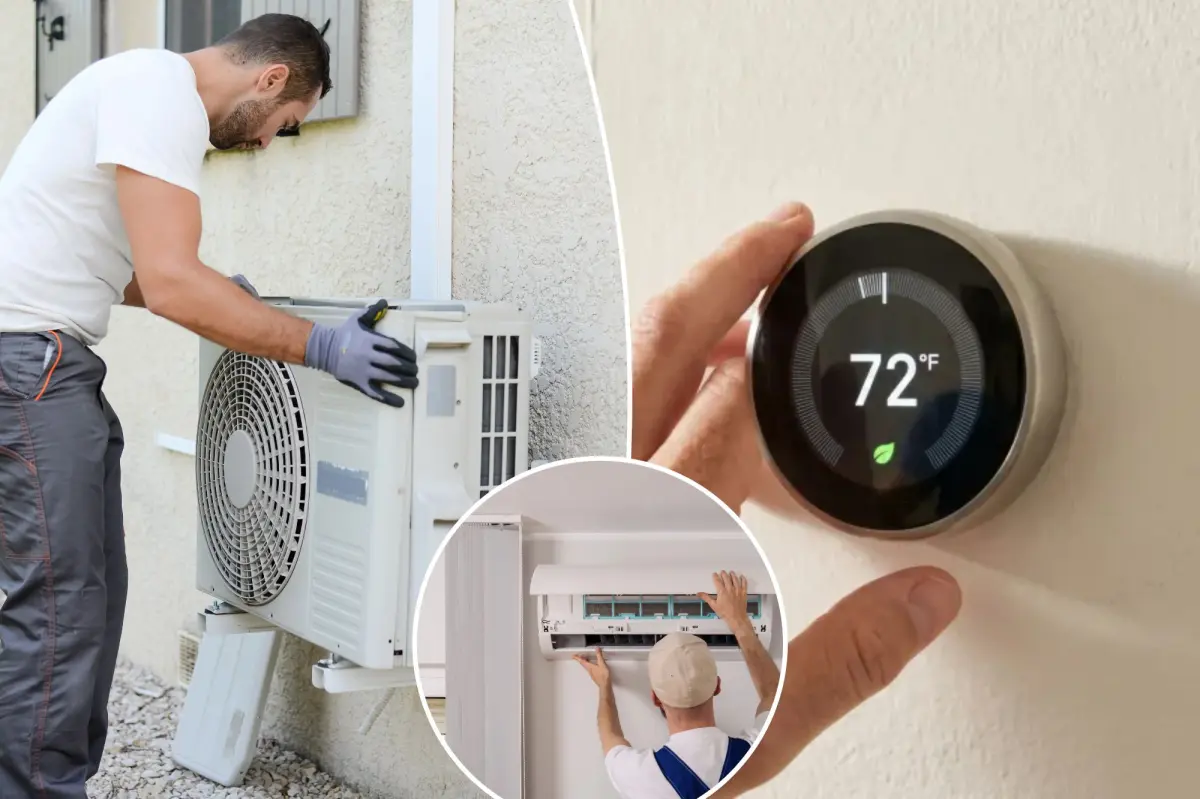
Fortunately, there are several low-risk, highly effective maintenance tasks that any homeowner can safely manage to keep their HVAC system operating efficiently. The absolute starting point for any airflow or cooling issue is the basic air filter, which is the unsung hero of your system’s overall health; if a filter becomes clogged, gray, and choked with household dust, pet dander, and fibers, it restricts the essential air exchange process and can cause the entire system to overheat, freeze up, or shut down entirely. Replacing a dirty filter with the correct size and directional flow is a simple DIY victory, and as Joey Dooley, a general manager at ARS in Texas, notes, modern smart thermostats and advanced HVAC systems can actually monitor internal pressure to tell you exactly when a filter needs to be replaced, sparing you from wasting money on expensive filters before they are actually dirty. Beyond the filter, you can easily verify your thermostat’s basic settings by confirming it is switched to the correct mode, ensuring the cooling target is set well below the ambient room temperature, and replacing dead or weak batteries, which are a surprisingly common source of unresponsive dual-stage systems. While you are evaluating airflow, take a brief walk through your home to ensure that heavy furniture, rugs, or storage boxes are not blocking your physical registers, and use a damp microfiber cloth or a vacuum brush attachment to gently clear accumulated dust and pet hair from your vent covers. Finally, step outside to inspect the outdoor condenser unit, making sure to clear away any encroaching garden weeds, fallen leaves, branches, or general yard debris within a steady two-foot perimeter, taking strict care to only clear the surrounding area without unscrewing any protective metal panels, spraying heavy water directly onto exposed electrical connections, or touching the delicate interior fins.
While these basic maintenance checks are safe and highly empowering, there is a hard safety limit where DIY troubleshooting ends and the severe dangers of electricity, high-pressure chemicals, and combustible fuels begin. First and foremost on the absolute no-DIY list is replacing a capacitor, which is a highly dangerous electrical component that acts as a powerful battery to jumpstart the heavy compressor and fan motors. Capacitors store lethal amounts of electrical voltage even after you have flipped the main circuit breaker of your home, and an amateur attempting a replacement risks severe electrical shock, permanent nerve damage, or localized electrical fires. In a similar vein, diagnosing, refilling, or repairing refrigerant loops must never be attempted by a homeowner, as chemical refrigerants are highly toxic substances that require specialized EPA-certified recovery equipment and diagnostic manifold gauges to handle safely and legally. This issue has become increasingly complex due to environmental regulations transitioning away from older R-410A refrigerants starting in 2025, a shift that ARS warns will continue to drive up repair and maintenance costs for older systems as the global supply of these older chemical compounds tightens over the coming years. Furthermore, if your home relies on a gas-powered furnace, you must strictly avoid any DIY attempts to adjust fuel lines, clean burner assemblies, or repair electronic ignition systems, as even a minor mistake can result in silent, deadly carbon monoxide poisoning, gas leaks, or catastrophic explosions. If you ever detect a smell of sulfur or rotten eggs in your home, which indicates a natural gas leak, you must abandon any diagnostic attempts immediately, evacuate your family to a safe distance, and call emergency services right away.
Many homeowners incorrectly view their heating and cooling systems as simple, modular appliances—much like a refrigerator or a washing machine—believing that if a unit is failing to cool the house, they can simply buy a larger unit online and swap the parts out themselves. However, residential HVAC systems are highly engineered, interconnected networks of thermodynamics, aerodynamics, structural airflow, and electrical engineering that must be precisely calibrated to the specific square footage and insulation values of your home. Gregory Milich, a widely respected HVAC expert and collegiate instructor with forty-three years of specialized experience, strongly warns against this simplistic mentality, explaining that you cannot simply replace a three-ton air conditioner with a four-ton air conditioner just because you want more cold air. When an HVAC unit is oversized for a home, it participates in a highly damaging process known as “short-cycling,” where it turns on and off rapidly without ever running long enough to properly dehumidify the air, resulting in a cold, clammy structure, excessive wear on the expensive compressor, and sky-high monthly utility bills. Conversely, an undersized system will run eternally without ever meeting the thermostat’s settings, burning out motor bearings and leaving the home perpetually uncomfortable. Professional technicians avoid these disasters by conducting multi-point energetic analyses and heat-load calculations that evaluate your home’s duct volume, insulation, window orientation, and regional climate conditions to find the perfect mechanical balance, proving that system sizing and hardware installation must be left exclusively to licensed professionals.
When your system suffers a major mechanical breakdown, you will inevitably find yourself at a stressful financial crossroad: deciding whether it makes more sense to repair your aging system or bite the bullet on a complete replacement. To guide homeowners through this difficult financial decision, ARS recommends applying the time-tested “50% rule,” which dictates that if the written repair estimate exceeds half the cost of a brand-new installation, and the existing system is more than ten years old, a full replacement is almost always the more sensible financial investment over the remaining life of the home. However, Joey Dooley advises that age should not be the single defining factor, noting that an eight-year-old system with a history of chronic failures might be a perfect candidate for replacement, whereas a well-maintained fifteen-year-old system with a simple component issue might still have years of reliable life left in it. Making this decision requires a thoughtful analysis of total ownership costs, energy efficiency performance, current warranty status, and the physical frequency of your system’s breakdowns. If replacement is indeed the most logical path forward, homeowners should prepare themselves for a major financial commitment, as ARS records show that a complete residential HVAC system replacement typically averages between $12,000 and $16,000 depending on home layout and efficiency requirements. More specifically, a stand-alone central air conditioning split-system replacement generally ranges from $13,000 to $16,000, while a combined gas furnace and AC installation also commands a similar $13,000 to $16,000 investment, representing a major financial decision that absolutely demands professional guidance to ensure long-term value.
Ultimately, when you do decide to yield to the experts and call a certified technician to your home, you can protect your financial interests and gain peace of mind by actively asking informed, strategic questions during the diagnostic visit. Before authorizing any repairs, ask the technician to explain exactly which component failed and why, which helps you understand the root cause of the breakdown rather than simply paying to treat a temporary symptom. Inquire as to whether the proposed fix is a reliable, long-term solution or merely a temporary patch, and ask directly if the system is currently safe to operate, which is especially important if your system has been tripping breakers, making buzzing sounds, or showing signs of drainage leaks. It is also highly critical to verify whether your system is still covered under its manufacturer’s warranty, and to confirm whether the proposed repair work will keep your warranty intact or potentially void it due to unauthorized parts or uncertified labor. Additionally, ask if any other major components are showing signs of heavy wear and are likely to fail soon, which gives you the foresight to budget for future expenses, or if your persistent comfort issues could actually stem from leaky, crushed, or poorly sized ductwork rather than the physical HVAC unit itself. By mastering these safe DIY boundaries—replacing your filters, maintaining clear ventilation, and managing basic thermostat updates—while confidently delegating high-voltage, high-pressure, and combustion-heavy tasks to the certified pros, you can protect both your household budget and the safety of your home, ensuring your indoor sanctuary remains comfortable for years to come.