



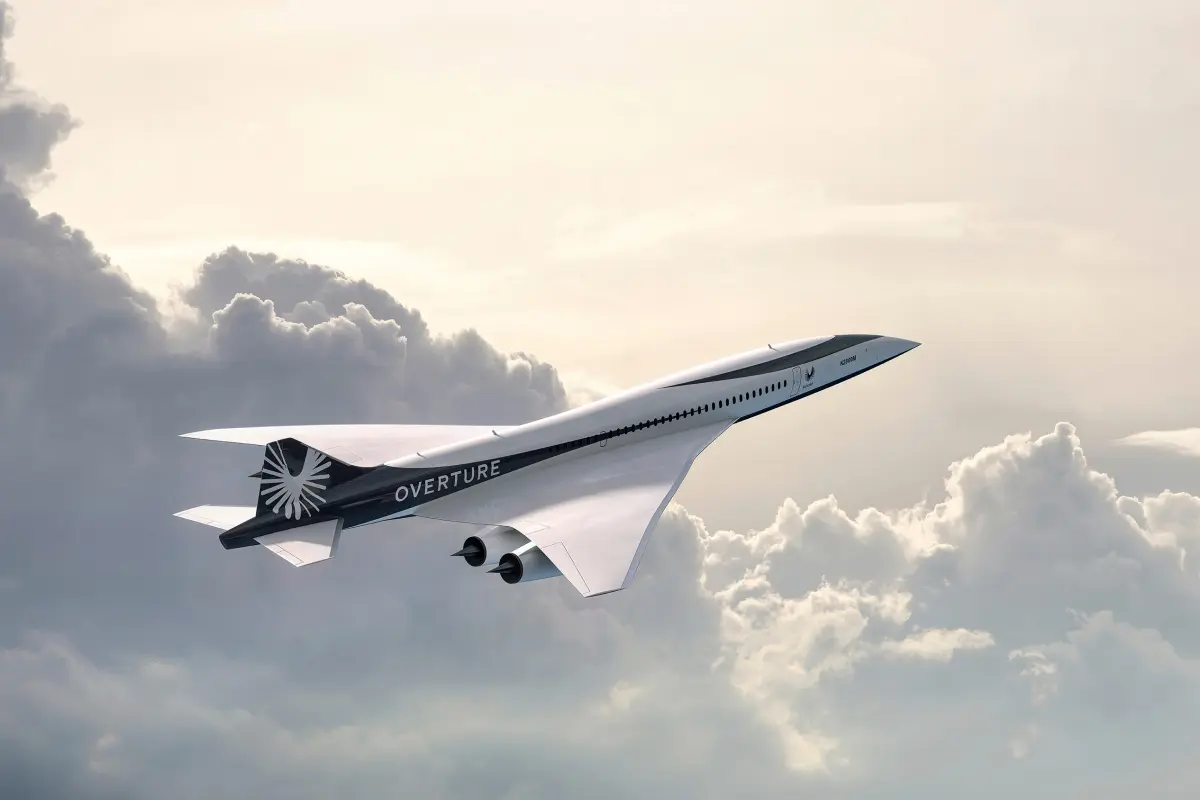
Imagine boarding a flight in New York and stepping off the plane in Los Angeles just three hours later, feeling like you barely had time to finish a movie. This reality is suddenly much closer on the horizon following a groundbreaking announcement by the Federal Aviation Administration (FAA). Capitalizing on massive leaps in aerospace technology, the FAA has moved to dismantle its decades-old ban on overland supersonic flight. In its place, the agency plans to introduce modern, emission-conscious noise limits. This seismic shift aims to slash cross-country travel times in half, effectively shrinking the vast distances that separate families, businesses, and cultures across the United States.
For over fifty years, commercial aviation has been stuck in a speed rut, with modern passenger airliners cruising at a relatively modest 550 to 600 mph. Supersonic jets, however, tear through the sky at speeds exceeding Mach 1, which is faster than 770 mph. To make this rapid-transit future a daily reality, the FAA is actively drafting tailored takeoff and landing noise standards. The agency expects to fully finalize these highly anticipated regulations by mid-2027. FAA Administrator Bryan Bedford expressed immense optimism about the transition, pointing out that modern innovations in aerospace engineering, advanced composite materials, and aerodynamic design will allow engineers to quiet the explosive sonic booms that once plagued supersonic travel.
The strict ban on overland supersonic flights dates back to a chaotic chapter in aviation history during the 1960s. At the time, the government conducted sonic boom tests in Oklahoma City that quite literally shook the public’s confidence. The tests resulted in shattered windows, cracked plaster walls, and a wave of community outrage that ultimately forced the FAA’s hand. In 1973, regulators drew a hard line in the clouds, outlawing supersonic flight over U.S. soil to protect citizens from the deafening, thunderous double-cracks of breaking the sound barrier. For fifty-two years, that ban stood as an immovable barrier, limiting supersonic speed exclusively to oceanic routes.
Modern political momentum has paved the way for this technological renaissance. The FAA’s regulatory overhaul directly follows a June 2025 executive order from President Donald Trump, who argued that the archaic 1973 ban was actively damaging American global competitiveness. The executive order emphasized that decades of scientific stagnation are over, asserting that modern material science and acoustics have finally made supersonic flight safe, sustainable, and commercially viable. By replacing an outright ban with smart, performance-based noise limits, the government hopes to encourage domestic innovation while keeping neighborhoods peaceful.
Sensing a lucrative new frontier, several American aerospace companies are already locked in a race to build the next generation of ultra-fast aircraft. Colorado-based Boom Supersonic is leading the commercial charge, reportedly securing high-profile pre-orders from major global carriers like United Airlines, American Airlines, and Japan Airlines. Their goal is to launch passenger jets capable of carrying 60 to 80 travelers in premium comfort. Meanwhile, luxury designers such as Atlanta’s Spike Aerospace are targeting the ultra-wealthy, focusing on sleek, whisper-quiet private supersonic jets tailored for executive travel and high-speed business trips.
Ultimately, this regulatory shift marks the beginning of a thoughtful balance between human ingenuity and environmental harmony. The goal is no longer just about flying as fast as possible, but about doing so with deep respect for the communities on the ground. As the aviation industry prepares for the 2027 regulatory green light, the dream of a quieter, faster, and more connected world is quickly becoming an inevitable reality. If successful, this initiatives will not only redefine how we travel, but will also prove that human progress does not have to come at the expense of our peace and quiet.