





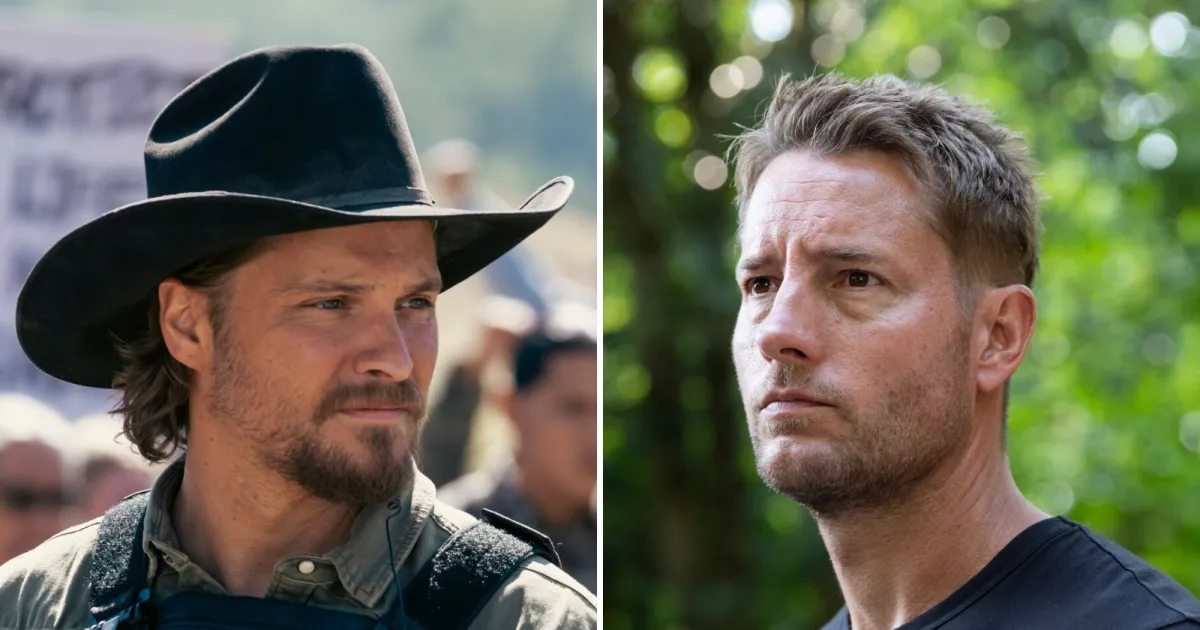
For anyone who has tried to keep a regular Sunday night routine on CBS, the experience has become a familiar exercise in patience. Week after week, viewers clear their schedules expecting to watch Marshals and Tracker at their advertised times, only to find that the network has quietly shuffled the lineup. What should be an evening of scripted drama often turns into an unpredictable waiting game, and the culprit is no mystery: live sports. NFL games, with their unpredictable lengths, consistently run past their time slots, and because CBS pairs those broadcasts with 60 Minutes specials, the delay ripples through the entire night. A football game that runs five minutes long becomes an hour of schedule chaos by the time 60 Minutes does its thing. So the Yellowstone spinoff starring Luke Grimes, originally slotted for 8 p.m. Eastern, gets pushed to 8:30 or later, and Justin Hartley’s Tracker, meant to start at 9, inevitably starts so late that viewers wonder if they’re watching live or catching a rerun. Watson, the third entry in the night at 10 p.m., suffers even more. It’s a frustration that has become almost comical in its consistency. The reason matters: live events are difficult to control, and networks understandably prioritize sports that generate enormous ad revenue. But for fans of serialized drama, the result is an annoying game of roulette. The irony is that Tracker, the very show that viewers fight to watch despite the delays, has become one of the most successful broadcast properties in recent memory. Even with all the schedule shifting and special-event interruptions, the series has managed to capture millions of loyal viewers each week. It survived its first season even as March Madness and the CMT Music Awards knocked it off schedule. It has become a Sunday-night ritual, one that people actively plan around—even if they have to tape the show or wait for it to stream. The network knows what it has, but it also knows that football is football, and in the battle between a tight scripted mystery and a last-minute field goal, there’s no real contest. So the delayed start times remain a point of collective eye-rolling, a side effect of living in a world where live television still rules the schedule. For now, fans accept the disorder, secure in the knowledge that the show they love will eventually appear—usually a little later than promised, but always with enough intrigue to make the wait worthwhile.
The success of Tracker didn’t happen overnight, but its rise has been remarkably fast. The show premiered in February 2024, sliding into the schedule right after the Super Bowl—a timeslot that all but guarantees a giant initial audience. But unlike many shows that debut to huge numbers and then fade, Tracker held its ground. It went on to be crowned the most-watched broadcast premiere since the final episode of NCIS, the one that featured Mark Harmon’s farewell in September 2021. That is no small accomplishment in an era when broadcast television has fragmented across streaming platforms, DVRs, and on-demand habits. The numbers tell the story: according to measurements reported by Paramount+ and broadcast ratings services, Tracker averaged 18.2 million viewers per episode in its first season. That average is staggering for any modern network show. It places Tracker alongside the kind of blue-chip titles that used to dominate television decades ago, when appointment viewing was the norm rather than the exception. What makes the achievement even more impressive is that the show did not have the easiest road. Its first season was interrupted by live programming—March Madness basketball games, the CMT Music Awards, and other events that swept in and displaced the drama at random. For a series that depends on serialized mysteries and character threads, those interruptions can be deadly. Viewers might forget where they stood in the story, or decide that keeping up isn’t worth the trouble. Yet Tracker’s audience stuck around. The ratings not only survived the delays but remained high enough to make the show a legitimate phenomenon. The secret probably lies in its format: Colter Shaw, the survivalist played by Hartley, travels from town to town, encountering a new mystery every week. That structure allows each episode to work as a self-contained story while still weaving in a longer narrative about Colter’s past. It’s a formula that rewards both loyal viewers and casual drop-ins, and it helps explain why so many people keep showing up, even when the show starts forty-five minutes late. In a television landscape where viewers have infinite options, Tracker has become one of the few shows that still feels like must-watch television, a phrase that used to get thrown around carelessly but here actually applies. The first season’s delays, in retrospect, did nothing to hurt the show; if anything, they may have built anticipation. By the time season two rolled around, the audience was more than ready to dive back into Colter’s world.
The second season of Tracker only strengthened the show’s reputation. After an eleven-week break between seasons—a long gap that would test the loyalty of any fan base—the series returned and immediately proved it had lost none of its momentum. The season 2 premiere pulled in 8.3 million total viewers, which was nearly a 10 percent increase over the season 1 finale. And even more telling, that premiere marked the show’s highest audience since its Super Bowl debut in February 2024. That’s a rare trajectory for a network series. Most shows expect attrition between seasons; Tracker somehow gained strength. The achievement was underscored by Variety’s annual ranking of the 100 most-watched primetime telecasts of the year, a list that found Tracker episodes occupying fifteen spots. Fifteen placements on a list of one hundred is an extraordinary showing, especially when those slots are usually dominated by football, awards shows, and other live events. It means that a scripted drama about a quiet survivalist solving mysteries has become one of the most reliable audience magnets in all of television. Part of the appeal, no doubt, is Luke Grimes’s presence at the start of the night with Marshals, which creates a strong lead-in audience for Tracker. But a lead-in can only do so much; the show itself has to deliver. Tracker delivers. It has a star in Justin Hartley, an actor whose charisma and grounded performance anchor every episode. It also has a rich supporting cast, with familiar faces popping up in guest roles, adding texture and excitement. The creators have figured out how to balance procedural mystery with emotional depth, making each case feel personal not just for Colter but for the audience. The result is a show that feels both comfortingly familiar and fresh at the same time. In a world of prestige dramas that demand intense concentration and streaming shows that are often consumed in gloomy binges, Tracker offers something a little warmer: a capable hero, a moral compass, and mysteries that are satisfying to solve. It’s no wonder that the series has become the crown jewel of CBS’s Sunday-night lineup, and no wonder that the network continues to invest in it, scheduling problems and all. The ratings speak loudly enough that even when the show is delayed by football and 60 Minutes, everyone knows it will be worth the wait.
For Justin Hartley, the success of Tracker has been something of a pinch-me moment, but also the result of decades of hard work and relationships. In a recent interview with The Hollywood Reporter, the 48-year-old actor reflected on how the show has changed the way people in the industry view him and his work. “It’s really the cool show now, right? So, we actually got really lucky. I feel like I blinked, all of a sudden woke up and it’s been 20 years. But I’ve been in this business long enough to have developed these relationships,” Hartley said. That sense of gratitude runs through his comments. He didn’t just assemble a random cast and crew; he pulled from the community of actors he has worked with and trusted over the years. He specifically mentioned Jensen Ackles and his wife, Sofia Pernas, both of whom have appeared on Tracker. These aren’t just celebrity cameos; they’re personal connections, built over years of shared sets and mutual respect. Hartley explained that his friends trust him not to waste their time or drag them into something mediocre. “I think they trusted me knowing I’m not going to call them and ask them to do something, or invite them to do something unless I think it’s really cool and fun and would be good for them as well. So we start off on that foot, and then this show became what it is. It’s huge. People think it’s cool and want to be a part of it, which is also nice because it allows you to get a bigger pool of talent.” There’s something refreshing about that approach in a television world often built on corporate mandates and focus groups. Here, the star of the show is personally calling up friends to ask if they want to come play in his sandbox, and they say yes because they know they’ll be treated well and get to do interesting work. That old-school network style of production—where relationships matter and loyalty goes both ways—has given Tracker a homey, collaborative feel. It shows on screen. The guest stars don’t feel like stunt bookings; they feel integrated into the world of the show. Hartley also seems to be enjoying the ride with a sense of wonder, knowing how lucky he is to have reached this level after two decades in the entertainment industry. He’s aware that public taste is fickle and that a show can be hot one moment and forgotten the next. But he’s also smart enough to capitalize on the moment, using his influence to bring other talented people into the fold. The result is a virtuous cycle: the show becomes more appealing, more stars want to appear, and the quality continues to rise. That energy has certainly contributed to Tracker’s enormous popularity, and it explains why the series has become a brand in its own right, not just another procedural with a country accent.
As the second season heads toward its finale, Hartley is promising fans a rewarding payoff. In his own words, the final five episodes will arrive in a row, without the interruptions that plagued the early season. He calls them “five separate movies.” That’s an exciting prospect for viewers who have learned to live with erratic scheduling. But more than just a run of uninterrupted episodes, the finale will finally begin to unravel the mystery that has been lurking in the background all along: the death of Colter’s father. Hartley teased the details with a series of tantalizing questions: “How did he die? Was there in fact another man in the woods? Did he get pushed? Did he get killed? Was it an accident? What the hell is going on with that?” These are the kind of questions that have kept fans theorizing and blogging and rewatching every clue. The mystery of Colter’s father has been the emotional backbone of Tracker from the start, giving a wandering hero a reason to keep moving and a wound to carry. The last five episodes, Hartley suggests, will bring that thread to the surface while still delivering the standalone adventure feeling that fans love. He also confirmed that discussions about season 3 are already underway, and it sounds like the creative team is not content to rest on its laurels. One idea under consideration is to put Colter in entirely new territory—not just geographically, but dramatically. “Now we’re in new territory. We have a couple of ideas. One of these is that Colter has all of these skills—he’s a survivalist and he knows how to be alone, and he knows how to find people and he’s gifted in that regard. He’s a great listener. But it would be interesting, I think, to see him be set up. In other words, to see him using all those skills to run from the authorities, because you’ve been set up for whatever reason. I’d love to have all that tie into the family background, the government.” The idea of Colter as a fugitive is an intriguing twist on the series’ established formula. Instead of a man who uses his survival skills to help law enforcement and local communities, he would become a man on the run, using those same abilities to stay one step ahead of the people chasing him. It’s a change in perspective that could radically reshape the show’s tone, taking it from a comforting mystery-of-the-week into a paranoid thriller with serialized momentum. Hartley acknowledged that the team has been “kicking that idea around” and has “a lot of different stuff” in the works. The underlying goal, he says, is to maintain the direction of the story while allowing new themes to breathe. That balancing act—honoring what made Tracker successful while still evolving—is the classic challenge of any long-running series. But if anyone can pull it off, it’s the actor who has already turned Colter Shaw into one of the most compelling characters on television. His enthusiasm is palpable, and his willingness to explore darker, more complex corners of the character’s life suggests that the best may be yet to come.
As fans prepare for the final stretch, it’s worth remembering the practical side of the Sunday-night schedule. Marshals airs on CBS at 8 p.m. Eastern, followed by Tracker at 9 p.m. Eastern, with Watson rounding out the evening at 10 p.m. For anyone who’d rather not deal with the unpredictable delays caused by football and 60 Minutes, the good news is that new episodes are available to stream the next day on Paramount+. That has likely been a saving grace for many viewers who simply cannot stay up late on a work night to watch a show that keeps getting pushed further and further into the evening. It also points to the changing reality of modern television: even the most successful network shows are now consumed as much through streaming as through live TV. The numbers for Tracker reflect that hybrid model, since Paramount+ and broadcast measurements are combined when calculating the show’s total audience. In that sense, Tracker is a perfect example of how a network show can thrive in an era when appointment viewing is no longer the default. It offers the comfort and accessibility of a procedural, but it also gives viewers a rich serialized story they can catch up with at their own pace. The weekly delays might be frustrating, but they’re also a reminder that television still has the power to draw a huge audience into a shared cultural moment. People watch football and then wait through 60 Minutes because they want to talk about Tracker the next morning. They adjust their schedules and set their DVRs. They complain about the delays online, but they keep showing up. In the end, that’s the mark of a show that has truly connected with its audience. It can survive schedule chaos, long midseason breaks, and competing live events because its characters and stories have become a habit. Justin Hartley has built something special with Colter Shaw, and CBS knows it. The network may continue to let football dictate the night, but Tracker has become the reason people return week after week. With a father-mystery payoff on the horizon, a possible season 3 twist that could turn Colter into a fugitive, and a growing reputation as one of television’s most-watched dramas, the series appears to have a long and exciting road ahead. The Sunday-night wait may remain unpredictable, but the quality of the reward is anything but. For now, fans can settle in, maybe with a backup plan for the late start, and enjoy the ride—because a show this good is worth waiting for, even when the network makes it a little harder than it should be.