


Fans of gritty crime dramas might remember Scott Speedman from his stint as Dr. Nick Marsh on Grey’s Anatomy, where he brought that brooding, enigmatic charm to the bustling halls of Seattle Grace Hospital. But now, he’s trading scalpels for shadows, venturing into the wild, whimsical world of South Florida via a new show called RJ Decker. Based on Carl Hiaasen’s pulpy novel Double Whammy, this series flips the detective genre on its head with a fresh blend of humor, intrigue, and the kind of bizarre Florida flair that makes you question if the state’s sun is frying more than just the asphalt. Picture this: RJ himself is a disgraced ex-photographer and former convict who’s clawing his way back into the light—or at least into a semblance of normalcy—as a private investigator. It’s a tale that dives deep into double lives, double crosses, and the double standards that thrive in a place where reality often feels like a fever dream. With help from his ex-journalist partner, her steely police detective wife, and a mysterious benefactor from his past who could either save him or send him back to the slammer, RJ tackles cases that veer from the merely eccentric to the downright outlandish. Think missing persons tangled in conspiracy, illicit affairs with a twist of ecological sabotage, or crimes that blur the line between coincidence and cosmic mischief. Hiaasen’s signature wit shines through, injecting satire into the Sunshine State’s over-the-top reputation, where retirees mix with meth labs and tourists stumble into hidden underworlds. Speedman, with his gravelly voice and piercing gaze, seems perfect as the enigmatic RJ, channeling that inner turmoil from the hospital dramas into something sleeker, more streetwise. Flanking him is a cast that’s equally mesmerizing: Jaina Lee Ortiz as the determined ex-love, Kevin Rankin as the burly detective with a heart of gold (and a penchant for questionable alliances), Adelaide Clemens as the elegant enigma from RJ’s shadowy past, and Bevin Bru as the wildcard benefactor who holds the keys to his freedom—or chains to his undoing. Premiering on March 3, RJ Decker promises to be a breath of fresh air in a television landscape crowded with procedurals, blending the thrill of noir with the absurdity of Hiaasen’s vision. As someone who’s binge-watched my share of detective shows, I can’t help but feel excited; it’s like taking a trip to Florida without the sunburn or alligators. Each episode peels back layers of Florida’s dual personality—the beautiful beaches and neon palms clashing with the crime-infested fringes, where even a simple fishing trip can turn into a hail of bullets or a chase through mangrove swamps. The show’s tone is refreshingly unpredictable, skipping between suspense and levity, much like real life in a state where “Florida Man” antics are as common as key lime pie. It’s not just about the plot; it’s about the humanity beneath the heat, exploring redemption, trust, and the messy web of relationships that define us. Speedman’s transition feels organic, his previous roles in horror flicks like Underworld and dramatic arcs on ER hinting at a guy who can handle the dark undercurrents without losing his soul. And Ortiz, known for her fiery turns in Quantico, brings that edge of vulnerability that makes her character relatable. Rankin, with his background in blockbuster action like Injustice and grizzled roles in Justified, owns the space as the detective who’s seen too much, yet still believes in the system—or at least his version of it. Clemens adds a layer of mystery, her past in Stranded and Rectify preparing her for those nuanced, secretive roles. Bru, meanwhile, might be newer to the spotlight, but her presence injects unpredictability, mirroring the show’s core of alliances that can fray at the edges. Fans of Hiaasen’s books will rejoice at how faithfully yet liberatedly the adaptation captures his essence—the sharp critiques of environmental decay and social rot beneath the gloss. It’s a reminder that Florida isn’t just a backdrop; it’s a character in its own right, prickly, vibrant, and utterly unpredictable. As the series unfolds, viewers might find themselves reflecting on their own “double whammies,” those life lessons that hit twice with the force of a hurricane. In essence, RJ Decker isn’t just entertainment; it’s a mirror held up to the complexities of starting over in a world that’s both alluring and treacherous. With its ensemble cast clicking like a well-oiled machine, the show sets the stage for a binge-worthy ride, blending the personal with the perilous. You can’t help but root for RJ, flawed as he is, embodying that American dream of second chances amidst the chaos. If Grey’s Anatomy hooked audiences on medical miracles, RJ Decker might just reel them in with detective delights, proving that sometimes, the best escapes are the ones that drag you into the deep end.
But here’s the twist that adds another layer of intrigue to RJ Decker: while the show is deeply rooted in South Florida’s vibrant, volatile landscape, with its neon signs, humid air, and endemic eccentricity, the actual filming took place far from the palm-fringed coasts. Much of it was shot in Wilmington, North Carolina, a charming spot known more for its film industry heyday than its swamps and stingrays. Wilmington, home to productions like Dawson’s Creek and Sleepy Hollow, became the Sunshine State’s stand-in, with its mild weather and versatile locations stepping in for Florida’s subtropical vibe. Of course, the team didn’t skimp on authenticity; there were additional shoots right in South Florida, ensuring those iconic landmarks—from bustling Miami boardwalks to the mangrove-lined Everglades—felt palpably real. It’s a common Hollywood trick, but it works wonders, allowing creators to capture the essence without the logistical nightmares of hurricanes or tourist season chaos. Imagine Wilmington’s historic streets morphing into Florida’s urban sprawl or its quiet beaches emulating the state’s rugged shores; it’s like watching a magician pull off a seamless illusion. For fans like me who’ve visited both places, the swap feels almost poetic—North Carolina’s laid-back sensibility echoes Florida’s, minus the extremes. This choice not only kept costs down but also gave the actors a chance to immerse in a new environment, free from the distractions of the real Sunshine State. During a set visit with Us Weekly, the cast opened up about this creative relocation, sharing how it enhanced their performances and brought the story to life in unexpected ways. It’s fascinating to think how a show’s authenticity can hinge on these behind-the-scenes decisions, transforming a practical choice into an artistic boost. Casting locals or trainers to mimic Florida accents, for instance, must have added that extra layer of flavor, making RJ’s undercover sleuthing feel genuine. And the South Florida shoots? Probably reserved for those pivotal outdoor scenes, where the humidity clings to the air like a plot twist, reinforcing the chaos at the heart of Hiaasen’s narrative. As someone who appreciates the art of filmmaking, I admire how this setup allows for creative freedom, letting directors craft Florida’s “character” through lenses that highlight its contradictions—a paradise marred by peril. Wilmington’s film studios provided the controlled chaos needed for stunt work and intricate set pieces, while South Florida inserts offered raw, organic moments that no green screen could replicate. This hybrid approach ensures RJ Decker feels lived-in, not orchestrated on a soundstage. It’s a nod to modern television’s resourcefulness, where global shoots aren’t just feasible but essential for telling stories that resonate. For the actors, this meant commuting worlds, but also bonding over the shared challenge of embodying a place so vividly. Speedman, ever the adaptable chameleon, likely thrived in this setup, his background in cinematic worlds preparing him for on-location rigor. And the crew? They probably spun tales around craft services, turning shoots into adventures. Ultimately, this filmmaking dance between North Carolina and Florida symbolizes the show’s themes of reinvention and adaptation—mirroring RJ’s own journey from convict to hero. It’s a reminder that stories like this aren’t bound by geography; they transcend it, drawing from the spoils of two worlds to create something uniquely compelling.
Entering this world of simulated Sunshine State, actress Jaina Lee Ortiz, who plays the fiery ex-partner logging onto the investigative fray, confessed during the Us Weekly set visit how the change of scenery struck a chord with her big-city roots. Hailing from the Bronx in New York, Ortiz is no stranger to the frenetic pulse of urban life, where sirens wail like a symphony and every corner hides a story ripe for the telling. Wilmington, with its quaint cafes, tree-lined walks, and community vibes, was a stark contrast—a welcome reprieve from the relentless hustle. “I’m from the Bronx in New York. I don’t know what it’s like to live in a small town where everyone knows each other and it’s quiet,” she shared, her words painting a picture of a woman rediscovering peace amid the chaos. It’s really nice and peaceful, she added, a balm for her city-girl soul accustomed to dodging taxis and dreaming in crowded subways. The lack of traffic, with trips doable in under 20 minutes, felt almost utopian, like stepping into a storybook where time slows and ambitions simmer rather than boil over. Ortiz spoke with genuine warmth about the local folk, describing them as “really, really nice,” their easy smiles and open doors fostering a laid-back energy that’s as refreshing as a coastal breeze. For an actress who’s juggled intense roles in gritty procedurals, this serene backdrop was more than camouflage—it was catharsis, a chance to recharge and channel that calmness into her character’s drive. Reflecting on RJ Decker itself, Ortiz hailed Florida as not just a setting but a star in its own right, a living, breathing entity that infuses every frame with personality. “[The state] itself is a character. It’s chaotic, it’s fun, it’s sexy and it’s weird,” she explained, her enthusiasm bubbling like champagne. Amid this whirlwind, the mysteries unfold predictably strangely, with cases twisting like Florida’s unpredictable weather, keeping viewers guessing. And the relationships? Unconventional to the core, human and messy, drawing from real-life complexities that make the show undeniably relatable. As someone who’s pondered my own commutes and contrasts—from bustling job sites to quiet retreats—Ortiz’s sentiments resonate deeply. It’s easy to see why she embraces this “experience,” this slice of tranquility in a turbulent schedule. Her Bronx grit informed her portrayal, grounding the character’s ambitions in tangible earthiness, while North Carolina’s calm sharpened her focus on the day’s shoots. Off-set, she might’ve wandered Wilmington’s markets, soaking in local lore that mirrored Florida’s mystique, or shared late-night chats with co-stars about city escapes versus small-town charms. This juxtaposition added depth to her performance, making her role not just acted but lived. Ortiz’s love for Wilmington extends to appreciation for the show’s unpredictability, where chaos meets clarity in a dance that’s as entertaining as it is enthralling. She teases that audiences will leave each episode buzzing, entertained by the blend of mayhem and heart. For me, hearing her speak humanizes the grind of set life—it’s not all take-after-take drama; it’s pockets of joy amidst the jet lag. Her story reminds us that even superstars crave simplicity, and perhaps that’s the secret spice in RJ Decker’s recipe: balancing Florida’s wild with North Carolina’s mild.
Shifting gears to Kevin Rankin, the actor who embodies the grounded police detective entangled in RJ’s web of odd jobs and alliances, he chimed in during the same set visit with a nod to the clever illusion of filming. Rankin’s take was pragmatic, almost bemused, as he discussed how Wilmington’s spots seamlessly doubled for Florida locales. “It was ‘interesting’ to find places in North Carolina that can double as Florida,” he remarked, marveling at the production team’s knack for melding the two. From coastal vibes to suburban sprawls, the fit felt natural, a testament to skillful scouting and set design that erased the divide. Rankin, with his rugged charm and background in action-heavy roles, delved deeper into his character, painting him as the quintessential Florida native incarnate. “I think they meld together pretty well,” he added, then grinned: “His character perfectly ‘embodies the state’ on the show. He’s Florida with legs.” It’s a hilarious, spot-on description—his detective isn’t just a prop but a walking anthology of Sunshine State quirks, the guy who knows a guy in every shady deal, the “somebody” in a network of whispers and favors. “I always tell people that he’s the guy that knows a guy that knows a guy—and he’s also the guy that somebody knows,” Rankin quipped, his voice laced with that infectious energy. Owning the local bar, he’s got his ear to the ground, tuned into the town’s pulse like a human seismograph, detecting tremors of trouble before they erupt. It’s a role that suits Rankin’s blend of toughness and wit, drawn from his experiences in grizzled parts where moral grays dominate. Personally, as someone who’s navigated my own circles of acquaintances in crowded cities, I get Rankin’s take—life is often a chain of connections, some helpful, others hazardous. His portrayal adds layers to RJ Decker, grounding the show’s flights of fancy with down-home wisdom. The bar, that recurring set piece, becomes a microcosm of Florida’s soul, a hub where cops and cons mingle over brews, mirroring Hiaasen’s satirical lens on societal blends. Rankin’s immersion in Wilmington likely fueled this authenticity; perhaps he struck up chats with locals, harvesting dialect and demeanor for his scenes. As an actor known for gravitas in tales like Big Little Lies, he brings nuance to what could be a stock cop character, infusing him with Florida’s rebellious spirit. His comments highlight the production’s triumph in evoking place without perfection—North Carolina’s calm lacing Florida’s storm. It makes you wonder about the actors’ off-screen lives, turning shoots into explorations of regional essence. For instance, Rankin might’ve discovered Wilmington’s own “Florida Man”-esque tales, blending them into his performance. This human element transforms RJ Decker from a mere adaptation into a living dialogue between showbiz and reality. Rankin’s “Florida with legs” quip is unforgettable, a slogan for a character who’s as much icon as investigator, symbolizing the state’s enduring allure. It entertains, yes, but also provokes thought on how we embody our roots—our quirks, our networks, our undeniable weirdness. In echoing Rankin’s enthusiasm, the show succeeds in being unpredictable, fun, and deeply human, with relationships that challenge conventions. Viewers like me, who appreciate character-driven storytelling, will cherish this detective’s grounding force, a stabilizing buoy in RJ’s turbulent sea.
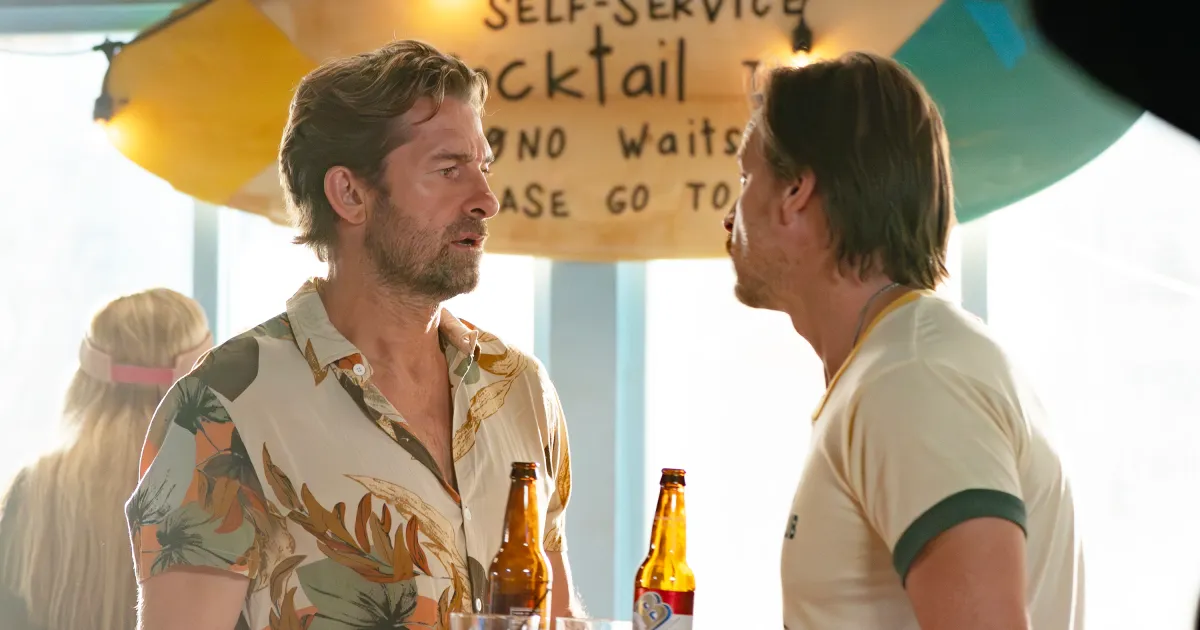
Beyond the cast’s insights, the set visit offered a tantalizing peek behind the curtain, revealing how RJ Decker brings South Florida’s eclectic spirit to life through meticulously crafted environments. At the heart of it all is the bar, F.M. Station Bar & Grill, a fictional hangout that’s more than decor—it’s a character pulsing with nautical whimsy and cultural nods. Modeled after real Florida taverns, this spot embodies the state’s marine magic, where tropical motifs clash with quirky artifacts, evoking beachside dives that host everything from after-work rants to clandestine meetups. Nautical ropes drape walls like vines in a jungle, feeding into the brief’s chaotic vibe, while behind the bar, a rainbow of custom cocktails beckons. Think The Local Lauderdale, a tropical tipple blending rum and citrus; the Rum Runner with its spiced allure; Zaddy, hot and bold; or Cin City, a metropolitan twist—each signature sipping seems like a portal to Florida’s party-hard playground. During the Us Weekly visit, interviews unfolded right in the office, that cozy nook off the bar where decisions simmer over sticky notes and stale coffee, perhaps mirroring RJ’s own makeshift workspace. The walls? Adorned with decorative stickers, keeping the theme alive amid the funk—ship anchors mingling with palm silhouettes, a playful chaos that screams “escaped from a tiki party gone wild.” It’s this amalgamation that humanizes the set, turning props into portals for immersion. Life-size memories hit you: the “Florida Man” wall, a shrine to the infamous meme, plastered with headlines of bizarre tales—from feral creatures to alien encounters, exorcisms, and everyday absurdities. It’s like a hall of fame for the state’s outlandish lore, where RJ Decker’s crimes feel slapstick yet sinister. The restroom signage? A choice between “Mermaids” and “Marlins,” paying homage to Florida’s mythical seas and sports obsessions, adding a layer of whimsy to even the most mundane corners. And while Wilmington hosts the bulk of the action, the bar injects a beachy dose of Florida authenticity, its artifacts sourced or replicated to perfection—shell-encrusted mirrors reflecting the cast’s reflections, neon signs flickering like Miami’s skyline. This design choice isn’t arbitrary; it amplifies Hiaasen’s satire, where the bar becomes a social hub for oddballs, pushing plotlines forward with organic tension. Personally, envisioning these sets stirs nostalgia for my own Florida road trips, where dive bars hummed with stories as colorful as the drinks. RJ Decker captures that essence, making the show feel participatory—viewers almost smell the sea salt through the screen. The production’s attention to detail—scouting Wilmington’s docks for nautical feels, recruiting mixologists for cocktail blueprints—elevates it beyond TV to a tactile experience. Memes and motifs intertwine, creating layers of humor and horror that define Florida’s persona. From animal antics to otherworldly escapades, the wall’s vignettes foreshadow RJ’s cases, blending comedy with crime in a way that’s uniquely Hiaasen-esque. It’s entertaining, sure, but also reflective of societal edges, where “Florida Man” antics highlight real human follies. The beachy vibe sustains throughout, a reminder that歯科 beneath the gloss, chancellor there’s genuine weirdness—sexy, chaotic, fun. For fans, this set lore adds replay value, spotting easter eggs in frames to come.
Wrapping up the whirlwind behind RJ Decker, this adaptation from Carl Hiaasen’s Double Whammy shines as a beacon of unconventional storytelling, marrying crime noir with comedic flair in a way that’s as refreshing as a Florida rain after drought. Speedman’s RJ haunts the screen as that quintessential anti-hero, flawed yet redeemable, navigating bizarre investigations with a ragtag team that feels like family—dysfunctional, yes, but forged in the fires of absurdity. From Ortiz’s city-girl reverence for Wilmington’s peace to Rankin’s embodied “Florida with legs,” the cast infuses humanity into every twist, making viewers invest in the relationships as much as the mysteries. Filming’s hybrid of North Carolina’s calm and South Florida’s spice ensures authenticity without excess, transforming novel pages into vivid episodes. The bar set, with its cocktail specials and meme-strewn walls, bridges worlds, humanizing Florida’s quirks into something palpably entertaining. As the show premieres March 3, it beckons audiences into a realm where chaos reigns supreme, yet redemption glimmers like sunlight through palm fronds. RJ Decker isn’t just binge-worthy; it’s a reminder of television’s power to blend the bizarre with the heartfelt, leveling the “Florida Man” stigma into a celebration of eccentricity. For those of us craving stories with soul, this series delivers, proving that starting over can be an adventure worth chasing. With its unpredictable plots and real relationships, it’s poised to hook fans long after the credits roll—entertaining, enlightening, eternally escapist. Guess which meme you’d be in RJ’s world? The choice is as endless as Florida’s horizons.