


The Shattered Echoes of Sisterhood
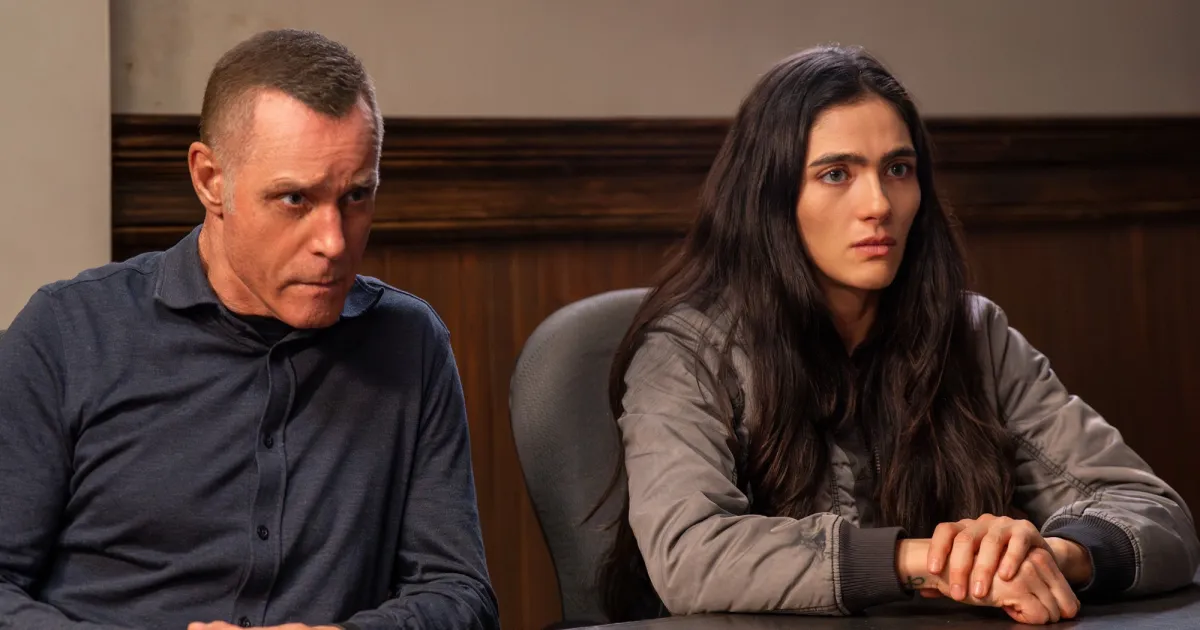
The final episode of Chicago P.D.’s 13th season left viewers breathless, a whirlwind of betrayal, violence, and raw human fragility unfolding in the gritty streets of Chicago. Imagine Sergeant Hank Voight, the hardened cop with a code of justice that’s as unyielding as his scars, staring down the barrel of a decision that could shatter a life—or perhaps salvage a fractured soul. Officer Eva Imani, who has spent two decades haunted by the abduction of her little sister, Shari, finds herself on the brink, nearly dying at the hands of this long-lost sibling she fought so desperately to reclaim. It’s a nightmarish twist: a reunion born of tragedy, where sisterly bonds collide with murder accusations that hang like a noose over Voight’s conscience. As sirens wail and blood stains the cityscape, the question lingers—who will be charged for the stabbing death of a prostitute named Laura? Shari’s confusion, shaped by years of manipulation, contrasts sharply with Imani’s fierce determination, painting a picture of two women whose paths diverged violently long before they intersected again. This isn’t just a crime procedural; it’s a soul-searching tale of redemption, abuse, and the blurred lines between victim and perpetrator. Voight, ever the pragmatist, knows the dark secret—that it was Shari, not their captor, who wielded the knife. Imani, on the verge of breakdown, pleads in the ambulance for answers, her voice cracking under the weight of years of unanswered prayers. The finale doesn’t resolve it; instead, it thrusts the characters into a desolate limbo, forcing them to grapple with morality in a world that’s anything but black and white. Shari, her wrists slashed in desperation, embodies the ultimate fragility—a woman raped of her childhood, her identity molded by a monster’s cruelty. Voight’s decision looms, a choice that could send Shari to jail or let her walk free, each path riddled with heartache. It’s a moment that humanizes these cops, stripping away their badges to reveal the personal toll of their line of work. Imani’s revelation about their shared past—trinkets from childhood, whispered secrets—slowly chips away at Shari’s walls, but the damage runs deep. As the team hunts a predator named Russ Kirby, who abducted Shari at age six and twisted her into his tool, themes of loyalty and betrayal weave through the narrative. Kirby, a shadowy figure of pure evil, represents the scourge that preys on innocence, his abuse leaving invisible wounds that fester. Shari’s dead-eyed stare after witnessing Kirby’s brutal end speaks volumes; she’s a survivor in stasis, her life a patchwork of stolen memories and forced allegiances. Imani’s plea for clarity—”Will my sister be charged with murder?”—isn’t just professional; it’s a cry from the heart, challenging her career, her ethics, and her very sense of self. The showrunner teases that this cliffhanger isn’t mere suspense; it’s a profound exploration of how secrets erode the soul. Shari’s shattered psyche, torn between the child she was and the broken adult she’s become, forces characters to confront uncomfortable truths: does releasing a killer heal anyone, or just prolong the agony? It’s a narrative that asks viewers to empathize with killers, to see the humanity in the abyss. Voight, with his gruff exterior masking a paternal protectiveness, faces a dilemma that tests his core—protect the law or protect the girl who’s suffered immeasurably? Imani, the embodiment of relentless hope, must reconcile her badge with her blood. Their isolation in that desolate hideout symbolizes the solitude of such choices, away from prying eyes, where judgment feels both absolute and utterly inadequate. As Shari’s story unfolds, it’s impossible not to feel the ache of what could have been—a normal life, a family intact. The episode’s intensity builds slowly, like a storm gathering, mirroring the characters’ internal turmoil. Viewers are drawn into the emotional vortex, questioning their own biases about justice and mercy. This finale isn’t about tidy resolutions; it’s about the messy aftermath of trauma, where healing feels distant and elusive.
Navigating the Abyss of Decisions
Showrunner Gwen Sigan opens up the layers of this epic cliffhanger, describing it as a “huge” emotional pivot that will reverberate into season 14, leaving Voight and Imani to wrestle with Shari’s fate in private solitude. “Nobody else really has all the information right now,” Sigan notes, emphasizing how Voight and Imani stand as solitary guardians of truth, their decision—a quiet confession in a forsaken spot—carrying the potential to absolve or condemn. It’s a deeply human moment, stripped of grandiosity, where two professionals confront the personal ramifications of their authority. Voight, the grizzled veteran hardened by countless battles, embodies the old-school cop archetype, yet here he’s rendered vulnerable, his moral compass spun by empathy for a young woman whose life has been a unending nightmare. Imani, the narrative’s beating heart, grapples with the dissonance of her reunion: finding Shari alive should be triumphant, but instead, it’s laden with guilt, horror, and unresolved pain. Sigan ponders aloud the philosophical quandaries—”Is that even saving somebody?”—weaving in the profound idea that letting a killer walk free might not mend brokenness but amplify it. Shari, “so shattered at this point,” emerges as a tragic figure, her psyche a battlefield where childhood innocence clashes with imposed monstrosity. The showrunner’s insights humanize the stakes, transforming a TV cliffhanger into a meditation on repentance and secrets. What does life look like for a woman who can’t expiate a sin she barely comprehends? Sigan’s questions linger, inviting viewers to feel the weight of Shari’s invisible scars—the forced marriage to her “adoptive father,” the layers of abuse that erased her true self. It’s not just about charging murder; it’s about envisioning a path to healing in a world that’s unforgiving. The season’s end positions Voight and Imani as reluctant arbiters, their bond tested by conflicting loyalties. Imani, whose “moral compass” is “turned inside out,” reflects the real psychological cost of blending personal tragedies with professional duties. Sigan teases “many layers to peel back,” hinting at Shari’s duality—a frightened six-year-old trapped inside a damaged adult. This narrative choice makes the characters relatable, their struggles echoing those of real people burdened by choices they never asked to make. Viewers can’t help but empathize, feeling the isolation of Voight and Imani in that desolate hideout, where whispers decide destinies. It’s a tale of quiet heroism, where acts of mercy or justice aren’t dramatized explosions but intimate reckonings. As the sun rises on their decision—whatever it may be—the ripple effects promise to redefine Imani, turning her relentless quest into a crucible for growth. The show’s willingness to dive into such ambiguity elevates it beyond genre tropes, grounding it in authentic human complexity.
The Relentless Pursuit of Truth
Amidst the cacophony of the city’s underbelly, the finale’s narrative centers on Imani and Voight’s desperate search for Russ Kirby, the man who stole Shari’s innocence, transforming a wide-eyed child into a hardened captive. Imagine the tension: Imani, fueled by maternal tenderness she barely knows she possesses, laboring to unearth buried memories from their shared past. She brings Shari to her apartment, a sanctuary cluttered with mementos—a old doll, a faded photograph—artifacts of a bond thought forever severed. These tangible reminders act as emotional keys, gently prying open Shari’s defenses, yet her loyalty to Kirby remains unshakable, a twisted product of years under his tyrannical thumb. Shari’s unreceptiveness isn’t cold detachment; it’s a protective fog, conditioned by manipulation that paints Kirby as savior rather than scourge. Voight, ever the strategist, coordinates the team in a parallel hunt, their belief pinned on Kirby as the murderer of Laura, a prostitute entangled in his web of exploitation. The team’s pursuit unfolds with the gritty authenticity of urban law enforcement—surveillance, interrogations, high-stakes chases—yet it’s infused with emotional depth. Imani’s personal investment shines through, her compassion a beacon against Shari’s programmed indifference. As they probe, threads of abuse surface, revealing Kirby’s control over Shari and Laura, forcing them into theft and worse. The episode builds intimacy here, humanizing the characters through flashbacks and heartfelt exchanges. Shari’s gradual thawing feels earned, a testament to Imani’s persistence, but Kirby’s shadow looms large, a reminder of the trauma that reshaped Shari’s world. Viewers feel the urgency, the sweat-soaked stakes of tracking a predator who thrives on secrecy. This isn’t mere plot; it’s a portrayal of resilience, showing how survivors navigate loyalty forged in fire. Voight’s leadership embodies stoic support, his silence masking the turmoil he anticipates. Imani’s revelations about their sibling link—whispered confessions of laughter and loss—create moments of raw vulnerability, making viewers root for connection amidst chaos. The search crescendos with moral weight, highlighting how personal histories bleed into professional duties. Kirby’s crimes, revealed layer by layer, depict a monster’s psyche, yet the focus remains on the victims’ lived experiences—Shari’s confusion, Laura’s tragic end. It’s a narrative that honors the humanity of those ensnared, painting empathy as a tool as vital as a badge.
Confrontation at the Edge
The tension explodes in the episode’s latter half, escalating into a harrowing confrontation that exposes every character’s vulnerabilities. Shari, lured by Imani’s coaxing, agrees to lead her to Kirby’s hideout—a forbidden sanctuary—but stipulates that no one else can follow, her voice laced with the obedient fear of betrayal. What unfolds is a betrayal amplified: an ambush where Kirby ambushes Imani with visceral rage, his words slicing through the air like daggers. The revelation hits like a thunderclap—Kirby orders Shari to kill Imani “just like Laura,” unveiling the grotesque truth that Shari, not him, plunged the knife into the woman. It’s a moment of shattering clarity, the air thick with horror as Shari’s past traumas resurface in a flood of repressed agony. Shari’s hand trembles on the gun, her eyes mirroring the turmoil of a life unchosen, while Imani, propelled by instinct and sisterly ferocity, disarms her and fights for both their lives. This isn’t staged heroics; it’s a raw, visceral struggle, where punches and chokes convey the depth of their fractured bond. Kirby’s escape adds to the peril, his mocking grin a symbol of enduring evil. The scene humanizes Shari’s actions, framing them as manipulated rather than malicious, a product of gaslighting that erased her agency. Viewers grasp the tragedy—Shari’s innocence stolen, her actions consequences of relentless abuse. Imani’s persistence, her refusal to yield, embodies protective love, transforming the confrontation into a cathartic release. As Voight and the team breach the building in a whirlwind of authority, the resolution feels inevitable yet devastating. Kirby’s brutal death at Voight’s hands— a door crashing against his skull—victims him in front of Shari, her scream piercing the silence. Her dead-eyed gaze afterward is the episode’s emotional core, a window into the void of loss. This climax isn’t glorified violence; it’s a testament to the human cost, leaving audiences grappling with themes of justice and mercy. Shari’s attempt at self-destruction, wrists slit in ambulance shadows, underscores her despair, a cry for escape from a reality too unbearable. Her words—”I was never who you thought I was. I was always his”—stir empathy, revealing a soul fragmented by devotion to a nightmare. Voight’s withholding of the full truth from others highlights the ethical quagmire, his secrecy a protective shield or a moral compromise. The sequence builds intensity, forcing characters to confront their darkest selves, and by extension, invites viewers to ponder how trauma shapes destiny.
The Aftermath of Broken Lives
Surviving the ordeal, Shari emerges from the hospital as a changed woman, her trauma indelibly etched into every glance and gesture. The season closes not with triumphant justice but with profound ambiguity, Shari’s life irrevocably altered by Kirby’s demise and her own lethal actions. Proselytized Laura’s death weighs heavy, a stain on Shari’s conscience that Voight and Imani now hold in delicate balance. Voight, the keeper of secrets, shares only with Imani, his decision hanging like a specter over their partnership. Imani’s heartfelt query—”Will my sister be charged with murder?”—is a poignant climax, her voice trembling with the blend of professional resolve and familial heartache. Actress Arienne Mandi articulates the character’s turmoil, noting how Shari’s fate will “challenge [Imani] in her professional life as a cop” and as a sister. Imani’s moral compass, once steadfast, spins wildly, her 20-year odyssey to find Shari now complicated by the awful truths unearthed. This blending of personal and professional realms echoes real-life dilemmas, humanizing her struggle as she navigates grief, guilt, and growth. Shari, physically healed but emotionally adrift, embodies the aftermath of abuse, her identity a war between the child remembered and the survivor forged. The episode’s end avoids closure, instead emphasizing ongoing suffering, where jail or freedom could both deepen her isolation. Mandi’s insights reveal Imani’s pivot—a cop uprooted, her purpose redefined amidst the wreckage. Shari’s slit wrists symbolize ultimate surrender, yet her survival hints at latent resilience. Viewers feel the weight of her confession, longing for redemption that might never come. This denouement isn’t neat; it’s messy and true, reflecting how traumas linger. Voight’s silence toward the team underscores the personal stakes, his gruff demeanor masking paternal concern. Imani’s entanglement illustrates the toll of empathy in high-stress professions, where lines blur and souls wear thin. As Mandarin expresses, the challenge tests Imani’s core, forcing her to reconcile duty with devotion. Shari’s future feels precarious, her “huge secret” a barrier to repentance, amplifying the episode’s themes of hidden wounds. The narrative humanizes failure and hope, showing characters etched by events, their paths forward obscured by pain. In this vulnerable space, empathy reigns, drawing viewers into the quiet ache of what remains.
Glimpses of Renewal Amidst the Shadows
Showrunner Gwen Sigan’s teasers infuse the finale with layers of intrigue, promising season 14 will delve deeper into Shari and Imani’s sisterly saga, far from over despite the trials endured. Shari’s psyche remains a tapestry of contrasts—the innocent six-year-old she once was, buried yet present, clashing with the abused adult molded by Kirby’s cruelty. Sigan describes this internal war vividly, noting that “those two things are warring against each other,” painting Shari as a complex figure deserving of nuance. This humanizes her arc, shifting from villain to victim, inviting viewers to explore identities reborn. Next season offers fertile ground, with Sigan hinting at peeling back layers to uncover who Shari is without Kirby’s shadow or Imani’s idealized expectations. Questions abound: Who emerges now that the monster is gone and the sister is no stranger? “Who are they now?” Sigan muses, emphasizing relational evolution. The narrative expands to include Voight and Imani’s ongoing journey, their bond strengthened or strained by the cliffhanger’s weight. Chicago P.D.’s return in fall 2026 builds anticipation, transforming a single episode’s chaos into a saga of healing. Shari’s path to wholeness feels daunting yet possible, her “huge secret” a catalyst for growth. Sigan’s insights add emotional depth, emphasizing the characters’ humanity over plot twists. Viewers anticipate rom explorations of forgiveness, identity, and family in adversity. Imani’s “tricky” adjustment—balancing career and kin—reflects authentic struggles, making her relatable. Shari’s duality invites empathy, her traumas a mirror for real survivors. As the show evolves, these elements promise rich storytelling, blending drama with introspection. The угодно finale isn’t an ending but a doorway, echoing life’s unpredictability. In humanizing their plights, the series captures the essence of resilience, urging reflection on choices that define us. Voight’s decision remains pivotal, symbolizing mercy’s fragility. Imani’s evolution underscores transformative power of connection. Shari’s rebirth hints at hope’s whisper. Through it all, the characters’ scars become strengths, their stories a testament to enduring spirit. Sigan’s vision elevates the cliffhanger to profound heights, ensuring Chicago P.D. remains a beacon of emotional authenticity in a genre often sensationalized. This isn’t just television; it’s a poignant reminder of human capacity for change, grief, and redemption.