


The Evolution of Dutton Ranch: Navigating Success and Shakeups
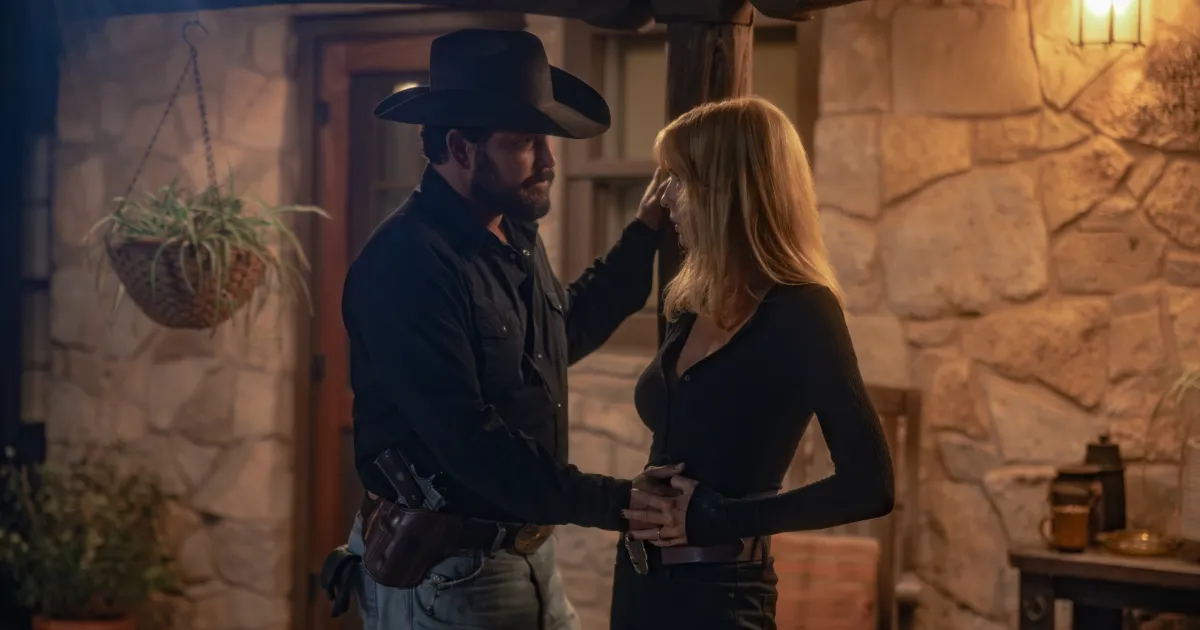
The television landscape has been irrevocably shaped by Taylor Sheridan’s gripping neo-Western saga, a universe that began with the monumental success of Yellowstone in 2018. For years, audiences were captivated by the turbulent lives of the Dutton family, particularly the fiercely devoted and complicated relationship between Kelly Reilly’s Beth Dutton and Cole Hauser’s Rip Wheeler. Their journey, ripe with peaks and pitfalls, defined the original series until its final bow in 2024. But the conclusion of Yellowstone was not an ending; it was a pivot, a moment to expand the Sheridan brand. This expansion materialized in the form of Dutton Ranch, a premise centered on the spin-off’s popular characters, which premiered on Paramount+ in 2026 and almost immediately achieved the same level of audience fascination as its flagship predecessor. The show’s swift success, however, has been anything but uncomplicated, occurring against a backdrop of significant off-screen drama, including a mid-stream showrunner change, whispers of cast friction, and the formidable challenge of continuing a beloved narrative without the guiding hand of its creator at the daily helm.
The show’s arrival was marked by a mix of anticipation and the inevitable comparisons to the mothership show, but its performance was a clear win for the network. Yet, even as the season was being filmed and promoted, the turbulent undercurrent was becoming public knowledge. Not long before the premiere, in the months leading up to the show’s May 2026 debut, major shifts were announced. Most notably, the show’s initial showrunner, Chad Feehan, who had previously worked with Sheridan on Lawmen: Bass Reeves, exited the series after completing his work on the first season. The departure was not framed as a simple creative divergence business. Instead, reports surfaced, notably from Puck News, citing tension and friction between Feehan, series stars Reilly and Hauser, and other key figures within the production. While Sheridan and his producing partner, David Glasser, were reportedly part of the equation, the whispers pointed to a deeper unhappiness among the cast with how the production was being managed under Feehan, irrespective of the quality of the scripts themselves. The sudden nature of the change, occurring so late in the game and right before the show’s launch, was indicative of a battle to protect the spirit of the narrative and the comfort of its stars. It was orchestrated a delicate behind-the-scenes maneuver, a producer-level reshape to ensure the single season’s success would be carried into a more structurally sound sophomore year. Into this mix stepped Benjamin Cavell, tasked with steadying the ship for the upcoming season.
Amidst the swirling reports of animosity and management shakeups, both Reilly and Hauser handled the transition with a public equanimity that spoke to their professionalism. While neither ever publicly confirmed the details of the friction, their comments became sound bites that framed themselves as cooperative team players enduring a necessary evolution. Hauser, speaking to The Hollywood Reporter in June 2026, attributed the shuffle to the nature of the business itself. He acknowledged that showrunners routinely change and that the industry is fundamentally about adaptation. In his statement “Showrunners change all the time. This business is about adapting,” he reflected his own decade-long career and the experience of navigating an industry where change is an inevitable part of the ecosystem. Reilly’s comments took on a similar tone of acceptance, but also heart. “It was a really difficult but really satisfying show to make, and so was Yellowstone. So is anything worth a great deal of effort,” she said. “We’re all creative minds and work together and I’m so proud of that.” Their narratives consistently pushed the focus back onto the collective work, not the individual drama, painting a portrait of a creative team resilient and able to pivot in moments of upheaval, a quality that seems both on-screen and off-screen. In July 2026, the duo also addressed the ambitions they held for the series moving forward, outlining a philosophy of taking it to near-one season at a time, but also whisper selections of a defined path for season 2. “I think we have some ideas,” Reilly noted, giving a new frisson of hope that they know where the story begins after the cliffhanger experience of the first season, with the underlying current of wanting to succeed without the literal word of their show’s original author.
But the showing of the creative discord became most apparent when the focus turned to the cast itself, specifically the legendary addition of Ed Harris. Harris, who signed on to star in the series, was brought with a two-year deal and an option for a third. Deadline reported his return for the second season is expected. However, his tenure in the inaugural ten episodes was a hot-button issue. Rather than having a central storyline typically reserved for a marquee name, Harris’ character, Everett McKinney, was barely glimpsed, appearing only near the edges of the narrative. The least speckeled, the Higgins actor chose startling candidness when they discussed their experience with the show, even stating in an interview with Variety that he was ready to say, “Get me the f**k out of here” midway through production. His feelings of being “underused” and “inconsequential” were clear, highlighting a deep dissatisfaction with how his character and his professional time were utilized for the season. He claimed he felt “a bit misled,” suggesting that the promise of the role did not align with what transpiring in practice on set. He did however confess to a bottom-line assessment of the results. He watched the series and thought it was “fine” and that his performance was “relatively important to the story.” But in a revealing quote, he conceded, “But the doing of it did not feel that way.” This disconnect between watching the finished product and living through the experience of ensuring it captures a significant behind-the-scenes physically and emotionally challenging place for the star. He told the crew he wanted to be more active, thus making it clear they needed to feature him more heavily in the next story. The approach is a narrative that could save a seriously unstable show, mixed with the scene of a potential new unsatisfied cast member.
In the broader tapestry of the show, “Dutton Ranch” was notable for its willingness to make consequential and unexpected choices regarding its characters. Showrunners and creators are not afraid of blending out major players to build tension and stakes, a storytelling practice honed by the extreme plot twists of Yellowstone. The case of such finality is Jai Courtney, whose character was killed off in the first season, making his return in season 2 extremely doubtful. This move, (a hallmark of Sheridan’s style) proves that the series maintains its brutal edge and willingness to lop off seemingly central figures for an emotional impact. Also meeting an onscreen end were Hart Denton’s Chet in Ray McKinnon’s Dwight, who met their ends as the season unfolded. These deaths served to highlight the high-stakes nature of this new plot. Also, it supports the fact that these bosses maintain huge power over all characters, regardless of their level top-billing. These narrative surprises may have intensified the fan engagement and also contributed to a deeper sense of more franchise that can make sudden, irreversible character changes, keeping audiences in the dark.
However, the most profound and subtle shape behind the premiere of Dutton Ranch was the quiet shift in Taylor Sheridan’s involvement. The architect of this universe was still billed as an executive producer on the project, but he was not assembling the daily craft of the show. That was a a significant leap for Reilly, whose character of Beth is the exact synthesis of woman, with a voice so sharp that was historically written by Sheridan’s unique precision. In a revealing reflective moment, Reilly confessed to incredible uncertainty about stepping into Beth without Sheridan’s words to guide her. She told The Hollywood Reporter, “I was very uncertain of what this would be without his words. I didn’t know if it was gonna work. I didn’t know if she was going to work. It was like a part of the character had to die to have me begin her again.” This sentiment is a vivid existential, signifying the creation of one of the most complex characters we’ve seen on television, but also undertaking the process of finding her voice again when her creator was no longer the main orchestrator. She somewhat bluntly stated that, “Everything ends, and his time with these characters as a creative leader, it ended. So there was a moment where we were trying to figure out, ‘How can we do this without him?'” The arduous journey of season one took on the tone of a test. Reilly Frame there from a more pragmatic view—that by succeeding in the network’s eyes, they have earned the right to continue that character’s life. And that impresses upon Sheridan. He still wants to engage with the storybuilding, their concept for season two. She said, “He’s really proud of us for doing it… We talk to him now about what the next season could be, and he wants to be involved.” These words project a sense of validation. They earned the right for Sheridan’s story to live on. Ultimately “Dutton Ranch” is authentic cult of its broadcasting universe, the cast reembodies these characters in a way that proves the Dutton legacy, with all its imperfection, has a compelling future—even as its past, present, and future navigate tremendous internal and external fires.