




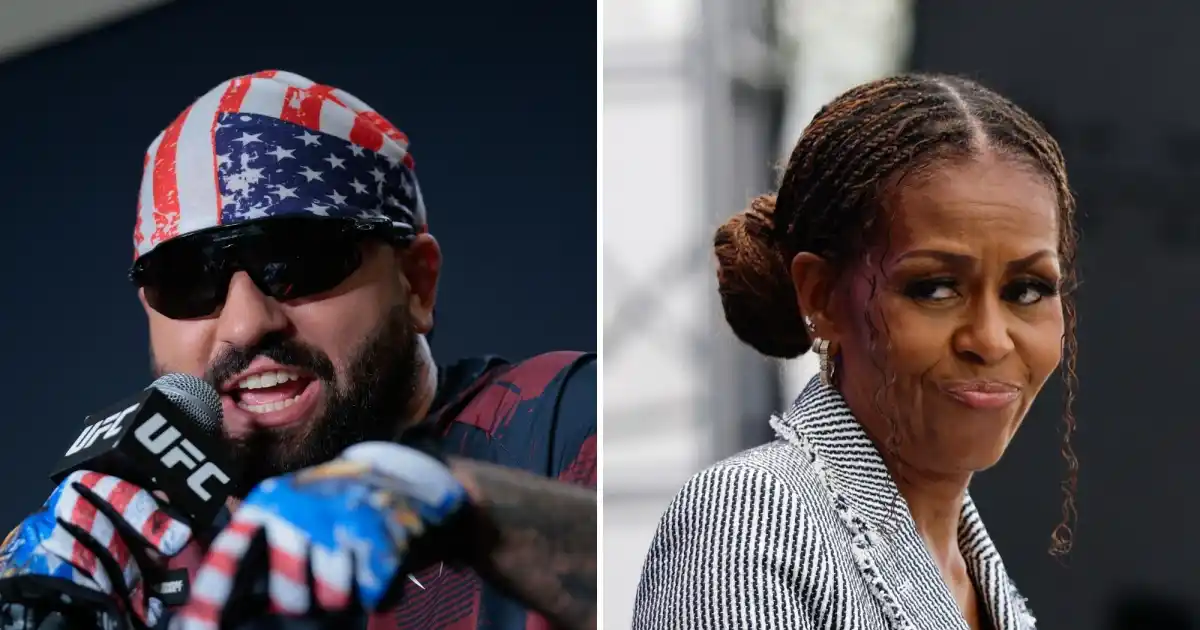
The physical and psychological torment of elite mixed martial arts is almost unimaginable to the average observer. For months leading up to a major event like UFC Freedom 250, an athlete like 28-year-old Josh Hokit subjects their body to extreme calorie deficits, grueling twice-a-day sparring sessions, and absolute social isolation in preparation for a volatile, violent confrontation inside a locked cage. When Hokit secured his high-profile victory over the formidable veteran heavyweight Derrick Lewis, the chemical cocktail flooding his brain—adrenaline, cortisol, dopamine, and the sheer, primitive relief of survival—was at an absolute peak. It is in this precise state of hyper-arousal that victorious fighters are handed a microphone by veteran commentator Joe Rogan, expected to deliver a coherent, inspiring address to millions of viewers watching worldwide. Instead of sticking to the traditional script of thanking coaches, praising his opponent, and calling for a title shot, Hokit seized the moment to inject a highly controversial, politically charged statement directly into the live broadcast, loudly shouting to the arena and the cameras, “Michelle Obama is a man. Am I right, America?” This sudden, jarring shift from physical combat to cultural provocation highlights a profound shift in the psychology of modern sports, where high-profile athletes are no longer just athletic competitors, but performance artists and cultural agitators who recognize that in our current media ecosystem, outrage is a highly valuable currency. The immediate aftermath of Hokit’s comment transformed what should have been a celebration of athletic discipline into a polarizing public referendum, demonstrating how easily the raw energy of the sports arena can be co-opted to fuel societal division.
In the days that followed, as the digital world exploded with intense criticism and condemnation, Hokit was invited onto the eponymous show of renowned sports journalist Ariel Helwani to explain his controversial remarks. Rather than seeking a quick public relations escape hatch by claiming he was simply caught up in the overwhelming emotion of a post-fight adrenaline rush, the 28-year-old fighter chose to double down on his position, presenting a deeply unorthodox and convoluted defense. He argued that his comments, far from being a malicious attack, were actually a sincere, albeit poorly articulated, attempt at a compliment. In Hokit’s personal vocabulary, calling the former First Lady a “man” was meant to symbolize absolute resilience, an relentless work ethic, and the rare ability to navigate immense adversity with unyielding strength. He explained to the 43-year-old Helwani that he views “working like a man” as the ultimate standard of perseverance when times get tough, and he believed he was honoring her by attributing these tireless qualities to her character. This explanation highlights a fascinating, albeit troubling, cultural disconnect between different segments of society. Inside the hyper-masculine, insular bubble of combat sports, language is often stripped of its intellectual nuance, and gendered terms are thrown around with a different set of definitions. However, when these internal metaphors are broadcast to a mainstream audience, they carry a heavy burden of historic prejudices, gender-based insults, and targeted conspiracy theories that have historically been weaponized against prominent women of color, transforming an alleged compliment into a deeply offensive public slight.
When Helwani pressed further, questioning why a professional fighter would choose to utilize their precious, hard-earned post-fight spotlight to make such a bizarre personal comment about a political figure, Hokit reframed the entire incident as an intentional celebration of American liberty and constitutional rights. He explained that his outburst was designed to demonstrate to a global audience the unique and rare greatness of the United States, particularly regarding the concept of freedom of speech. Hokit pointed out that in many other regions of the world, criticizing or mocking members of a political dynasty or ruling class carries deadly consequences, suggesting that citizens under authoritarian regimes would face imprisonment or execution for saying something similar. By pointing out that he was still alive, healthy, and freely speaking with an esteemed journalist, Hokit sought to validate his provocative comment as a living testament to Western freedom, even jokingly assuring the audience that he was not suicidal and remained in good spirits despite feeling a little under the weather. This defense reveals a complex psychological strategy often employed by modern public figures: leveraging the grand, sacred principles of constitutional liberty to shield oneself from the social and professional consequences of vulgar speech. By elevating a playground-style taunt into a high-stakes test of the First Amendment, Hokit attempted to cast himself as a patriotic truth-teller rather than a professional athlete indulging in political shock value for personal branding.
The ripples of Hokit’s commentary quickly spread far beyond the confines of the mixed martial arts community, eventually reaching the highest echelons of political communication and eliciting a highly strategic response. Steven Cheung, acting as a prominent spokesman, offered a statement to CNN’s anchor Jake Tapper that was remarkable for what it chose to ignore. Rather than addressing the offensive and highly controversial nature of Hokit’s remarks about Michelle Obama, Cheung focused entirely on the young fighter’s physical capabilities and tactical victory within the Octagon. He lauded the performance as a “great win,” praising Hokit’s toughness, his relentless pressure style, and his ability to dominate his opponent both on his feet and on the canvas during his match. This strategic avoidance of the cultural controversy illustrates the calculated nature of modern political messaging, especially when dealing with a demographic as passionate and influential as the UFC fanbase. Political communication in the modern era or during key election seasons often operates on an unwritten agreement where raw, anti-establishment figures are embraced for their cultural currency, even when their language crosses traditional boundaries of decorum. By validating Hokit’s athletic prowess while remaining completely silent on his controversial social commentary, the political apparatus managed to appeal to the fighter’s loyal supporters without explicitly endorsing a highly offensive conspiracy theory, keeping the focus squarely on the raw power and determination that defines the sport.
This political evasion stood in sharp, clarifying contrast to the public reaction of UFC CEO Dana White, who chose to draw a very clear personal and professional line regarding his fighter’s behavior. The 56-year-old executive, renowned globally for his fierce, uncompromising defense of his athletes’ absolute right to speak their minds without corporate censorship, did not mince words when expressing his disapproval. In a direct text message to Time magazine, White clarified his stance, stating that while everyone is well aware of his absolute support for free speech, he harbors a deep distaste for the spread of nasty, false, and derogatory statements about the families of public figures. White’s candid reaction is particularly revealing, as it exposes the complex internal moral boundaries of an organization that prides itself on being unfiltered and rebellious. It shows that even within a promotion built on intense trash-talk, blood, and hyper-masculinity, there exists a human threshold of decency where baseless personal attacks on family members cross from sports entertainment into unacceptable disrespect. By publicly distancing himself from Hokit’s remarks, White tried to preserve the integrity of the sport and protect the human dignity of those who exist outside the competitive arena, proving that even a free-speech absolutist recognizes that liberty without responsibility can quickly degrade into meaningless cruelty.
In the end, the target of Hokit’s highly unusual commentary, Michelle Obama, maintained her characteristic, poised silence, choosing not to dignify the fighter’s provocation with a public response or acknowledgement. Her refusal to engage in the media circus stands as a quiet counterweight to the loud, performative conflict that defines our current era of public discourse. Meanwhile, Hokit remains completely unrepentant, declaring that he stands “10 toes down” on his statements and will never backtrack from his words—a defiant attitude that has become a highly rewarded currency in a digitized world where apologizing is often framed as a fatal sign of weakness. This entire saga serves as a compelling and cautionary mirror to our broader contemporary culture, where the traditional boundaries separating athletic achievement, political warfare, personal honor, and digital outrage have completely dissolved. It forces us as a society to grapple with the deeper implications of our modern communication tools: of whether our hard-won freedom of speech is best utilized to elevate public discourse or to drag it down into personal degradation for temporary internet fame. Ultimately, the incident leaves us to ponder the human cost of these constant rhetorical battles, reminding us that behind the headlines and the viral videos are real people, and that the words we choose to throw into the world carry a weight that cannot simply be shrugged off as competitive theater.