

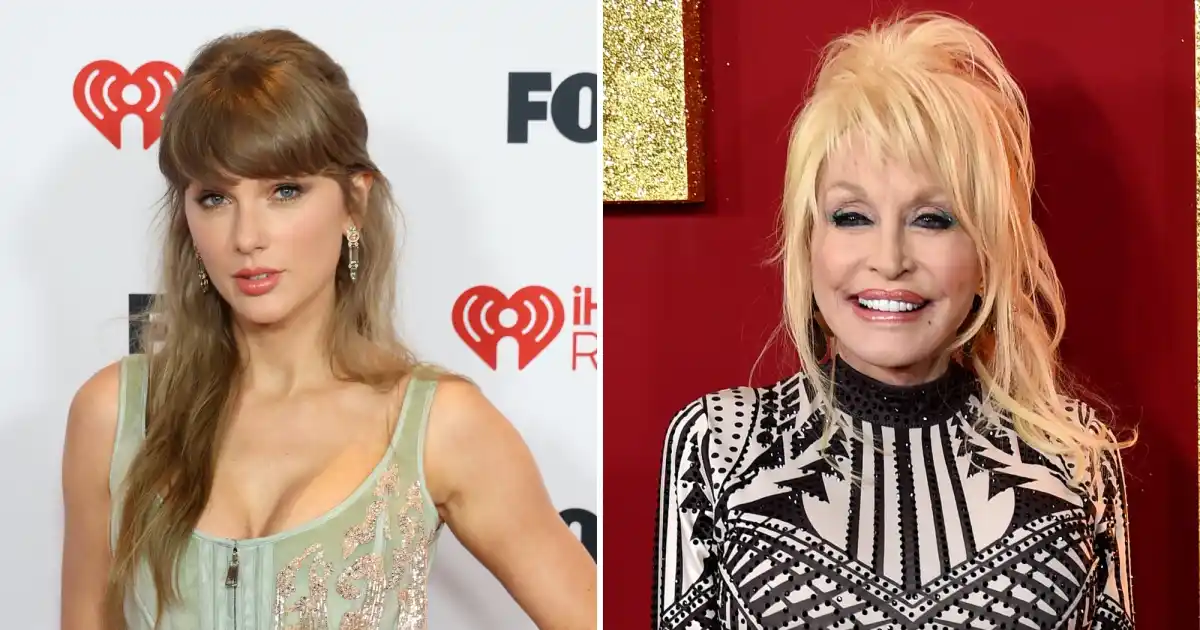
The world received shattering news on a Tuesday that felt impossibly heavy: Dolly Parton, the iconic, rhinestone-studded queen of country music, had passed away at the age of 80. Surrounded by loved ones at the Vanderbilt-Ingram Cancer Center in Nashville, Parton surrendered to a brief but brutal battle with cancer, leaving behind a legacy so vast and luminous that the very concept of a world without her seemed to lose its color and sound. In the immediate wake of this devastating announcement, a chorus of grief rose from every corner of the globe—from the smallest rural towns to the grandest stages of Hollywood. Among those voices, none resonated with more personal poignancy and profound respect than that of Taylor Swift, the 36-year-old pop sensation who had long cited Parton as a foundational inspiration. Swift, who had just recently married Travis Kelce, released a heartfelt, achingly beautiful tribute that cut through the static of generic celebrity condolences, offering instead a deeply intimate portrait of a woman who was equal parts dream and reality, grace and grit.
In her statement, Swift articulated the collective sense of disbelief that gripped her and millions of others, admitting that the reality of Parton’s absence feels fundamentally impossible. She noted that the only solace lies in the eternally generous way Parton spent her time on Earth, and the countless lives she changed for the better. Swift masterfully deconstructed the very essence of Parton’s character, describing her as a gift that kept on giving. Parton was a towering figure who encouraged individuality and self-acceptance while simultaneously offering gentle, honest, and often hilarious lessons about the world. Swift marveled at Parton’s unique ability to maintain an air of ultimate mystery and fantasy in certain corners of her public life, while providing full transparency in the ways that mattered most. This balance—the glittering enigma of a woman who could joke about her own plastic surgery while fiercely championing her artistic self-worth—was a tightrope walk that Parton executed with flawless precision. She possessed what Swift described as the softest heart for the struggles of others, coupled with a backbone of steel to defend her own legitimacy as a songwriter and artist. In a world that often demanded she apologize for her ambition, Parton never did, and for that, Swift expressed eternal gratitude.
Swift’s tribute did not stop at honoring Parton’s character; it delved deep into the tangible, lasting impact of her work. She thanked Dolly for the melodies and lyrics that thawed the coldest hearts—songs like “Jolene,” “I Will Always Love You,” and “Coat of Many Colors” that have become the emotional currency of millions, passed down through generations as heirlooms of the heart. Swift also highlighted Parton’s extraordinary philanthropic vision, specifically her Imagination Library, which has placed hundreds of millions of books into the hands of children across the world, igniting a love for stories that will echo for decades to come. She thanked her for the tightropes Parton walked so that young girls like Swift could grow up dreaming of joining the circus too—a metaphor that perfectly captures the barrier-breaking nature of Parton’s career. By refusing to be boxed in by the expectations of Nashville or the music industry at large, Parton paved a glittering path for the artists who followed, including Swift. Her final words to Dolly encapsulated a vow of continuity: “Dolly, I’ll think of you each step of the way.” It was a promise to carry that torch forward, to remain true to oneself while remaining relentlessly kind to others, and to continue building the dream that Parton helped make possible.
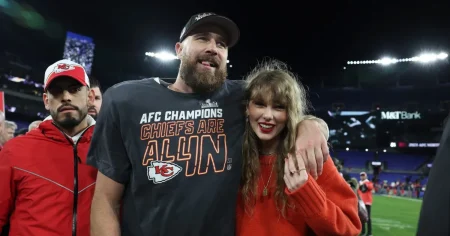
The emotional weight of Swift’s tribute was compounded by the heartbreaking timeline of their final interactions. Just a month prior to Parton’s death, the world had been treated to a heartwarming revelation: Swift and her new husband, Travis Kelce, had donated a staggering $2 million to Parton’s beloved Imagination Library, timed to coincide with their July 3 wedding. It was a staggering act of generosity from one superstar to another, a passing of the torch and a recognition of the bedrock upon which Swift’s own career was built. Parton, ever gracious and delightfully irreverent, had responded with a video message that quickly went viral. Visibly blown away and overjoyed with gratitude, she thanked the newlyweds for their kindness. But in true Dolly fashion, she turned the moment into a playful, unforgettable joke. Leaning into the camera with her characteristic twinkle, she told Swift and Kelce, “Now, it’s evident that you have made giving back a key part of your lives, so hey, when you have your firstborn, can I have it? Because that is gonna be one special baby!” This brief, humorous exchange now stands as a poignant bookend to their relationship—a snapshot of Parton’s spirit that refused to be dimmed, even as she privately fought a battle that would ultimately claim her life just weeks later. It humanizes the icon, showing that even in her final stretch, she was thinking of connection, of laughter, and of the beautiful future of a new family.
The official statement confirming Parton’s death, released by her representative, painted a picture of a life lived in total service to others. “Our beloved Dolly Parton spent her life and career bringing joy, laughter, hope and integrity into everything she touched,” the spokesperson said. “Her unmatched generosity reached the lives of countless people whom she would never meet, yet she was always there to offer a helping hand.” The statement emphasized the guiding force of her unconditional love, citing her invaluable Imagination Library and her funding of research that helped create a lifesaving vaccine used around the world—a reference to her $1 million donation to Vanderbilt University Medical Center during the COVID-19 pandemic, which became a crucial component of the Moderna vaccine. This clinical, factual summary of her impact serves to underscore the magnitude of what was lost. Parton was not just a performer who sang about heartbreak and home; she was a tireless humanitarian who understood that her platform was a tool for collective upliftment. She was a woman who touched millions of lives without ever meeting them, her influence reaching into operating rooms, elementary school classrooms, and living rooms simultaneously. The contrast between her public image—the flamboyant, winking performer in towering heels and wigs—and her private reality as a savvy businesswoman and generous philanthropist was a testament to the multi-faceted nature of her genius. She understood that you could be both a grandiose fantasy and an authentic, approachable neighbor, and she bridged that gap with an effortlessness that belied the constant work it required.
In the end, Taylor Swift’s tribute serves as a masterclass in grief and gratitude. She didn’t just mourn a hero; she celebrated a legacy that will outlive us all. As the news settles and the world adjusts to a quieter, less sparkly landscape, we are left with the lasting echoes of Parton’s wisdom, humor, and immense generosity. Her songs will continue to play at weddings, funerals, and karaoke bars. Her children’s books will continue to be read by new generations. Her example will continue to inspire artists to walk their own tightropes. Swift’s promise to “think of you each step of the way” is a vow that will be honored not just by her, but by every young girl who picks up a guitar, every writer who captures a fleeting emotion, and every dreamer who dares to be themselves. Dolly Parton’s death marks the end of an era, but her life defined an eternity of influence. She was, as Swift so rightly declared, true grace and true grit in one dazzling person—a woman who left an irreversible mark on the human heart, ensuring that even in her physical absence, she will remain an ever-present light, guiding us through the darkness with a song on her lips and a sparkle in her eye. The world is infinitely poorer for her loss, yet infinitely richer for the treasure she left behind.