


It is a classic Hollywood tale of David versus Goliath, a story of a struggling creative versus an entertainment empire. At the heart of this modern legal drama is Lauren J. Salkin, an entertainment journalist and television writer who claims that her original vision for a series was not just similar to the mega-hit Yellowstone but was, in fact, the very blueprint from which it was built. Her lawsuit, filed in a California federal court, alleges that Taylor Sheridan, the creator of the Yellowstone universe, along with his management company Elevate Entertainment and media giants Paramount and NBCUniversal, stole her idea. Salkin’s claim is not one of mere happenstance or vague thematic overlap; it is a detailed accusation that her specific plot mechanisms, character functions, and the entire conceptual framework of her series, titled Sovereign Nation, were lifted and repurposed without her consent or compensation, transforming her decade of hard work into a billion-dollar franchise from which she has seen nothing.
The genesis of Salkin’s idea was a deeply personal and professionally rigorous endeavor. For over ten years, she poured her energy and expertise into crafting a television series she called Sovereign Nation. Her concept was a high-stakes, dramatic saga centered on tribal governance, the immense economic power derived from casino operations, and a modern-day war over land and development. This was not a fleeting thought or a one-page treatment; Salkin developed a complete and polished package. She wrote a full pilot script, assembled a comprehensive show bible detailing the series’ mythology, future storylines, and character arcs, and created a professional pitch deck to present to industry executives. It was the culmination of years of research and creative labor, a project she felt was ready for the big leagues of prestige television. In late 2016 and early 2017, she decided to take her meticulously prepared materials to Taylor Sheridan’s representatives at Elevate Entertainment, hoping to find a powerful partner to bring her vision to life.
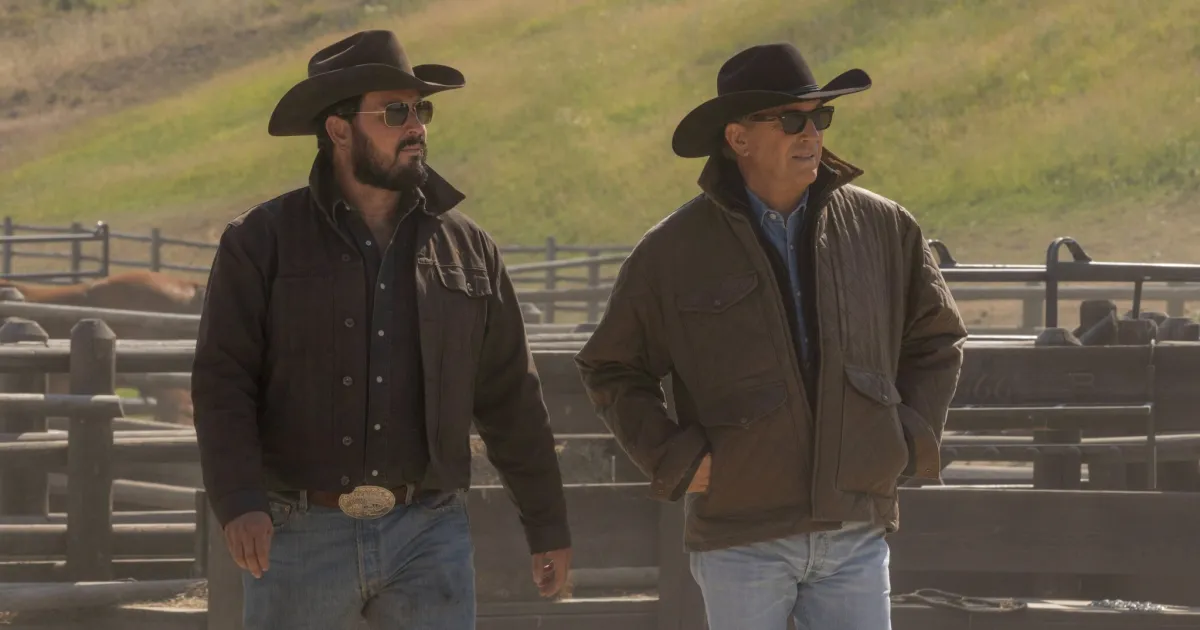
The response from Sheridan’s camp was a polite but definitive rejection. An individual from Elevate reportedly sent Salkin a message in early 2017, stating, “Taylor thanks you very much for your interest. Unfortunately, he’s unavailable for TV Projects.” From Salkin’s perspective, this was the end of the road for that particular avenue. She had taken her shot, pitched her life’s work to one of Hollywood’s rising stars, and been told he wasn’t interested in television at that time. However, the timeline of events that followed suggests a disturbing narrative. Just months after this alleged rejection, Paramount greenlit Sheridan’s Yellowstone, a show that would go on to become one of the most successful series in television history. The new show, which premiered in 2018, didn’t focus on the complexities of tribal governance or casino economies, but it did center on an epic, multi-generational conflict over land, power, and legacy, anchored by the fictional Dutton family and their massive Montana ranch. Salkin contends that this was no coincidence.
The lawsuit goes beyond a simple complaint and offers a compelling piece of corroborating evidence. Salkin alleges that months before her materials were sent to Sheridan, she had submitted Sovereign Nation to HBO for consideration. At the time, Taylor Sheridan had himself been developing a project at HBO that bit was initially pitched as “The Godfather in Montana.” According to the complaint, a senior creative executive at the network, who had reviewed Salkin’s materials for Sovereign Nation, made a critical connection. When Sheridan’s project was brought into the network, this same executive noticed a startlingly similar concept and believed Sheridan’s project echoed the core elements of Sovereign Nation. The lawsuit claims that this HBO executive “terminated Sheridan’s project at HBO for that reason” immediately. This suggests that before Yellowstone ever found a home at Paramount, its own central idea was recognized as being too close to Salkin’s work, at least in the eyes of one HBO insider. This accusation transforms the case from a simple he-said-she-said situation into one with a potential internal eyewitness to the alleged theft.
The core of Salkin’s complaint is the striking similarity in the story’s scaffolding. She alleges that the key plot devices, story mechanisms, and character functions in Yellowstone were the same as those she had painstakingly developed for Sovereign Nation. Both series revolve around a powerful, land-owning family embroiled in a high-stakes conflict with a Native American tribe. In both, the central struggle is not just about land, but about the future of a community and the lengths to which a family will go to preserve its power and heritage. Furthermore, Salkin’s lawsuit makes a specific and very pointed claim: that Yellowstone featured several cast members who were on her own personal list of suggested actors for Sovereign Nation. This detail, if proven, moves the similarities beyond thematic coincidences and suggests a direct link—that whoever was responsible for casting Yellowstone had access to Salkin’s specific creative materials and used them. It is one thing to have a similar idea; it is another to have the same ideas for the same roles in a story with the same central conflicts.
As Yellowstone exploded in popularity, spawning multiple spinoffs and prequels like 1883 and 1923, and generating billions of dollars in revenue for Paramount and Sheridan, Salkin watched what she considered her stolen story become a cultural phenomenon. The success is a double-edged sword; the more famous the show becomes, the more public and painful the alleged theft is for Salkin. After years of watching her work being adapted, altered, and profited from, she decided to act. Her lawsuit seeks damages and profits tied to the alleged copyright infringement. While she did not specify a total monetary amount in the initial complaint, the request is to be compensated for the billions of dollars the franchise has generated. She is also seeking an injunction to prevent the defendants from continuing to use her copyrighted material in any future productions, which could potentially halt the sprawling Yellowstone universe. Her attorney, Paul B. Lackey, framed the case as a fight for justice against an industry giant, stating, “This is a classic David-versus-Goliath situation. She spent years putting together the specific and multi-layered framework for a story that has become the biggest streaming success of all time.”
The lawsuit has now been filed, placing this conflict in the hands of the legal system. The accusations against Taylor Sheridan, a celebrated figure in modern Western storytelling, are serious. His version of the Yellowstone origin story is well-documented, having pitched it as “The Godfather in Montana” and navigating a difficult development process at HBO before finding a home at Paramount. The case will hinge on the ability of Salkin’s legal team to prove that Sheridan and his cohorts had access to her material and that the similarities between Sovereign Nation and Yellowstone are so substantial that the latter is a derivative work. For Salkin, this legal battle is about more than just money; it is an attempt to reclaim credit for her overlooked work and to correct the record in an industry where creative ideas are the most valuable currency. For now, the entertainment world watches and waits to see if this “classic David-versus-Goliath” story will end with the smaller player finally getting their justice, or if the powerful forces of Hollywood will once again prevail.