


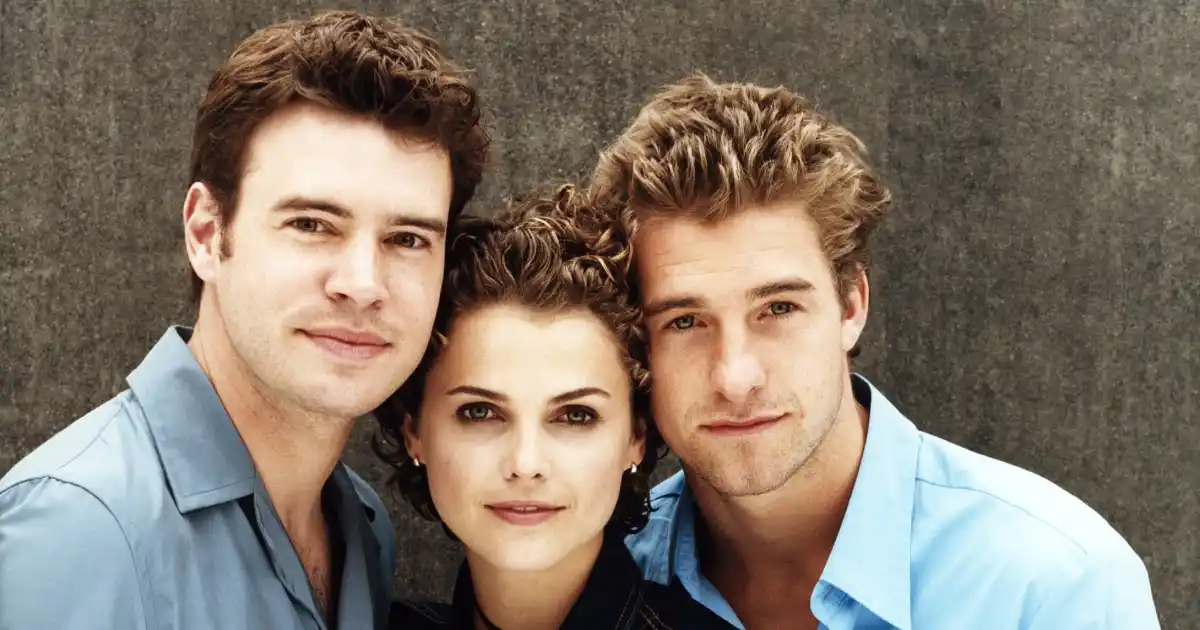
The Curse of Scott Foley: A Career Defined by Tragic Endings and Canceled Dreams
There’s something almost poetic about the career trajectory of Scott Foley, an actor whose television roles seem to follow a tragically consistent pattern. While some actors struggle to find work or fade into obscurity, Foley’s problem appears to be quite the opposite—he keeps getting hired, keeps delivering compelling performances, and then watches as his characters meet untimely deaths or his shows get unceremoniously canceled. It’s a peculiar kind of professional misfortune that has become something of a running joke among his fans. From playing doomed patients on medical dramas to starring in promising series that barely survive one season, Foley has experienced more television heartbreak than most actors will face in an entire career. And yet, there’s something remarkably resilient about the way he handles these setbacks, approaching each cancellation and character death with grace, gratitude, and an admirable ability to find silver linings in even the most disappointing circumstances.
The latest chapter in Foley’s ongoing saga of television misfortune came in the most dramatic fashion possible when he joined the hit series Will Trent in 2025. His character, Seth, initially seemed like he might finally break the pattern—a stable presence in the chaotic world of the show, a supportive husband to Angie (played by Erika Christensen), and a man on the verge of becoming a father. The setup felt different, more permanent somehow, as if the universe had finally decided to give Foley a character who could stick around and develop over multiple seasons. But that hope came crashing down in a May 2026 episode when Seth collapsed in a hospital corridor and died, mere moments after becoming a father. The cruel timing of it all—dying just as his wife gave birth to their child—felt almost intentionally designed to maximize the emotional devastation. Yet Foley’s response to this creative decision was characteristically gracious, taking to Instagram with a photo of his name on the show’s title card and expressing nothing but gratitude for the experience. “What a wonderful gift to receive after a wonderful experience on #willtrent,” he wrote, adding that seeing his name in the credits would make his wife and daughter smile every time they passed by the television.
But the Will Trent heartbreak was merely the opening act of what would become a devastating year for Foley. Just months later, in July 2026, he found himself delivering the kind of news that has become all too familiar in his career—announcing that his latest project had been canceled. This time, it was the faith-focused series It’s Not Like That, a show that had seemed like a guaranteed success story on paper. The streaming series had spent an impressive six weeks in Prime Video’s Top 10, climbing as high as number three or four on the charts. It boasted a perfect 100 percent score on Rotten Tomatoes, a rare achievement that should have guaranteed its survival in almost any entertainment landscape. And yet, despite all of these promising indicators, Amazon Prime made the decision not to renew it for a second season. Foley addressed the news with a video message that perfectly captured his characteristic blend of professionalism and vulnerability. “After six or so weeks in Prime Video’s Top 10, I think getting as high as, like, three or four, really great reviews—I think we have like 100 percent on Rotten Tomatoes—our little show called It’s Not Like That has been canceled at Amazon Prime,” he said, the disappointment evident in his voice even as he tried to maintain a positive demeanor. “But I’m so grateful for the chance. I get to make—I got to make a show I’m so proud of with people I grew to like a lot, and now we don’t get to make it anymore, and you don’t get to watch it.”
What makes Foley’s situation so uniquely frustrating is that his shows don’t fail because of poor quality or lack of viewer interest—they fail despite being critically acclaimed and commercially successful by almost every measurable standard. Consider his ABC action series Whiskey Cavalier, which paired him with Lauren Cohan, Ana Ortiz, Tyler James Williams, Vir Das, and Josh Hopkins. The show had all the ingredients for a long-running hit: an appealing cast, a fun premise, solid production values, and the backing of a major network. Yet it lasted barely one season before ABC pulled the plug, leaving viewers who had invested in the characters and storylines feeling cheated and confused about what had gone wrong. Similarly, his 2021 Fox comedy-drama The Big Leap seemed destined for success, placing Foley at the center of a show about second chances and pursuing dreams. It lasted just one season before being canceled, another promising project disappearing before it could truly find its audience. The HBO Max series The Girls on the Bus saw Foley in a recurring role, and while his part wasn’t the central focus, he still managed to be associated with yet another show that failed to survive beyond its first season. At some point, the pattern becomes too consistent to be dismissed as mere coincidence—it begins to feel like some kind of cosmic joke being played at Foley’s expense.
But perhaps no role in Foley’s career illustrates the cruel irony of his television persona better than his stint on Grey’s Anatomy, where he played Henry, a patient with a rare genetic condition. Anyone familiar with the long-running medical drama knows that guest stars on Grey’s Anatomy are rarely safe, and patients with mysterious conditions are even less likely to survive. Foley’s Henry suffered the inevitable fate that fans had been dreading from the moment he appeared on screen. The character’s death was handled with all the emotional weight that Shonda Rhimes, the show’s creator, has perfected over decades of television storytelling, making it a heartbreaking storyline that left viewers devastated. Similarly, his arc on Scandal, while not ending in death, provided its own form of tragedy. His character, Jake, survived the series, but his ending was arguably worse than death in some ways—he never got the girl, and he ended up imprisoned for life, taking the fall for crimes he didn’t commit. It’s the kind of dark, despairing ending that television critics love to analyze but that audiences find deeply unsatisfying, especially when they’ve grown attached to a character over multiple seasons.
The human element of Foley’s experiences deserves more attention than the list of canceled shows and tragic character arcs. Behind every headline about another cancellation or shocking death is a working actor who has consistently demonstrated an extraordinary level of professionalism and grace in the face of professional disappointment. When Will Trent killed off his character, Foley could have expressed frustration or anger about the creative decision, especially since it came at such a pivotal moment in his character’s arc. Instead, he chose to focus on the positive aspects of the experience—the wonderful cast and crew, the writers and creators who made the experience special, and the small joy of seeing his name in the show’s opening credits. When It’s Not Like That received its cancellation notice despite impressive ratings and critical acclaim, he chose gratitude over bitterness, thanking everyone who took the time to watch the show and acknowledging that while the cancellation wouldn’t be reversed, the support from viewers was genuinely appreciated. This attitude is refreshingly rare in an industry where actors often respond to setbacks with public relations-managed statements or carefully crafted social media posts designed to generate sympathy. Foley communicates with an honesty and genuineness that makes him feel like more than just another television star—he feels like someone who genuinely appreciates the opportunities he’s been given, even when they don’t work out as he might have hoped.
Looking at Foley’s career more holistically, there’s a certain tragicomedy to the way his various roles and projects have played out over the years. His breakout role on Felicity, where he played the lovable but complicated Noel Crane, established him as a talented young actor capable of handling both drama and romance. His work on Scrubs, where he played Sean, demonstrated his comedic abilities and made him a beloved figure among fans of the show. These roles provided him with a foundation of goodwill among viewers that has lasted for decades. Yet time and again, his subsequent projects have seemed cursed, doomed to cancellation or character death no matter how promising they appeared in development. The irony hasn’t been lost on his fans, who have watched with a mixture of amusement and frustration as each new Foley project receives critical acclaim and viewer enthusiasm, only to meet an untimely end. It would be easy to understand if Foley had become bitter or disillusioned after so many disappointments, but he continues to approach each new project with enthusiasm and dedication, suggesting a resilience that goes beyond mere professional obligation. He seems to genuinely love the craft of acting, regardless of whether his shows succeed or fail, and that passion comes through in every performance.
As Foley looks toward the future, there’s reason to hope that his luck might finally be changing. In August 2026, it was announced that he would be reprising his role in the Scrubs revival series, a decision that feels like a kind of homecoming for the actor. The revival represents an opportunity to revisit a character that fans already love, working within a franchise that has already proven its staying power, and collaborating with colleagues who were part of his earlier success. There’s something fitting about Foley returning to Scrubs, the show that demonstrated his range as both a dramatic and comedic actor, especially after experiencing so many canceled projects in recent years. It’s a chance to reconnect with what initially made audiences fall in love with him as a performer, free from the pressure of launching a new series or establishing a new character. The entertainment industry is notoriously unpredictable, and there are no guarantees that this new chapter will provide the stability that has eluded Foley for so much of his career. But if his past behavior is any indication, he’ll approach this new opportunity with the same gratitude and professionalism that has defined his response to every setback and success throughout his career. Whether this marks the beginning of a new era of good fortune or merely another chapter in his ongoing saga of television misfortune remains to be seen, but one thing is certain: Scott Foley will handle whatever comes his way with grace, humor, and a genuine appreciation for the opportunity to keep doing what he loves.