




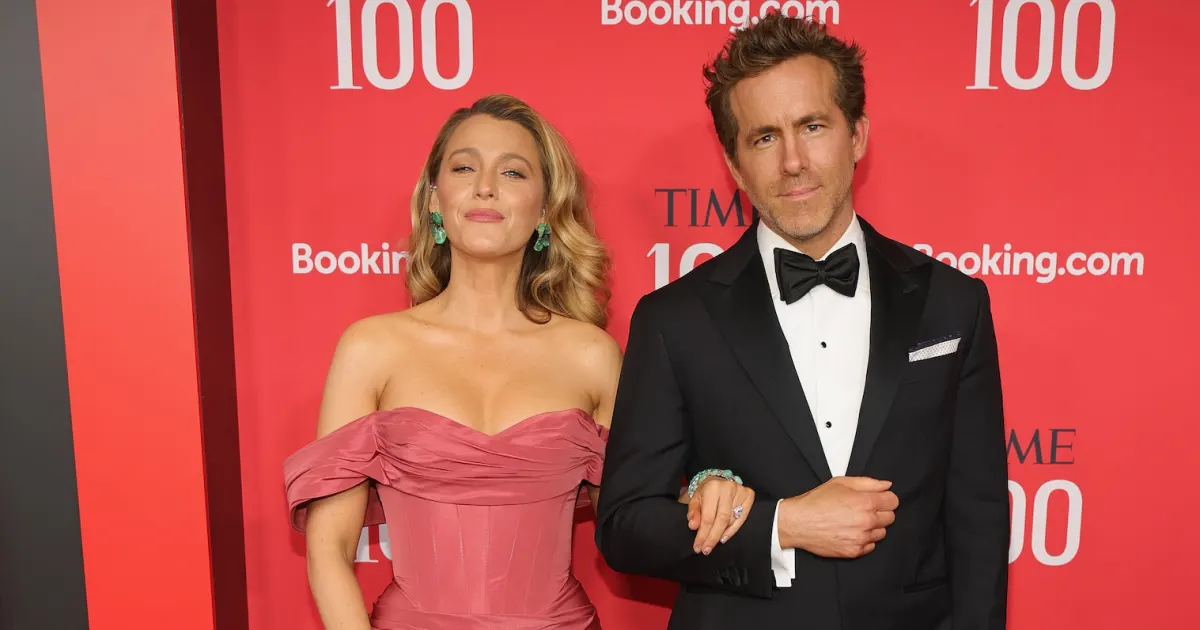
Ryan Reynolds stood by Blake Lively with the kind of unwavering gentleness that only a devoted partner can muster, his eyes reflecting not just love but a deep, protective pride that enveloped their entire family. It was a cool spring morning on the Sunday edition of Today, and as he chatted with Willie Geist, Reynolds, now 49, spoke of his wife with a warmth that made you feel like you were sitting in their living room, sipping coffee amid the chaos of celebrity life. “You really see kind of the illusion behind so much of this stuff, you know? Digital life versus real life,” he mused, his voice steady yet tinged with the weariness of someone who’s navigated fame’s underbelly. The world often sees the polished images on screens, but Reynolds hinted at the raw undercurrents—the mean tweets, the fueled rumors—that bubble beneath. Yet, amid Blake’s brewing legal battle against filmmaker Justin Baldoni, Reynolds emerged as her steadfast anchor, declaring with quiet conviction, “I’ve never in my life been more proud of my wife.” That pride wasn’t performative; it was born from years of watching Blake Lively maneuver Hollywood’s shark-infested waters with grace and resilience. As a 38-year-old actress who’d risen to fame through iconic roles in Gossip Girl and romantic blockbusters, she embodied the delicate balance of stardom and humanity. Reynolds, the quick-witted Deadpool star, had always admired her poise, but now, as she faced allegations and accusations head-on, that admiration swelled into something profound. He painted a picture of a couple deeply intertwined, two souls committed to each other since their 2012 wedding, a union that weathered the storms of public scrutiny while nourishing four precious children. In Reynolds’ words, it was a reminder that beyond the headlines, real life pulses with simple, sacred bonds—laughter over family dinners, chaotic mornings with kids, and those stolen moments of peace that fame often eclipses. Blake wasn’t just his wife; she was a force of integrity, a woman who carried herself through adversity with a dignity that inspired him to reflect on the ephemeral nature of it all.
The heart of the conflict lay in Blake’s courageous lawsuit against Baldoni, filed back in December 2024, where she accused the 42-year-old director of sexual harassment and orchestrating a smear campaign to tarnish her reputation. It wasn’t a frivolous claim; it stemmed from her experiences directing and producing the adaptation of Colleen Hoover’s novel It Ends With Us, a film that deals with themes of domestic abuse and survival. Baldoni, a fellow producer and actor in the project, vehemently denied the allegations, responding with his own defamation suit that sought to protect his name. Yet, in a twist that highlighted the intricacies of legal battles, Baldoni’s countersuit was dismissed last year, leaving the stage set for Blake’s grievances. By April, many of her claims—whispered about on social media and in hushed industry circles—were pruned away, including disputes over harassment and conspiracy theories that had swirled like a toxic fog. Ten specific complaints faded into the background, dismissed not out of irrelevance but perhaps due to procedural knots. Still, the core remained: a trial looming, slated for May, where Blake’s remaining assertions would demand the spotlight. This wasn’t just a celebrity feud; it felt like a personal reckoning, a fight for a safe workspace in an industry plagued by power imbalances. Imagine the toll—countless nights spent sifting through documents, confronting memories, all while juggling motherhood and a high-profile career. Blake, with her signature blonde waves and measured composure, wasn’t seeking revenge; she was pursuing justice, ensuring that her story, and those of others, could be heard without the shadow of retaliation that she alleged continued even now.
Reynolds, ever the eloquent storyteller, dove deeper into the emotional trenches, sharing insights that humanized the ordeal in ways the tabloids never could. “People have no idea what’s really going on, you know?” he told Geist, his tone carrying the weight of unspoken burdens, like a friend confiding over beers about life’s hidden hardships. He’d witnessed the media storm—articles twisting facts, fans picking sides, the relentless buzz on platforms that amplify outrage at the expense of nuance. But through it all, Reynolds spoke of Blake’s integrity as a beacon, a rare trait in a world where facades crumble. “I’ve just never in my life been more proud of someone with that level of integrity that brings that with them and carries that with them in everything that they do.” It was a love letter wrapped in admiration, not for her fame, but for her essence: the way she navigated ethical dilemmas with a moral compass unswayed by applause. Parenting four children together since 2012 had forged an unbreakable bond—Reynolds and Lively’s little ones, innocent souls amidst the drama, likely giggling through playground antics or snuggling up for bedtime stories. Reynolds reflected on this with heartfelt simplicity: “My wife and kids are everything. I mean, that’s it. When we finally close our eyes to this mortal dumb show, those are the ones that are going to matter, you know?” It evoked a sense of priorities, the joyous mess of family overshadowing the fleeting grip of public opinion. He wasn’t dismissing the pain of the lawsuit but elevating the enduring treasures of love and legacy.
Drawing from his own wells of sorrow, Reynolds wove in a poignant reflection on mortality, making the narrative even more deeply human. His father, James, had passed away in 2015 after a grueling fight with Parkinson’s disease, a loss that had reshaped Ryan’s view of time and presence. “I can’t think of anything more isolating or lonesome than no longer being a reliable narrator in your own life,” he shared, his voice catching slightly, as if reliving the void of watching a loved one fade—unable to share stories or memories freely. It was a cruelty that mirrored the felt isolation of navigating personal truths amid public judgment. Now, as he supported Blake through her trial, Reynolds found parallels, wishing his dad could witness this chapter: “[There are] many moments I have in my life now, where I wish my dad could see.” It added layers to his pride in Blake—a son honoring a father’s life by championing his wife’s, teaching his children the value of standing firm in righteousness. Parkinson’s had taught him fragility, how the body betrays, leaving behind echoes of what was. Perhaps that’s why the domestic abuse themes in It Ends With Us hit close to home for Blake; it wasn’t just a script but a mirror to real vulnerabilities. Reynolds’ snippets painted family not as perfect pictures, but as messy, loving oases where true support blossoms, urging us to cherish every fleeting moment before the curtain falls.
As the trial neared, confirmed details emerged that underscored the stakes, transforming this into a testament of resilience for both Reynolds and Lively. Us Weekly reported earlier that month that the pair would take the stand, their testimonies set to unfold in a May courtroom. In a pretrial motion dated April 11, they prepared to recount Baldoni’s alleged misconduct—spanning the film’s production turmoil, those post-shoot power struggles, and even the promotional whirlwinds that turned buzz into backlash. It wasn’t about sensationalism; it was about accountability, revealing how creative collaborations soured into conflicts, how a shared vision for a story about empowerment morphed into personal battles. Reynolds, the outspoken advocate, and Blake, the composed narrator, would share their perspectives, perhaps detailing behind-the-scenes tensions that sparked whispers of inequality. Blake had longed for this moment, expressing a vulnerable hope that echoed through her April 3 social media post: “I am grateful for the Court’s ruling which allows the heart of my case to be presented to a jury next month, and for the ability to finally tell my story in full at trial, for my own sake, but also for those who don’t have the same opportunity to … many of whom I have known and loved deeply in my life.” Those words pulsed with empathy, recognizing that her fight extended beyond personal grievance to a broader advocacy for silenced voices in Hollywood—friends and colleagues who’ve endured similar shadows.
In closing the chapter of this unfolding drama, one couldn’t help but feel inspired by Blake Lively’s journey, a bloom of courage amid adversity that Reynolds nurtured with unwavering fidelity. “The last thing I wanted in my life was a lawsuit, but I brought this case because of the pervasive RETALIATION I faced, and continued to, for privately and professionally asking for a safe working environment for myself and others.” Her statement lingered like a promise, a call to prioritize humanity over hype. As trial day approached, it symbolized hope—not just for a verdict, but for change in an industry often blind to its own flaws. Reynolds’ pride, laced with reflections on life, death, and legacy, reminded us that true strength lies in integrity and the bonds we forge. Their story became a canvas of enduring love, where a husband and father’s support illuminated the path for his wife, turning a contentious battle into a narrative of grace, resilience, and the quiet power of being seen. In the end, as Reynolds hinted, it’s the real-life connections—those tender family moments—that outshine the digital illusions, leaving a legacy worth cherishing.