


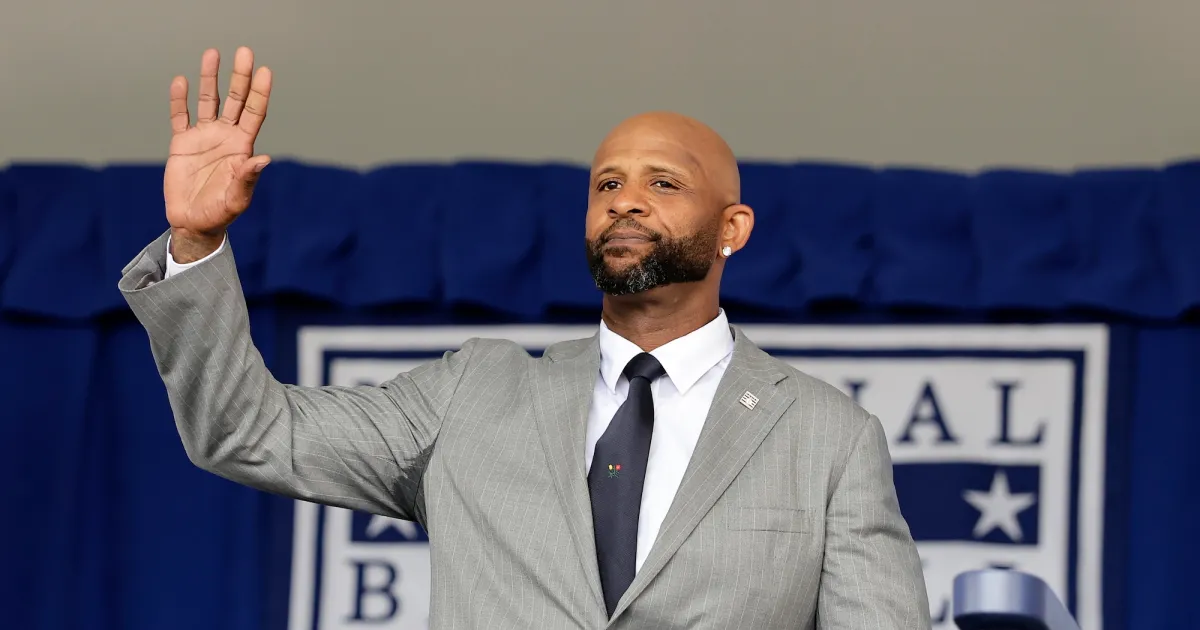
In the high-stakes world of professional baseball, where athletes are often viewed as invincible titans of talent and fortitude, the human stories behind the statistics can sometimes get lost. Such was the case in the fall of 2015, when the baseball world received a seismic shock. CC Sabathia, the formidable ace of the New York Yankees, a pitcher known for his imposing presence on the mound and his reliability as a workhorse, had just checked himself into a rehabilitation facility for alcohol addiction. The announcement came at the worst possible time, right as the team was poised to enter the high-pressure crucible of the MLB Postseason. For fans and analysts alike, it seemed like a sudden betrayal of the team’s championship aspirations. But for Sabathia himself, now 46 years old and reflecting on his journey, this public moment of vulnerability was not an act of abandonment; it was the culmination of a decades-long, private struggle with grief, loss, and the numbing escape of alcohol. He recently opened up exclusively to Us Weekly about his transformative journey while in Iowa for Netflix’s exclusive broadcast of the 2026 Field of Dreams game, offering a rare, intimate glimpse into the pain that fueled his addiction and the path he took to reclaim his life.
The roots of Sabathia’s internal turmoil stretch back to a devastating period in the early 2000s, a time that would fundamentally shape the man he was to become. Within a span of just six months, from December 2003 to June 2004, Sabathia lost the three most influential pillars of his life. His father passed away, followed shortly by his uncle and then his cousin. These weren’t just relatives; they were his support system, his mentors, and his closest confidants. When his parents separated, it was his uncle who stepped into the paternal void, becoming his coach, driving him to football practices, and providing the steady guidance that young men need. His uncle’s son, the cousin who also passed away, was like a brother to him. The compounded grief from these three immense losses was a tidal wave of sorrow that Sabathia never allowed himself to feel. In his conversation with Us, he articulated this painful reality with stark clarity: “I never dealt with those deaths and those three are the closest people to me in my life.” He acknowledged that he had no problem performing on the field, seemingly shutting off the pain to deliver powerful pitches and rack up wins. But that compartmentalization came at a devastating cost. The grief didn’t disappear; it festered, and the only way he knew how to silence the internal chaos was through alcohol, which he admitted made for some incredibly tough years in between, establishing a destructive pattern that would define his off-field existence for over a decade.
For years, the alcohol slowly eroded the foundations of his life outside of the stadium walls, while his on-field success masked the severity of his struggle. Sabathia admitted that the very deaths he refused to process “fueled” him on the mound, providing a grim, sorrowful energy that transformed him into a dominant force in Major League Baseball. He was a known workhorse with the Cleveland Indians, a pitcher who could be counted on to log innings and compete at the highest level. This reputation made him one of the most highly sought-after free agents in the history of the sport, ultimately culminating in a historic contract with the New York Yankees, the largest ever signed by a starting pitcher at that time. The money was a monument to his professional achievement, but it almost wasn’t enough to get him to the Bronx. The Yankees are the most famous and scrutinized franchise in the game, a stage where legends are made and failures are magnified. For Sabathia, the pressure wasn’t just about pitching in the Bronx; it was deeply personal and rooted in his unresolved relationship with his late father. He revealed to Us that the reason he hesitated for so long to sign with New York was his father’s death. If he went to New York and failed, his dad wouldn’t be there to pick him up, to tell him it was all okay. The absence of that safety net, the one person he could always rely on for unconditional support, created a very real and profound nervousness about taking on the ultimate baseball challenge.
Sabathia’s fears about failing in New York were ultimately unfounded on the field. His first season with the Yankees produced a fairy-tale ending, as the team won the 2009 World Series. He was the undeniable anchor of the pitching staff, earning the MVP title of the American League Championship Series after delivering two dominant performances against the Los Angeles Angels. From that pinnacle, he went on to pitch eleven seasons in the Bronx, cementing his legacy as one of the franchise’s greats. But the professional accolades and the championships could not outrun the personal demon he had been carrying. The drinking continued to spiral, eventually leading to an alarming turning point during a road trip to Baltimore at the end of the 2015 season. After a particularly heavy drinking binge that extended from his hotel room well into the next day, Sabathia was shocked into an unavoidable realization: he was about to go down to the bullpen and throw a pitching session while still severely intoxicated. This scary moment served as a brutal wake-up call, shattering the illusion of control he thought he had. It was a crystal-clear moment of consequence, forcing him to confront the fact that his addiction had finally begun to threaten the very career and identity he had built, compelling him to take the difficult step of seeking professional help and entering rehab.
The decision to enter rehab was the beginning of a long and arduous journey toward redemption, one that took him from the darkness of addiction to the quiet dignity of sobriety and self-awareness. His willingness to speak openly about his story now is a testament to the personal work he has done. In September of 2025, the New York Yankees will celebrate his remarkable career by retiring his iconic No. 52, a permanent honor that cements his place in the pantheon of baseball legends. When that moment arrives, and he stands in Monument Park among the most revered players in franchise history, Sabathia’s thoughts will inevitably turn to his father. He stated that his dad is always the first person who comes to mind when he achieves these milestones, because his father was the one who instilled in him the belief that such dreams were attainable. When he pictures himself in Monument Park, or sees his number hanging from the rafters, he doesn’t just see his own name; he sees his father’s face beside it, acknowledging that his greatest accomplishments are shared with the memory of the man who set him on this path, and that his journey from the depths of grief and addiction to this incredible honor is a story of resilience, healing, and the enduring power of a father’s belief in his son.
Sabathia’s story is not merely a cautionary tale about the dangers of alcohol, nor is it simply a triumphant sports narrative. It is a profound human story about the fragility of the human spirit and the immense strength required to confront one’s own vulnerabilities. He has transformed his personal struggle into a platform for advocacy, showing other men, especially athletes conditioned to be tough and unemotional, that seeking help is not a sign of weakness, but an act of profound courage. By sharing the intimate details of his grief, his mistakes, and his road to recovery, he redefines what it means to be a hero. He isn’t just a Hall of Fame pitcher; he is a man who faced his deepest demons, took responsibility for his actions, and found a way to heal, all while navigating the immense pressure of playing for the most famous sports team in the world. As he prepares to see his number retired, Sabathia’s legacy is now double-sided: he is celebrated not only for his Cy Young Award and his World Series ring, but for his honesty and his bravery in the face of personal adversity. He shows us that even in the hallowed halls of baseball immortality, the most enduring victories are often the ones fought and won not on the pitcher’s mound, but within the quiet, unforgiving confines of one’s own heart, proving that the greatest comeback stories are not always about winning games, but about reclaiming a life.