






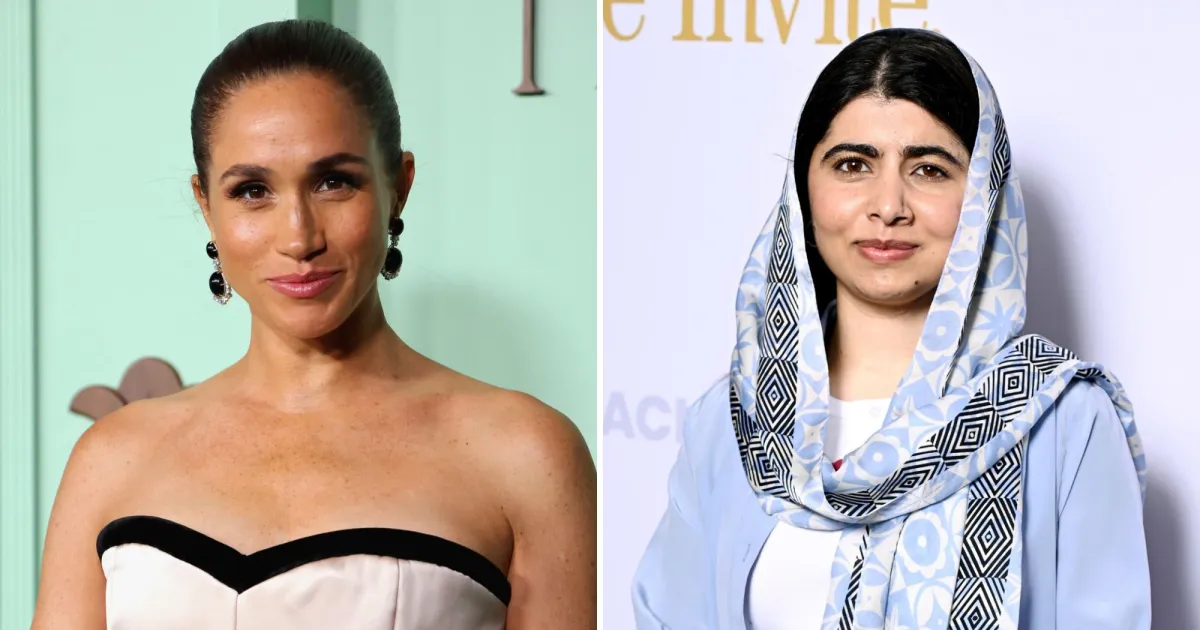
On a cool October evening, Claridge’s hummed with its usual quiet glamour. In a corner of the hotel’s famous restaurant, two women leaned in over dinner, their conversation punctuated by easy smiles and the occasional laugh. Meghan Markle, the Duchess of Sussex, and Malala Yousafzai, the Nobel Peace Prize laureate, were having a girls’ night. A fellow diner captured the moment on TikTok, and the internet leaned closer. There was something wonderfully ordinary about the scene: two women, a meal, a private conversation. But for Meghan, it felt like a small emblem of the life she is rebuilding in Britain. The Duchess, now 45, has returned to the U.K. with her family, and this dinner with Malala was both a reunion and a quiet declaration. The two women are not casual acquaintances. In October 2020, Malala interviewed Meghan and Prince Harry to mark the Day of the Girl, a conversation about girls’ education, resilience, and the strange new reality of pandemic life. That interview was conducted over Zoom, with all the formality and distance that came with lockdown. This time, there was no screen between them. There was just the warm glow of Claridge’s, the clink of silverware, and the simple pleasure of friendship. For Meghan, who has spent years being scrutinized and analyzed, this was a reminder that her life can still include ordinary rituals—dinner with a friend, a late-night conversation, a moment not designed for cameras. The video showed the two deep in conversation, and viewers noticed how relaxed Meghan seemed. It was a human moment, almost mundane in its sweetness, and perhaps that was the point. After years of upheaval, Meghan is carving out a life that includes both activism and intimacy, public purpose and private joy. Sitting across from Malala—a woman who has faced down violence and used her voice to change the world—Meghan seemed to be exactly where she wanted to be: present, engaged, and at home.
The dinner carried a quiet echo of the past. In October 2020, Malala sat down with Meghan and Harry over Zoom for International Day of the Girl. The world was still deep in the pandemic, and the Sussexes were living in Montecito, California, adjusting to a new life after stepping back from royal duties. That conversation was both serious and tender. They spoke about the importance of girls’ education, the work still needed, and the ways the pandemic had upended everything. But they also spoke about something more personal: their son, Archie, who was then a toddler. Harry described the gift of being present for Archie’s early milestones. “We were both there for his first steps,” he said. “His first run, his first fall, his first everything.” Meghan echoed the sentiment, explaining that without the forced pause of COVID, they would have been traveling and working more externally, missing those fleeting moments. “So it’s been a lot of good family time,” she said. Looking back, that moment feels like a seed. The Sussexes were making a virtue of necessity, finding silver linings in a frightening time. But the values they articulated then—family, presence, the determination to be there for their children—have only deepened. Now Archie is 7, and Lilibet is 5. The toddler who took his first steps in a California rental is a schoolboy in Britain. The family that hunkered down during lockdown is now settling into a new rhythm in the U.K. For Meghan, that 2020 conversation with Malala was not just an interview; it was a snapshot of a family in transition. And now, five years later, she is living out the next chapter of that story. The girls’ night at Claridge’s was a bookend of sorts—a reminder of how far she has come, and how much has changed. The woman who once spoke through a screen about wanting to be present for her children was now present in a London hotel, building friendships and a life on her own terms.
The move back to the U.K. did not happen overnight, but it happened deliberately. In late August, Meghan, Harry, Archie, and Lilibet left Montecito and returned to Britain in time for the start of the school year. For the first time, the children are attending a U.K. academy—a decision that speaks to a deeper commitment than a short visit. This is not a holiday or a publicity tour. This is a family choosing a country, a school system, a way of life. The Sussexes had moved to California in 2020 after stepping down as senior working members of the royal family, seeking independence and privacy. But California, for all its sunshine, never quite felt like home to Harry. “Harry is not as happy in the U.S. as he is in the U.K.,” a source told Us in August. The source added that the couple aims to live somewhere outside London, not in the city proper, and that they are “open to a new chapter.” That new chapter is now unfolding. For Meghan, the move means continuing to lead her lifestyle brand, As Ever, from the U.K. For Harry, it means supporting his various charitable endeavors from a place where he feels more grounded. But for the family, it means something simpler and more profound: school runs, weekends in the countryside, the chance to build a life that is not defined by constant travel. The decision to enroll their children in a British school suggests a desire for roots. It is one thing to visit the U.K., another to send your children to school there. It signals a belief that this is not temporary. Meghan, who has often been portrayed as the Californian transplant, is now making Britain her base. The irony is not lost on anyone. The woman who was once criticized for not fitting in is now choosing to raise her children there. And she is doing so with the same grace and determination she has shown throughout her public life. The move is not without complications, of course. There are expectations, histories, and old wounds. But for now, the family seems to be embracing the change with openness and optimism.
For Harry, the return to the U.K. is more than a change of address; it is a reckoning with identity. A source described Harry as still operating “as if he were a member of the royal family when he evaluates opportunities.” That is a striking observation. Even after stepping back, even after moving across the ocean, Harry carries the weight of his upbringing. He is not just a private citizen; he is a prince who has chosen a different path. The source noted that Harry has seen royals who left the family, like Sarah Ferguson, and does not want to emulate that path. He wants to do things that are a right fit for him, but that can be very limiting. The tension is real: Harry wants to be his own man, but he also wants to be taken seriously. He wants to make money, but not at the cost of his values. He wants to support causes, but in a way that feels authentic. “They need to find ways to make money, so they are eager to find partnerships that are the right fit and fruitful for them,” the source said. This is the quiet calculus behind the public appearances and the brand-building. Meghan, meanwhile, is expected to continue growing As Ever, her lifestyle brand, from the U.K. The brand is an extension of her interests: cooking, home, wellness, the small pleasures that make life beautiful. It is a far cry from royal duties, but it is hers. Together, the Sussexes are trying to build a sustainable future—one that honors Harry’s royal legacy without being trapped by it, and one that allows Meghan to be an entrepreneur and activist on her own terms. It is not easy. Every decision is scrutinized. Every partnership is dissected. But the couple seems determined to find a balance. They are not running from the past; they are trying to integrate it into a new future. And in that sense, the move back to the U.K. is not a retreat. It is a reclamation.
Since returning, the Sussexes have been spotted doing something they rarely did in California: living like locals. They were seen at the Falkland Arms, a cozy pub in the Cotswolds, and at The Three Horseshoes, where they hung out with friends Ellen DeGeneres and Portia de Rossi. These are not glamorous red-carpet moments. They are the small, unglamorous rituals of a life—grabbing a drink, catching up with friends, blending into the warm dim light of a village pub. For Meghan, these moments are precious. She has spent years in the glare of the spotlight, and the chance to sit in a pub with a friend, to laugh without being watched, is a form of freedom. The Cotswolds, with its rolling hills and stone cottages, offers a kind of anonymity that Los Angeles never could. It is a place where people are less impressed by titles and more interested in whether you are kind to the dog. The presence of Ellen and Portia, who have been friends of the Sussexes for years, adds another layer. It suggests that Meghan and Harry are not just returning to old haunts; they are building a community. They are surrounding themselves with people who know them, who accept them, who do not need them to be anything other than themselves. And the girls’ night at Claridge’s with Malala fits into this pattern. Meghan is not just reconnecting with the U.K.; she is reconnecting with herself. She is making time for friendships that matter, for conversations that nourish, for the kind of connection that cannot be scheduled or performed. In a world that often treats her as a symbol or a headline, these quiet moments are a reminder that she is also a person. A mother. A friend. A woman who, like anyone else, just wants to feel at home.
There is something hopeful about the image of Meghan Markle and Malala Yousafzai sharing dinner at Claridge’s. It is a picture of two women who have both been defined by their courage—Malala, who stared down extremism and became the youngest Nobel laureate; Meghan, who stepped away from the British royal family to protect her children and her own sense of self. They come from different worlds, but they share a belief in the power of education, the importance of speaking up, and the value of using one’s platform for good. Their dinner was not a fundraiser or a campaign event. It was simply two friends catching up, and that is what made it so compelling. For Meghan, the evening was a small but significant sign of the life she is building in the U.K. She is not the same woman who left in 2020, wounded and weary. She is older, more certain, more aware of what she wants. She has weathered storms that would have broken many people, and she has emerged with her sense of purpose intact. The move back to Britain is not a surrender; it is a choice. It is a decision to give her children a British upbringing, to give Harry the grounding he craves, and to give herself a chance to redefine her relationship with a country that has not always been kind to her. There will be challenges ahead. There always are. But on this autumn evening, in the warm glow of a hotel restaurant, Meghan seemed at peace. She was exactly where she wanted to be. And that, perhaps, is the most human thing of all.