






The call came quietly at first, the way tragedy often announces itself. In the middle of a slow, hot August week in Worcester, Massachusetts, police entered a home and found something that shattered the routine of the city. Officer Kurt Solomon, a man who had worn the Worcester police uniform for more than thirty years, was dead. The morning of Tuesday, August 18, brought the kind of news that no community, no police department, no family is ever ready for. But the shock did not end with his death. Almost immediately, another layer of alarm was added to the grief: Kurt’s wife, Karen Solomon, was nowhere to be found. Police said they were actively looking for her and voiced public concern that she might be armed. A city that had trusted this officer for years now found itself caught between heartbreak and uncertainty. What had happened inside these walls? Why had this beloved man died? And where was his wife, a woman known in her own right as a gentle advocate for the mental health community? Those questions filled the air as officers began canvassing neighborhoods, standing up at parks, sending out missing notices, trying to find answers in a picture that made no sense. For neighbors who knew the couple, the events seem impossible, a tragedy not simply sad but utterly unexpected.
As the search for Karen continued, the public pieces of the story began to arrive with the terrible work of an investigation. An arrest warrant was issued for Karen Solomon, charging her with assault and battery with a dangerous weapon. Worcester Police Chief Paul Saucier disclosed that Kurt had been harmed by a sharp object, and the word “object” carried all the weight of a story still being reconstructed. At that point, the household scene had already shifted from a quiet residential corner to a stage of forensic intensity. The weather, now anyway, seemed to indicate a tragedy that had perhaps unfolded in a private flash of violence, and no one who knew the couple could reconcile this portrait with the people they thought they had known. In public comments, Chief Saucier tried to make clear the contours of their findings without crossing into a conclusion. “I want to make myself absolutely clear,” he said, “at this point that has nothing to do with this case.” He was referring to domestic abuse, as if the world had been trying to find an easy narrative. He insisted there was no history of that in this family, no prior calls, no shadows that would have predicted such a catastrophic outcome. The chief said that this was not about an old pattern. It was, he believed, a tragic murder-suicide. But that label, simple and official, could not communicate the human mystery that lay underneath. The phrase “murder-suicide” is quick, says everything for the record, but it says little about the thousands of small daily decisions, the nights, the mornings, the moments of affection and distance, that two people share over decades. There is nothing in the word for the aftermath, for a son or daughter waiting for a phone call that no longer comes, for the friends who are left to re-examine every conversation they ever had.
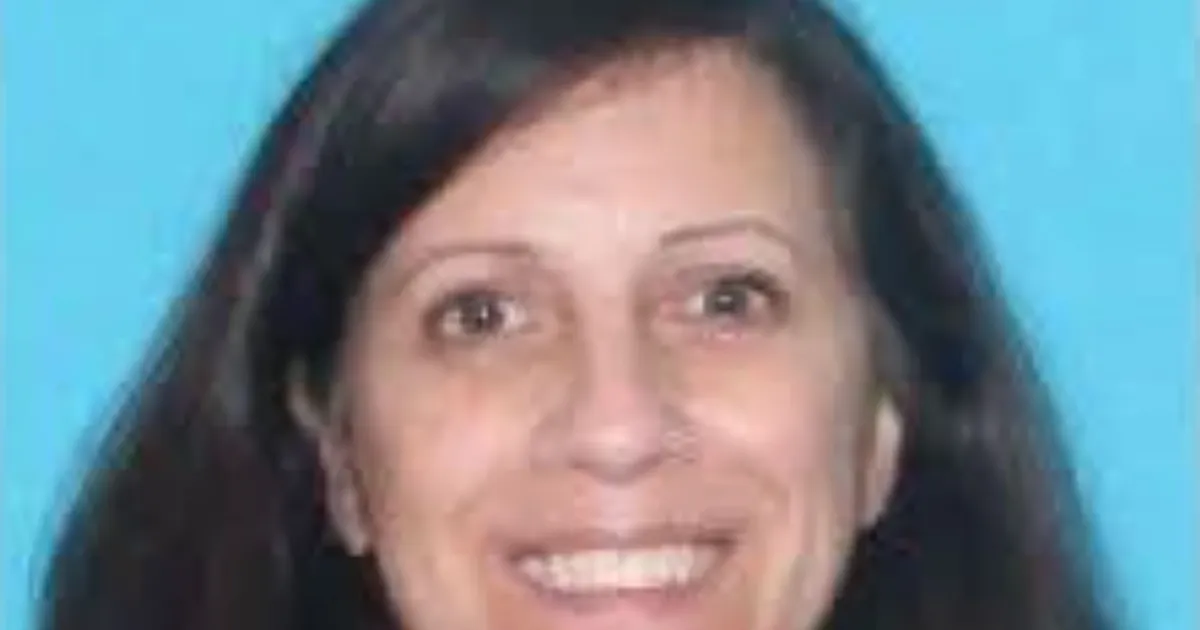
The search for Karen lasted a week. For seven days, the family and law enforcement waited, prayed, and hoped that something other than the worst would happen. On the afternoon of Monday, August 24, in the woods in Worcester, police found a body believe to be Karen’s. She was 58 years old. In a Facebook update, police made the announcement cautiously, with more everywhere. They confirmed only as much as they could, and they included the statement from the Solomon family. “The nightmare of the past week has left our family heartbroken and rudderless,” the family said. The word “rudderless” one word, broken apart in this sentence, described how grief removes all directions, leaving a person in a drifting white moving floor where you are not sure who is what or where your next step will take you. The family then, reaching through their pain, expressed a gentle larger thank you to all the agencies involved. “The compassion, dedication and empathy of all the agencies involved have given us light in the face of darkness.” It is perhaps the most human detail of the entire story: that even in the deepest moment of shock and loss, a family can feel the efforts of strangers, with the flashlights in the woods, the officers who have been away from their own homes, the people who have moved through their days in order to help with no goal except to bring a small measure of peace. The selflessness of those who have helped us weather the storm, the family said, cannot be expressed in simple words. In that one line, there is so much truth—in a world of facts, fingerprints, warrants, and dates, at the heart of the spectacle is not a case, but many people trying to be good to each other.
Kurt Solomon was not just a police officer; he was a piece of the city itself. Joe Petty, Worcester’s mayor, wrote that Kurt had served for thirty-one years and earned the respect of fellow officers and of the community. “He was much more than the uniform,” Petty wrote. “He was a proud son of Worcester, a father, son, brother, friend, neighbor, and U.S. Army veteran.” Those little words, without glittering, are the true things: “father, son, brother, friend, neighbor.” They describe a man whose identity outspread behind a badge, a man who, in the recollection of his department, was more likely to have a kind word than a hard one, more likely to stop by a home on a hot evening, or to be known by also the same faces in the city and to know their names, their children, their worries. Thirty-one years in one job is not mere loyalty; it is a life. It is an endless succession of shifts in rain, of calls in the middle of the night, of official reports, of moments of danger and hours of quiet walking. Every officer who has done this knows the weight of that time. And then, aside from the work, there was the man he was outside, with his family, in the small kitchen of his life, at dinner tables, at birthday parties, on the couch after a hard day. That Kurt, the human one, is the one now being remembered in shattered silence. The loss resonates with the officers who served at his side, all too well aware how close this story is to every officer, of fine line between the life after the night and the life through the night, of how a police home is like any other, but with an extra ring of tension in the middle of the night, the ringing of a phone when the city is watching on radar.
But it is impossible to understand this story without also trying, with caution, to step into Karen Solomon’s life. She was perhaps by those who knew her best: an advocate, and a founder involved in the organization First H.E.L.P., a group exploring the mental health of first responders, that guides the invisible deep inside of those who run toward trauma, and guides her own as she stood alongside Kurt, aware that his work did not always lie easy on a soul. Karen was part of those who struggle for the mental health of police officers, fire fighters, emergency personnel, and she had spent her life trying to make room for pain, hope, and recovery. This makes the final tragedy even more unbearable. How can someone who became so close to the cause of mental health and so much to the light in others be swallowed by all the darkness, the undodged darkness that no one can see from the outside? No, she will not be remembered simply as the person who was charged in connection to her husband’s death; she will be remembered by those who loved her as a human being, with her own goodness, her own disappointments, her own private inner world, her own dreams and struggles. The police chief’s statement that there was no history of domestic abuse shows that this was not a family known for violence, not a couple that exhibited danger signs. It was, perhaps, a hidden tragedy, a pain that had turned inward, sideways, until it had no outlet. These happen. The hardest reality to accept is that people can carry depths that their closest friends and their most everyday companions can’t fully reach. The loneliness to which all people are susceptible is a thing even the best relationship can’t erase. And this strange, tragic end, among the woods near the city, across a week of searching and unimaginable suspense, leaves behind not just the answered “why” that the family will repeat for the rest of their lives.
Now, with their deaths, all that remains is work that never has a complete “working” outcome. The autopsy paperwork, the investigation reports, the legal details of the warrant, the recovery of the body—that is the daily machinery of law enforcement. But the human machinery more difficult: the family that will turn to Lako? of a future without two people in it, one rest with the other maybe beyond the grave. The Solomon children, if any, their father gone, their mother gone, had to face the hardest moment no one is ever prepared for. And the community, in its way, will be affected for a long time, not only because an officer lost his life and his family fell apart in a terrible way, but because this tragedy reminds us how thin is the floor between any of us and the edge. It is possible to be a good man, a good officer, a neighbor who helps, and still have a life that turns into a nightmare. It is possible to advocate for the mental health of first responders and still not be protected from the darkest side of your own brain. For every person who places a hand on a loved one’s shoulder and says, “are you all right?” it will no longer be meaningless. The family’s statement, “You can’t express simple words,” the everyone who has ever been with is aware of, and the actual long, are not so good. The week left in these rooms, and the police lights of the recovery are still burning. But what we can do is to keep both Kurt and Karen in our thoughts, not as stories, not as a series, but as two human beings, a lifetime apart, who are loved. For the ones left behind, the rue can be a silent one. We cannot help you find all the answers, but we can be there. We can let families know that a city is, after this, a family still, and that not one officer or wife will be forgotten. Kurt Solomon’s years of service and Karen Solomon’s dedication to the mental health of first responders are before the sorrow. They are what we can hold onto, as the quiet settles, and the beautiful and terrible record of a life, of two people, enters into the calm memory of a community trying to heal.