


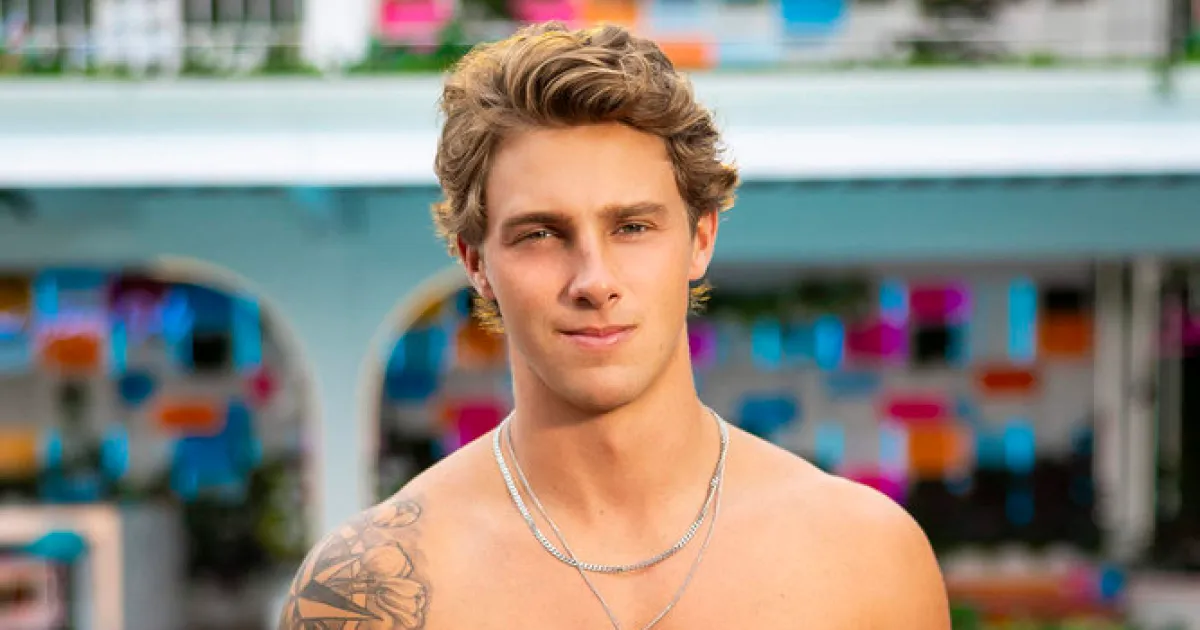
When you throw a group of highly attractive, emotionally charged singles into a luxury villa, isolate them entirely from the outside world, and subject them to the unblinking gaze of dozens of night-vision cameras, human nature takes some incredibly strange and hilarious detours. On a recent episode of Peacock’s breakout reality hit, Love Island USA, contestant Caleb McDaniel voiced the exact question that had been echoing across social media platforms for weeks: what in the world does “French fry” actually mean in the context of villa hookups? When Trinity Tatum casually replied that it was shorthand for “Deejaying,” she didn’t offer any further clarification, leaving both Caleb and the viewing audience to navigate a bizarre linguistic puzzle. This is the fascinating reality of modern surveillance television; because these young adults are fully aware that their parents, friends, and millions of strangers will dissect their every move, they have to develop elaborate, almost juvenile codes to discuss their physical intimacy. It is a defense mechanism born out of a deeply human desire for a shred of privacy in a place where privacy is functionally nonexistent. Under the heavy, neon-lit duvets of the shared bedroom, whispered negotiations and muffled giggles become a daily ritual, leading to an entirely new dialect of romantic slang that serves to both mask and inadvertently highlight the cast’s late-night activities. The humor of the situation lies in the fact that even the participants themselves cannot always keep their stories straight, creating a hilarious disconnect where some Islanders are operating on one set of metaphors while their roommates are left totally in the dark. This constant negotiation between public display and private desire is what makes the show so incredibly compelling, as viewers watch these young people attempt to maintain some semblance of dignity while falling headfirst into passionate, hormone-driven connections. By focusing on Caleb’s relatable confusion, the show highlights how even the contestants get lost in the complex webs of slang they spin to protect their intimacy from the public eye.
The specific mystery surrounding the “French fry” terminology reached a fever pitch earlier this season, thanks to some highly observant and candid commentary from Trinity Tatum. She openly remarked to her fellow castmates that she had heard someone actively engaging in a round of “French fries” in the communal bedroom, dryly noting that the audio feedback sounded far “too wet” to simply be a passionate, closed-mouth kiss. It didn’t take long for the culprit to step forward in the relative privacy of the beach hut confessional booth, where Kenzie Annis, beaming with a mixture of embarrassment and giddy excitement, confirmed that she had indeed shared an incredibly heated late-night exchange with her partner, Corbin Mims. She gushed to the cameras about getting some “French fries” and feeling absolutely incredible afterward, though she did admit that they both probably crossed the line into doing a bit too much in a room full of sleeping people. Kenzie conceded that they got carried away, attributing the boldness of their actions to the undeniable, sizzling chemistry she felt developing with Corbin. When eager fans dissected the night-vision footage and audio cues on social media, they quickly formulated their own theories, concluding that “French fries” was a highly specific euphemism for manual sexual stimulation, such as hand jobs. The broader internet community quickly jumped on this translation, pointing out the gastronomic logic of the metaphor: a plate of French fries is traditionally viewed as an appetizer, a salty and satisfying precursor designed to tease the palate before the main course of a full-scale meal is served. This level of forensic analysis from the fan base shows just how invested viewers are in the unspoken dynamics of the villa, turning a simple moment of physical warmth into a widely debated cultural phenomenon that brings people together online in a shared, lighthearted quest for translation.
To truly understand why these young men and women resort to such elaborate code words, one must look at the intense pressure cooker that is the Love Island structural framework. Originating in the United Kingdom back in 2002 before morphing into a global entertainment powerhouse, the show’s format is deliberately designed to hyper-accelerate emotional and physical intimacy among its contestants. The participants, fondly dubbed “Islanders,” are stripped of their smartphones, cut off from their families, and placed into a pristine, heavily monitored luxury villa where their sole objective is to find love—or at least a convincing facsimile of it. To survive the weekly cullings and avoid being summarily dumped from the island, contestants must remain actively coupled up with another person. This dynamic means that romantic rejection isn’t just a blow to one’s self-esteem; it is an immediate threat to their place on the show and their shot at the life-changing $100,000 grand prize. Living in such close quarters under constant, twenty-four-hour video and audio surveillance creates an environment where normal dating timelines are completely thrown out the window. Weeks feel like months, and a casual spark can quickly escalate into a full-blown obsession under the warm tropical sun. The sheer vulnerability required to build these connections while knowing that every whisper, sigh, and shift of the bedsheets is being recorded for prime-time television is immense. It forces the Islanders into a unique psychological paradox: they must perform their relationships for the cameras to win the hearts of the public, yet they must also find ways to protect the sacred, deeply personal moments of physical intimacy that naturally occur when two people are intensely attracted to one another.
While finding a genuine romantic connection that you want to explore behind closed doors is always the ultimate goal, the American iteration of the franchise on Peacock has seen a dramatic uptick in sheer physical boldness. Season 7 of Love Island USA was widely regarded by fans as a turning point, seemingly setting a historic high-water mark for the sheer number of times couples were caught hooking up on camera. However, Season 8 has completely shattered those previous standards, dialing up the heat and the willingness of the contestants to throw caution to the wind. Unlike previous casts who might have exercised a bit more restraint out of fear of public judgment, the current crop of Islanders has shown a refreshing, if occasionally shocking, level of comfort with their own sexuality. Multiple couples have openly gone all the way, transforming the communal bedroom—historically a place of quiet cuddles and whispered sweet nothings—into a hotbed of overt passion. This escalation of physical intimacy has added an entirely new layer of tension to the show’s narrative arc, particularly with the highly anticipated arrival of Casa Amor midway through the season. Casa Amor is the ultimate relationship test, a brutal twist where the original couples are physically separated and tempted by an entirely new crop of attractive singles. For couples who have already shared deep physical intimacy and established their own private code words, this separation represents an emotional minefield, raising the stakes of loyalty and betrayal to an absolute fever pitch that keeps audiences glued to their screens night after night, anxious to see who will stay true and who will succumb to temptation.
The reliance on creative metaphors is not a new phenomenon in the villa, but rather a proud tradition passed down through generations of cast members who have sought to navigate the delicate line between public entertainment and personal privacy. During Season 7, fan favorites like Hannah Fields, Pepe Garcia, Huda Mustafa, and Jeremiah Brown found themselves in the exact same position, trying to find a way to communicate their deeply intimate moments without having to speak plainly for the entire nation to hear. In an exclusive interview, Hannah revealed that the group had established a highly effective classification system centered around travel terminology. Whenever someone wanted to inquire about the physical progress of a relationship, they would casually ask their friend how their “journey” was going, or what the specific path of that journey had looked like the night before. This clever linguistic shield was originally conceptualized by Huda Mustafa, who famously broke the ice by admitting to her castmates that she had embarked on a journey that went all the way to its destination. This kind of playful, self-imposed censorship highlights a very human side of these reality television stars; despite being thrust into a hyper-sexualized environment where their bodies are constantly on display, they still possess a relatable vulnerability and a desire to keep some aspects of their relationships sacred. By transforming their physical encounters into a shared, lighthearted vocabulary of “journeys” and “French fries,” the Islanders manage to reclaim a tiny shred of autonomy over their own stories, turning what could be an incredibly awkward, clinical observation of their sex lives into a charming, collaborative inside joke that actually helps them bond as a group.
This blend of high-stakes romance, genuine human vulnerability, and hilarious linguistic gymnastics is precisely why Love Island USA has captured the cultural zeitgeist so completely. Airing new episodes six days a week on Peacock—offering a much-needed midweek break on Wednesdays—the show provides an almost real-time look into the unfolding drama, allowing fans to feel as though they are living right alongside the Islanders. To further bridge the gap between the screen and the viewer, Us Weekly has teamed up with Bracketology.tv to introduce the first-ever Love Island USA fantasy league. This free-to-play platform offers fans the ultimate opportunity to test their romantic intuition, allowing them to predict weekly winners, rank their favorite Islanders based on their survival instincts, and compete directly against professional entertainment editors. It transforms the passive act of television viewing into an active, highly engaging community experience, complete with exclusive content and exciting prizes. Ultimately, whether viewers are tuning in to watch genuine love blossom, to participate in the competitive fantasy league, or simply to figure out what bizarre food metaphor the contestants will come up with next to describe their bedroom antics, the show remains a fascinating mirror of modern dating. It reminds us that no matter how structured or artificial the environment may be, the fundamental human search for connection, intimacy, and a little bit of shared humor always finds a way to break through the noise, leaving us all thoroughly entertained and surprisingly invested in their journey.