


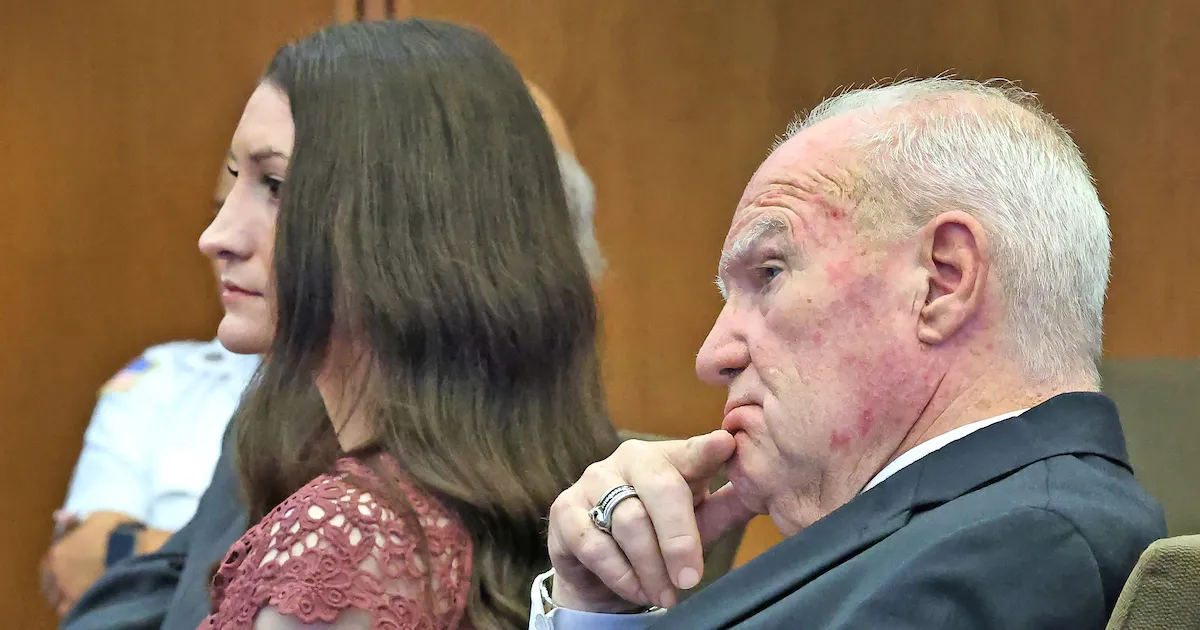
Behind the legal language and courtroom arguments, the case of Lindsay Clancy remains one of those rare tragedies that feels almost impossible to reconcile. In January 2023, three young children—Cora, five years old; Dawson, three; and Callan, just eight months old—were found dead in their Massachusetts home, and their mother, Lindsay Clancy, was charged with their murders. The details were so devastating that the story ricocheted around the country, stirring both outrage and a painful public conversation about what happens when new motherhood goes catastrophically wrong. Clancy’s defense has consistently argued that she was not a cold-blooded killer but a woman in the grip of postpartum psychosis, a severe mental health crisis that can fracture a person’s grip on reality. Prosecutors, however, have framed her actions as deliberate and criminal. The legal process has been grinding forward ever since, with no easy answers and no clean resolution. On October 1, Judge William Sullivan rejected another attempt by Clancy’s lawyer, Kevin Reddington, to have the three first-degree murder charges dismissed. The ruling came almost a month after a mistrial had been declared on September 4, when a jury could not reach a unanimous verdict. For anyone who has followed the case, the judge’s decision was not a final chapter but another heavy twist in a story that seems to resist closure.
At a hearing on September 29, Reddington made a striking new argument. He claimed the charges against Clancy should be dropped because prosecutors had failed to prove, during the nearly seven-week trial, that she killed her children. That was a significant departure from the defense’s earlier position. During the trial, Reddington had not disputed that Clancy strangled Cora, Dawson, and Callan. Instead, he argued that she was not criminally responsible because she was suffering from postpartum psychosis and other severe mental health struggles at the time of the children’s deaths. The strategy was meant to persuade the jury that Clancy’s mind was so broken that she could not be held legally accountable for her actions. But after the jury Deadlocked, Reddington changed course. On Tuesday, he told the court that there had never been a full investigation into the children’s deaths, and that authorities “just immediately assumed that this woman was guilty.” The implication was that the prosecution built its case on assumptions rather than thorough inquiry, and that the complexity of Clancy’s mental state had been ignored or minimized from the start. It was a bold and emotionally charged argument, intended to cast doubt not only on the evidence but on the entire investigation that led to Clancy’s arrest.
Two days later, Judge Sullivan shut that argument down. He wrote, according to CNN, that with respect to the elements of murder and the identity of who committed the alleged crimes, the evidence presented by the Commonwealth in its case in chief was sufficient to satisfy any rational trier of fact beyond a reasonable doubt. In other words, the judge concluded that prosecutors had presented enough evidence for a jury to reasonably convict Clancy of murdering her three children. The decision was not a ruling on whether Clancy is guilty or innocent; it was a ruling on the legal sufficiency of the prosecution’s case. At this stage, the court’s role was not to weigh credibility or decide whether Clancy’s mental illness should excuse her actions. It was simply to determine whether the evidence, viewed in the light most favorable to the prosecution, could support a conviction. Sullivan found that it could. The denial was the latest of at least three attempts by Reddington to have the charges dismissed, and it underscored how difficult it is to end a case of this magnitude before a jury has a chance to decide it. Still, the judge’s ruling did not mean the case was moving quickly toward a retrial. It simply left the charges in place, preserving the possibility that Clancy will face another jury in the future.
The mistrial itself revealed just how divided the jury was after weeks of testimony and deliberation. In late August and early September, the panel deliberated for seven days before announcing that they could not reach a unanimous decision. According to reports, eleven of the twelve jurors found Clancy not guilty by reason of insanity, but one holdout juror refused to find her not guilty. That single holdout was enough to prevent a verdict. The near-unanimous agreement among the majority suggests that the trial deeply affected those who heard the evidence, and that many were persuaded by the defense’s portrayal of Clancy as a woman broken by postpartum mental illness. But the holdout juror’s refusal also shows how contentious and morally complicated the case remains. A jury’s job is to apply the law, but cases like this ask jurors to make judgments about sanity, responsibility, blame, and compassion. The fact that eleven people were ready to acquit by reason of insanity, while one was not, underscores the deep uncertainty surrounding Clancy’s state of mind on the day her children died. For the family of the victims, for Clancy herself, and for the wider community, that uncertainty is agonizing. A mistrial does not provide closure. It leaves wounds open, questions unanswered, and both sides exhausted.
Now the case sits in a strange and painful limbo. Neither Plymouth County District Attorney Timothy Cruz nor Clancy’s defense team has publicly commented on whether plea negotiations are underway. Cruz has not said whether the prosecution intends to take the triple-murder case back to trial. That silence is significant, because it suggests that both sides may be reconsidering their options, weighing the emotional costs of another trial, and trying to determine what justice could possibly look like after such a catastrophic tragedy. In addition, Clancy still has another motion to dismiss the case pending in court. That motion could raise new legal issues, perhaps centered on the fairness of the proceedings, the handling of evidence, or the lack of a comprehensive investigation that Reddington has complained about. It is possible that the case could be resolved without another full trial, through a negotiated plea or some other agreement. It is equally possible that the Commonwealth will push forward and try to secure a conviction on at least some of the charges. But with a jury that came so close to finding Clancy not guilty by reason of insanity, the prosecution would be taking a significant risk by retrying her. Another hung jury is a real possibility, and the emotional toll on everyone involved would be immense.
Amid all the legal maneuvering, it is important to remember what is beneath the case: a family shattered, three children who will never grow up, and a mother whose fate now rests in the hands of a legal system that was never designed to make sense of such profound human brokenness. Lindsay Clancy is not simply a defendant; she is a woman who, according to her defense, experienced a devastating mental health crisis after giving birth. Whether or not the court ultimately accepts that explanation, her case has drawn national attention to the dangers of untreated postpartum psychiatric conditions. Pregnancy and the months after childbirth can be extraordinarily vulnerable periods, and for some women, conditions like postpartum psychosis can emerge suddenly and with terrifying force. The story has prompted painful conversations about whether more could have been done to help Clancy, and whether better mental health care might have prevented such an unimaginable loss. For anyone who is currently pregnant or has just had a baby and is struggling, help is available. The National Maternal Mental Health Hotline offers free, confidential support 24/7 in English and Spanish at 1-833-TLC-MAMA (1-833-852-6262). In the end, this case is not just about guilt or innocence. It is about how society responds to mothers in crisis, how the legal system handles mental illness, and how a community can begin to heal after losing so much. There are no easy answers, and no verdict can bring back Cora, Dawson, and Callan. But the conversation their deaths have inspired may, in time, help save other mothers and other children from the same fate.