

The magic of the Disney Channel during the late 2000s was defined by a few key cultural cornerstones, and arguably none burned brighter or left a more enduring legacy than the beloved fantasy-comedy series Wizards of Waverly Place. Running from 2007 to 2012, the hit show captured the hearts of millions of young viewers, perfectly blending adolescent chaos and family dynamics with supernatural whimsy, all anchored by the unforgettable, electric chemistry of its young cast. When Disney officially announced its highly anticipated sequel series, Wizards Beyond Waverly Place, a massive wave of intense nostalgia swept over the now-adult fanbase, all of whom were eager to see how their favorite spellcasters had grown up and navigated the complexities of the magical world as adults. However, amidst the initial excitement, there was also a quiet, bittersweet undercurrent of longing for the original ensemble cast, particularly for actress Jennifer Stone, who famously portrayed the wonderfully eccentric, delightfully outspoken, and fiercely loyal Harper Finkle—the ultimate best friend and fashion confidante to Selena Gomez’s mischievous Alex Russo. Stone, who is now 33, recently opened up in an exclusive interview about the emotional, complex journey of initially believing she would be left out of the revival plans entirely. Having spoken early on to her former co-star David Henrie, who leads the new series as Justin Russo, Stone had gracefully come to terms with the fact that this new chapter was purposefully centered on an entirely different family dynamic, with Gomez only making occasional, brief guest appearances. Believing there simply wasn’t a logical narrative space or reason for Harper to pop in, Stone had quietly but deeply mourned the end of that chapter of her life, making peace with the idea that her time in the wizarding world had permanently drawn to a close. Yet, the television universe has a beautiful way of working in mysterious, highly satisfying ways, and when the creative team unexpectedly approached her with a surprise invitation to appear in the series’ monumental, four-part finale, the door to Waverly Place swung open once more, offering her a chance to say a proper goodbye.
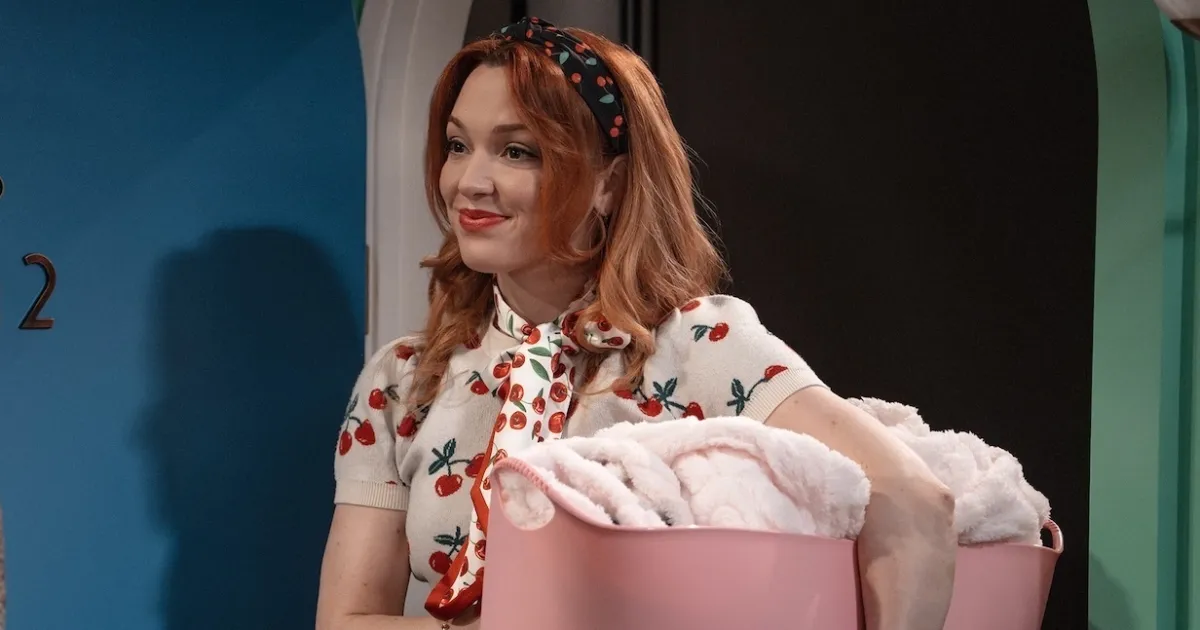
Stepping back into the shoes of a character that defined your youth is a delicate, emotionally weighty, and sometimes daunting endeavor, especially when that character is as uniquely stylized, vibrant, and beloved as Harper Finkle. Known throughout the original series for her iconic, entirely hand-constructed, avant-garde outfits—which famously ranged from dresses made of marker pens to clothes adorned with actual animal crackers—and her unwavering, quirky optimism, Harper was a beacon of unapologetic self-expression for an entire generation of viewers who felt like misfits. Consequently, when Jennifer Stone was first approached by producers about the thrilling possibility of reprising her role, her immediate reaction was not just pure excitement, but also a deep, almost maternal sense of protectiveness over the character she had spent five of her most formative years bringing to life. Stone candidly revealed in her interview that her only real hesitation in returning for this very special finale was ensuring that Harper’s legacy was handled with the utmost care, sensitivity, and respect. She was fiercely determined that Harper should not be reduced to a cheap nostalgic gimmick, a caricature of her younger self, or a lazy punchline designed to evoke cheap laughs in this new iteration of the wizarding world. Instead, she wanted to ensure that the adult version of Harper remained just as confident, self-assured, and vibrantly independent as she had always been, proving that her teenage eccentricity had successfully matured into a genuine, grounded sense of self-possession. Fortunately, the writers’ creative vision for the series finale aligned perfectly with Stone’s hopes, presenting a version of Harper who was fully herself, thriving, and back in action in a way that beautifully honored her rich history. This profound creative synergy made the decision to return an incredibly easy and joyful one for Stone, allowing her to step back into the colorful wardrobe of the character she loved and pay a heartfelt tribute to the eccentric, loyal friend that both she and the audience had grown up with.
The narrative arc of the dramatic four-part series finale of Wizards Beyond Waverly Place delivered an emotionally charged, high-stakes adventure that masterfully blended the classic, lighthearted magic of the original show with the mature, serialized storytelling of the sequel. The central plot of the finale focused on the young, aspiring teen wizard Billie, portrayed with incredible heart and charisma by Janice LeAnn Brown, who embarked on a desperate, sprawling quest to locate her mentor, Alex Russo, after making the shocking and life-altering discovery that the two actually share a much deeper, maternal connection. Meanwhile, the legendary Alex Russo was trapped in a state of profound amnesia within a mysterious alternate universe, completely severed from her true memories, her magic, and her actual identity. In this surreal, dreamlike pocket dimension, Alex was living a deceptively cozy, normal life, sharing an apartment with her long-time best friend, Harper Finkle, and blissfully reunited with her first love, the ruggedly charming werewolf Mason Greyback, played once again with charismatic warmth by guest star Gregg Sulkin. To the viewing audience, this reunion initially seemed like the ultimate, hard-won fairytale resolution for Alex and Mason, a passionate romance that fans had desperately rooted for since their teenage years on the Disney Channel. However, the narrative pulled off a devastatingly mature and emotional twist: when Alex finally regained her memories and snapped back to reality, she was forced to confront the heartbreaking truth that the real Mason had actually passed away prior to the events of the sequel series, rendering their alternate-universe reunion a beautiful but fleeting illusion. Yet, amidst this profound grief, the unbreakable bond between Alex and Harper remained a vital anchor; Harper comforted her grieving friend and urged Alex to look her up once she returned to the real world, dropping a comforting hint that their legendary friendship would inevitably find its way back to life in reality, proving that true sisterhood transcends dimensions.
While the on-screen storyline of the finale was filled with dramatic tension, supernatural stakes, and bittersweet heartbreak, the real-life reunion behind the scenes between Jennifer Stone and Selena Gomez was an absolute torrent of genuine emotion, mutual admiration, and nostalgic tears. Stone candidly recalled the overwhelming wave of feelings that washed over her the moment she stepped back onto the set, admitting that she was an absolute emotional wreck throughout the production, to the point where her waterproof mascara stood no chance against her constant tears. The absolute emotional peak of the experience for Stone occurred during the initial table read, where she found herself weeping tears of pure pride and joy as she watched Gomez—now a highly accomplished, multi-hyphenate artist, global icon, and executive producer—confidently step behind the camera to direct this pivotal, high-stakes episode. Seeing her childhood friend transition from a young, collaborative co-star into a powerful, focused, and compassionate director was a deeply moving experience that underscored just how much time had passed and how beautifully they had both evolved since their days of filming silly magic spells on a Disney soundstage. Before the cameras officially began rolling for their shared scenes, the two actresses shared a quiet, incredibly intimate moment of reflection, checking in with each other and acknowledging the heavy, beautiful reality of their circumstances: they looked at each other and realized that this was almost certainly the very last time they would ever play Alex and Harper opposite one another. For Stone, this poignant realization transformed the entire filming process into a deeply therapeutic and poetic act of closure, offering them a formal, sacred opportunity to bid farewell to the beloved characters who had defined their youth, while simultaneously celebrating the enduring, unbreakable strength of the real-world sisterhood they had nurtured away from the Hollywood spotlight.
This profound sense of real-world maturity and evolution naturally influenced how Jennifer Stone conceptualizes Harper Finkle’s life beyond the television screen, especially since the series finale left much of the character’s adult journey unspoken, thereby sparking Stone’s own imaginative and deeply affectionate theories about where Harper is today. Rather than leaving Harper frozen in the amber of her adolescent quirks and high school antics, Stone envisions a highly successful, nurturing, and creatively fulfilling career path for her beloved character, which perfectly aligns with someone who was always defined by her generosity of spirit and passionate self-expression. Because Harper was characterized from the very beginning by an innate desire to care for others, nurture her friends, and creatively express her soul, combined with her legendary, boundary-pushing passion for DIY fashion, Stone beautifully pictures her residing in New York City and working as an esteemed, beloved fashion instructor at the prestigious Parsons School of Design. In this wonderful headcanon, Harper has successfully channeled her eccentric, sometimes bizarre teenage designs—which once raised eyebrows in the suburbs of Chicago—into highly respected, avant-garde wearable art, using her platform to inspire the next generation of visionary designers to fearlessly push the boundaries of style and self-expression. Alternatively, Stone imagines that Harper has launched her own incredibly successful, whimsical fashion line that dominates the metropolitan indie scene, proving to the world that her unique creative voice was never just a passing childhood phase, but rather the solid foundation of a brilliant, lifelong career. This sophisticated and empowering projection of Harper’s future highlights the deep respect Stone holds for her character, elevating her from a humorous sidekick into an accomplished, self-made woman who successfully turned her childhood eccentricities into a thriving professional empire.
When it comes to Harper’s personal, romantic, and emotional life in her adulthood, Jennifer Stone’s modern perspective offers an incredibly fresh, inclusive, and nuanced take that beautifully reflects how much both society and these beloved characters would have naturally evolved over the years. Reflecting on Harper’s high school sweetheart, the equally eccentric and energetic Zeke Beakerman, Stone is both realistic and delightfully playful about the fact that a vibrant, sprawling metropolis like New York City offers a massive dating pool that might have naturally led the pair down separate life paths. While she is not entirely certain if the quirky couple stayed together and got married, she laughs warmly at the endearing image of Harper still keeping in close touch with Zeke, occasionally calling him up out of the blue just to perform their legendary, hilariously synchronized “Velociraptor dance” for old time’s sake, thereby preserving the pure, unadulterated joy of their youthful connection. Going a step further into the nuances of Harper’s emotional identity, Stone shared that she can easily and confidently picture Harper identifying as bisexual in her adult life, a progressive creative choice that feels incredibly organic to the character’s open-minded, deeply loving, and artistic temperament. Stone explained that because Harper is such a highly creative, empathetic, and boundary-free soul, she is precisely the type of person who would simply fall in love with the human being, looking entirely past traditional gender labels to connect deeply with someone’s inner heart and mind. This beautiful, deeply humanizing interpretation of Harper’s personal evolution perfectly encapsulates why the character remains so profoundly beloved by fans decades later; she is not a static, frozen caricature of the late 2000s, but rather a living, breathing entity who continues to grow, adapt, and love unconditionally. As Wizards Beyond Waverly Place continues to stream on Disney+, fans around the world can take comfort in knowing that while the physical cameras may have stopped rolling, the magical spirit of Harper Finkle lives on—forever confident, infinitely creative, and eternally bound by love to the magical world she helped build.