


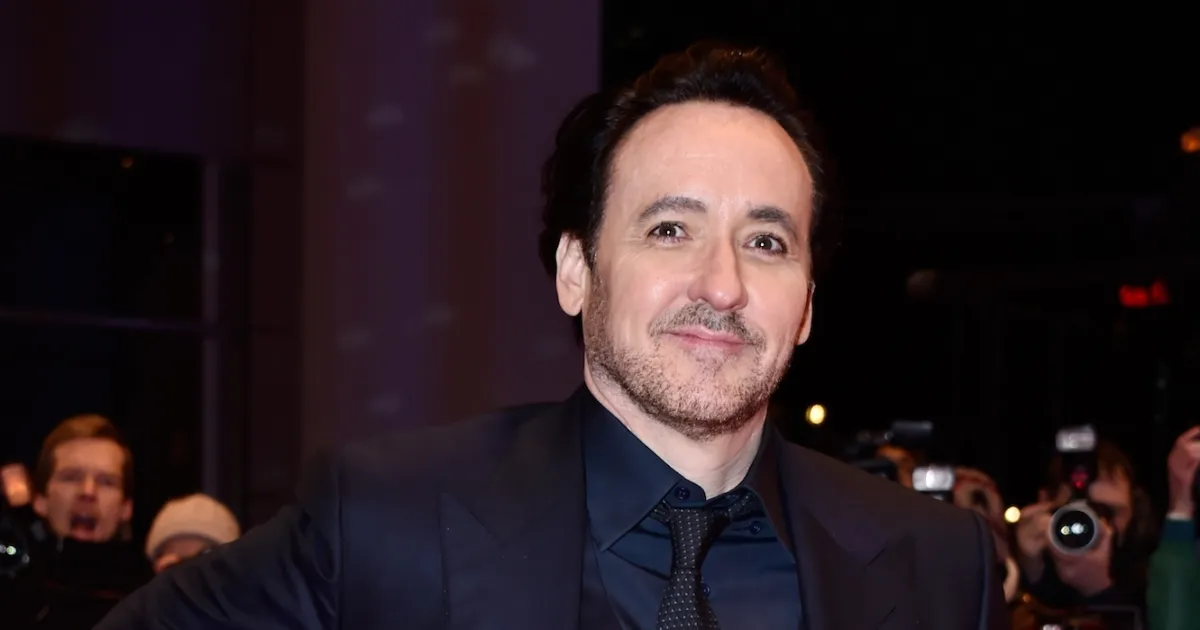
John Cusack’s journey from a fresh-faced teenage actor to a highly respected, fiercely independent cinematic icon is a compelling testament to the power of maintaining one’s personal identity in an industry that constantly demands conformity. Emerging onto the silver screen in the early 1980s after honing his craft at the prestigious Piven Theatre Workshop in Chicago, Cusack made a modest but memorable debut in the 1983 comedy Class, followed closely by a charismatic, scene-stealing turn in the generation-defining classic Sixteen Candles alongside Molly Ringwald. It did not take long for Hollywood to recognize his unique charm—a rare blend of intellectual curiosity, dry wit, and a slightly cynical but ultimately romantic worldview. This signature energy propelled him into a string of beloved starring roles in cultural touchstones like Better Off Dead, The Sure Thing, and, most famously, Cameron Crowe’s Say Anything. His portrayal of Lloyd Dobler, holding a boombox aloft in a trench coat, did more than just cement his status as a quintessential teen idol; it completely redefined the cinematic romantic lead for a generation of moviegoers who saw in Cusack a relatable, deeply empathetic young man who felt things with an intensity that mirror-perfect, airbrushed Hollywood stars simply could not replicate. Yet, even as his face adorned the bedroom walls of countless admirers across the globe, Cusack harbored a quiet, persistent restlessness. He was never entirely comfortable with the shallow machinery of celebrity culture, nor was he content to remain frozen in the amber of teenage nostalgia. For Cusack, acting was never merely a pursuit of fame, box office dominance, or an exercise in self-congratulation, but rather an ongoing, highly personal exploration of human behavior and a quest for genuine creative expression. This early, profound commitment to substance over superficiality set the stage for a decades-long career defined by bold, often risky artistic choices, as he consistently sought out projects that challenged both his own capabilities and the rigid expectations of the studio system.
As the 1990s and 2000s beckoned, Cusack made a deliberate and highly successful effort to shatter the “teen idol” archetype, expanding his artistic horizons into a breathtakingly diverse array of cinematic genres. He flatly refused to let himself be pigeonholed, transitioning seamlessly from the dark, cynical underbelly of neo-noir crime thrillers like The Grifters to the brilliantly subversive black comedy of Grosse Pointe Blank, a film he also co-wrote and produced, which explored the existential dread of a professional assassin attending his high school reunion. He continued to captivate mainstream audiences with the whimsical, fate-defying romance of Serendipity, while simultaneously feeding his appetite for intellectually stimulating, dark, and avant-garde projects like the surreal masterpiece Being John Malkovich and the intense psychological horror of 1408. Through these incredibly varied roles, Cusack demonstrated a rare chameleonic ability, bringing a distinct, intellectual edge and an undeniable human warmth to every character he inhabited on screen. He became widely known as an actor’s actor, a dedicated performer who valued the collaborative alchemy of a film set and who was deeply invested in the subtle nuances of complex storytelling. Whether he was playing a cynical record store owner navigating the hilarious complexities of heartbreak in the beloved music-centric film High Fidelity or a desperate man trapped in a haunted hotel room, Cusack consistently prioritized projects that had something meaningful, quirky, or deeply human to say about the world. This exceptionally rich period of his career solidified his reputation not just as a reliable box office draw, but as an influential creative force who was deeply respected by his peers for his artistic integrity, his refusal to play the traditional Hollywood game, and his unwavering dedication to the craft of acting over the empty allure of celebrity status.
In recent years, however, audiences have noticed a distinct shift in Cusack’s professional trajectory, characterized by a noticeable decrease in his film output and a quiet, deliberate retreat from the relentless Hollywood spotlight. His last prominent film appearance was in the 2025 project Fog of War, after which he largely stepped away from the cameras, leaving many dedicated fans to wonder about the deeper motivations behind his sudden absence. The definitive answer finally came in July 2026 during a rare, highly anticipated public appearance at San Diego Comic-Con, where Cusack offered a candid, deeply philosophical explanation for his decision to distance himself from the modern film industry. With his characteristic honesty and lack of pretense, he explained that his retreat was not a rejection of storytelling itself, but rather a profound weariness with the exhausting corporate bureaucracy and financial negotiations that now dominate the filmmaking process. He lamented the grim reality of trying to secure funding in the current studio ecosystem, noting that when an artist asks financiers to invest twenty or thirty million dollars into a bank account to finance a film, those backers inevitably demand total creative control, driven by fear, insecurity, and a desire to minimize financial risk. For a pure storyteller like Cusack, this constant creative compromise had become entirely intolerable. He expressed a deep, palpable frustration with a homogenized industry that has increasingly prioritized safety, sequels, and reboots over original, risky ideas. By stepping away from the Hollywood machine, Cusack chose to protect his creative sanity, refusing to spend his remaining energy negotiating with risk-averse executives who view art merely as a financial commodity to be calculated, focus-grouped, and sanitized for mass consumption.
This yearning for absolute creative autonomy ultimately led Cusack to explore entirely new mediums of artistic expression, culminating in his venture into the world of literature and graphic storytelling. At Comic-Con 2026, he proudly introduced his graphic novel, Momo, a project that served as a direct antidote to the stifling, corporate-controlled environments he had grown to despise in the modern film industry. Collaborating with the exceptionally talented Argentine illustrator Ignacio Noé, whose intricate and evocative visual style perfectly complemented Cusack’s dark narrative vision, the actor found the pure, unadulterated creative partnership he had been desperately seeking for years. The creation of Momo was a deeply liberating experience for Cusack, who marveled at the fact that no committees, executive boards, or corporate editors interfered with a single word he wrote or any image Noé drew. He described the project as a fiercely “anti-algorithm” endeavor, a direct, passionate rebellion against the modern entertainment industry’s reliance on computer data, poll-testing, and mathematical formulas up in Seattle to dictate what kind of stories should be told. For Cusack, Momo represented a triumphant return to the very essence of art: two human beings coming together to share an unfiltered vision, completely free from the fear of commercial failure or the watering-down of their creative impulses. This venture demonstrated that while Cusack may have stepped away from the physical stage of acting, his passion for storytelling remained as vibrant and urgent as ever, finding a new, beautifully illustrated home on the page where his imagination could run entirely free without a price tag or a corporate mandate hanging over its head.
Despite his self-imposed exile from the mainstream movie industry, Cusack has not completely severed his ties with the medium that made him famous, choosing instead to engage with his cinematic legacy on his own warm, human terms. Rather than attending glitzy red-carpet premieres or hollow industry networking events, he has chosen to connect directly with his audiences through intimate, nostalgia-fueled screenings of his classic films. Every so often, he delights his devoted fan base by appearing at local venues to host Q&A sessions, as he did in January 2026 for a screening of Serendipity at the historic Carnegie of Homestead Music Hall in Munhall, Pennsylvania, and a screening of Say Anything in El Cajon, California. He followed these appearances with a celebratory screening of Grosse Pointe Blank in his beloved hometown of Chicago in June 2026. These gatherings are characterized by a palpable sense of warmth, mutual respect, and a shared love for the golden age of character-driven cinema, with fans treating him more like an old friend than a distant celebrity. During these candid conversations, Cusack often reflects on the state of modern filmmaking with his trademark bluntness, openly sharing his disdain for the endless cycle of uninspired sequels and reboots that clog contemporary movie theaters. While he humorously admitted that he would be open to revisiting the psychological horror of his 2007 film 1408 because of its pure, Rod Serling-esque narrative structure, he remains largely critical of a landscape where “most movies suck.” For Cusack, these screenings are not merely exercises in looking backward, but vital opportunities to celebrate a time when films possessed a soul, an authenticity, and a human touch that seems increasingly rare in today’s CGI-dominated landscape.
Beyond his creative endeavors, Cusack has channeled his formidable energy, intellect, and public platform into passionate political activism, establishing himself as a vocal, unwavering advocate for social justice and systemic change. Identifying openly as a Democratic Socialist, he has never shied away from using his voice to challenge the status quo, consistently speaking out against militarism, global conflict, and the political establishment, including his prominent, outspoken opposition to the policies and rhetoric of Donald Trump. His activism is deeply rooted in a desire for transparency and truth, a commitment that is vividly reflected in his frequent collaborations with the Freedom of the Press Foundation on his social media platforms, where he actively campaigns for the protection of journalists, whistleblowers, and the preservation of a free, uncompromised press. This dedication to political advocacy reveals a man who views his platform not as a privilege to be hoarded, but as a profound responsibility to be used in service of the public good. Today, John Cusack stands as a rare and inspiring figure in contemporary culture: a Hollywood survivor who successfully walked away from the glittering trap of fame to live a life of quiet defiance, intellectual freedom, and genuine human connection. By choosing the quiet path of a political activist, an independent author, and a protector of his own artistic integrity, he has proven that true success is not measured by box office receipts or industry accolades, but by the courage to live authentically, speak one’s truth, and remain forever true to oneself, offering a beautiful blueprint for future generations of creators who wish to reclaim their own artistic agency.