

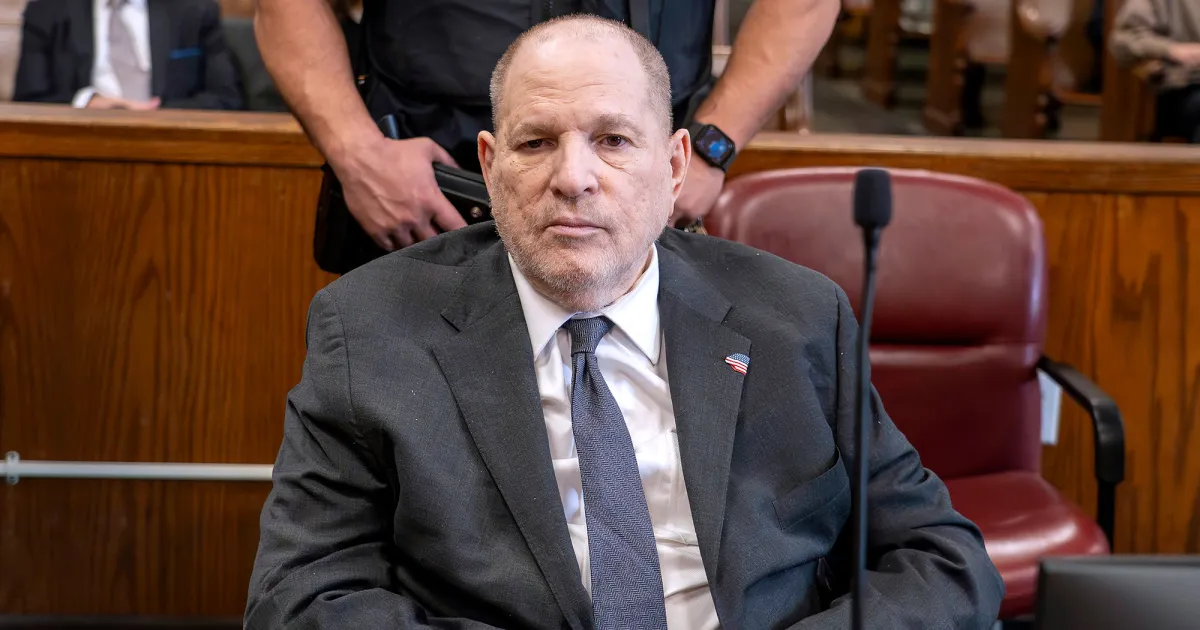
Harvey Weinstein, once a towering figure in Hollywood, now finds himself confined in Rikers Island, speaking out for the first time from behind bars in a candid interview featured in The Hollywood Reporter. At 73, the disgraced producer, who built an empire through Miramax and Weinstein Company films, reflects on a life that has spiraled into public disgrace and legal battles. Convicted of sexual assault in New York in 2020 and Los Angeles in 2022, though his New York conviction was overturned in 2024, he remains incarcerated due to the California ruling. In this exclusive profile by journalist Maer Roshan, who knew Weinstein during his heyday, we glimpse a man grappling with regret and denial, claiming innocence while acknowledging bouts of poor judgment. Weinstein describes himself not as a predator, but as an “oversexed schmuck” whose “stupid moves” inadvertently ignited the #MeToo movement. With nearly 100 women accusing him of misconduct overtime, it’s a narrative steeped in power, abuse, and redemptive self-analysis. Humanizing this, one can imagine Weinstein as a complex character—charismatic yet domineering, someone whose obsessive pursuit of success translated into personal failings. He freely admits to spending “millions and millions” on his defense, a financial drain that underscores the toll of his predicament. Yet, in moments of vulnerability, he admits a “fatal flaw”: overstepping boundaries, acting like a “horrible bully” who wielded power arrogantly. “I was pushy and insistent, and I feel terrible,” he says, his voice betraying shame. It’s hard not to feel a pang of sympathy for a man who once mingled with stars, now stripped of freedom, contemplating his legacy. Roshan paints him as isolated, a far cry from the party-throwing mogul he was. This article humanizes him by exploring the human cost of fame, where unchecked impulses lead to isolation. Weinstein’s story reminds us of how one person’s actions can ripple out, affecting countless lives, including his own, as he awaits a new trial in April after a deadlocked jury in 2025. We see a man who, despite his wealth, faces the ordinary fears of age and confinement, yearning for understanding in a world that has judged him harshly. Words like “loutish” and “pathetic” he concedes, but he insists, “I’m no rapist.” This denial, paired with admissions of adultery and infidelity, creates a portrait of someone wrestling with accountability, seeking redemption not through total confession, but through a reframing that blames overzealousness. In humanizing him, we consider the layers: a father, a businessman, a survivor of his own excesses now serving hard time. (412 words)
Life inside Rikers Island is a stark contrast to the lavish penthouses Weinstein once occupied, and his descriptions paint a picture of enforced solitude that tugs at the heartstrings. He claims his celebrity status has relegated him to virtual isolation, limiting interactions to “the guards and the nurses.” While other inmates enjoy the yard, Weinstein describes feeling “under siege,” constantly threatened and derided, making outdoor time a perilous venture. It’s a narrative that evokes the vulnerability of anyone stripped of power, no matter how famous. In one harrowing incident, he recounts being punched “hard in the face” after politely asking to use the phone, falling bleeding to the floor but choosing not to “rat” on the perpetrator. “I couldn’t say,” he explains, revealing a code of honor bred from his tough encounters. This humanizes him as someone who, despite his past domineering ways, now navigates a world where he can’t assert control, evoking empathy for the defenseless. Mentally, the toll is immense—Weinstein admits fearing death in prison, a thought that “scares the s***” out of him, especially after the life he led, full of high society and influence. “It’s incredible to have the things I did for society and not have the leniency to deal with me in a kinder way,” he muses, highlighting the irony of his downfall. Yet, he denies any suicidal thoughts, vowing not to “do that to my kids,” which adds a layer of paternal responsibility amidst desolation. We picture him pacing a small cell, remembering nights in Cannes or Hollywood highs, now reduced to regimentation—meals on schedule, limited visitors, the buzz of fluorescent lights. His physique, once robust from studio lunches, has likely withered, a physical manifestation of emotional erosion. Roshan’s profile notes his demeanor as subdued yet defiant, a man reflecting on how fame insulated him from consequences until it all unraveled. Humanizing Weinstein here means seeing the softer side of a bully: someone taught lessons the hard way, where power imbalances that favored him in boardrooms now leave him exposed in a communal setting ruled by instincts, not influence. The guards, perhaps indifferent to his status, symbolize a leveling force, reminding us that incarceration is a great equalizer, chipping away at egos built on accolades. In these details, we find a poignant undercurrent—a once-untouchable king, now a common inmate grappling with anonymity and threat, his vulnerability making him more relatable, if not redeemable, in the eyes of readers who ponder their own brushes with vulnerability. (384 words)
At the core of Weinstein’s struggles is his fractured family, a deeply human element that underscores the personal wreckage of his public downfall. Father to five children—Remy, Emma, and Ruth from his first marriage to Eve Chilton, and India and Dashiell from his second to Georgina Chapman—he speaks daily to only three: his eldest daughter, now 30, and his younger teens, aged 12 and 15. This selective connection reveals a bittersweet reality; the younger ones “know everything” thanks to Google, he claims, yet they visit sporadically—facilitated by a son-in-law who brings the 12-year-old, finding it “emotionally crippling.” “I told them I never sexually assaulted anyone, and they believe me,” Weinstein insists, clinging to this parental bond amid estrangement. The other two children—India and Dashiell—haven’t spoken to him for six years, since the allegations surfaced, ignoring his outreach despite his hopes for reconciliation. We can envision late-night phone calls in his cell, filled with pleading voices, or letters penned with trembling hands, as he yearns for the unconditional love that familial ties promise. For a man who courted stars and moguls, this disconnection cuts deeper than any courtroom drama, hinting at the irreversible damage to relationships built on deception. Back in Bellevue, visits were easier, more frequent, allowing glimmers of normalcy, like games or fatherly advice, now halted by Rikers’ restrictions. Humanizing Weinstein through his role as a dad brings forth complexity: the flamboyant producer morphed into a penitent parent, defending his innocence not just for himself, but to preserve his children’s faith. Remy’s silence, perhaps, echoes a generation grappling with media saturation, where online horrors color perceptions before personal understanding. Emma and Ruth, the voices he hears, might represent hope—children who see the man beyond headlines, a flawed father admitting mistakes. One imagines tender moments, like reassuring a 12-year-old during a brief, supervised visit amidst humming machines and guarded stares. This familial rift serves as a metaphor for broader isolation, where loyalty fractures under public scrutiny, forcing reflection on what truly matters. Weinstein’s pain here feels palpable, a reminder that behind every scandalized figure is a network of loved ones caught in the fallout, their bonds tested by truth and denial. (356 words)
Delving into his allegations, Weinstein offers a layered defense that oscillates between defiance and concession, revealing a man reckoning with his legacy in the #MeToo era. He staunchly denies being a rapist, attributing accusations to ulterior motives, claiming “a lot” of lies stem from financial incentives—citing settlements like a $500,000 payout to one woman and $3 million to another. “All anyone had to do was fill out a form saying I sexually assaulted them,” he alleges, framing the lawsuits as opportunistic rather than founded. Yet, he admits to “unsuccessfully” pursuing some accusers, labeling it “over-flirtation” and “bad and stupid behavior,” while steadfastly rejecting assault claims. This juxtaposition humanizes him as someone capable of introspection: “I could be scary and difficult,” he concedes, acknowledging power imbalances that fueled rumors, but insists, “that’s still a long way from sexual assault.” We see a flawed individual grappling with impulse, where charm turned coercive, leading to a cascade of regret. Cheating on both wives is confessed as immoral, a personal betrayal that compounded public distrust—staff complicit in hiding affairs, creating a web of deceit. Humanizing this, one might sympathize with his portrayed naivety, a man habituated to getting his way in Hollywood’s cutthroat scene, where lines blurred between ambition and transgression. His words evoke a pathos: not a monster, but a product of unchecked privilege, now faced with litigated truths that force reevaluation. “I didn’t push anybody. I didn’t physically move anybody,” he pleads, painting himself as clumsy rather than criminal. This perspective invites readers to consider gray areas, where intent matters, and actions, even if regretted, don’t equate to worse deeds. Roshan’s profile subtly critiques this self-exculpation by juxtaposing it against survivor testimonies, yet it allows Weinstein’s voice to humanize through vulnerability—expressing shame for bullying and pushing, rare admissions from a man whose ego defined decades. It’s a dialectical dance: denial of assault, admission of immorality, crafting a narrative of redemption born from confinement. In essence, it portrays a man unlearning dominance, where solitude breeds self-awareness, transforming brashness into something approaching humility. (382 words)
In a rare moment of contrition, Weinstein extends an apology to his accusers, a gesture that adds emotional depth to his portrayal, making him feel more than a caricature of villainy. “I apologize to those women. I’m sorry. I shouldn’t have been with them in the first place. I misled them,” he states, recognizing the lure of his status led to illicit encounters. He distinguishes between infidelity—outlined as cheating on his wives—and assault, vowing, “I won’t apologize for something I didn’t do.” This nuanced apology humanizes him, showing a man sorting through remorse: for deception and immorality, yes, but not for fabricated crimes. “I cheated on both my wives. That’s immoral,” he admits, weaving in personal betrayals that ripple into public scandals. Yet, he promises vindication: “I will be proven innocent. That I promise you.” Humanizing here means seeing beyond headlines to a reflective penitent, possibly sincere in regret for harming relationships, even if his denial persists. We can picture him composing these words in a cramped cell, weighing each phrase to balance dignity with atonement, a stark evolution from the aggressive executive. For the accusers, this might evoke mixed feelings—acknowledgment without full responsibility, a partial concession in a broader denial. It’s reminiscent of broader cultural reckonings, where apologies signal progress, however incomplete. Roshan captures the hesitation: unable to contact them directly during trials, he opts for this public avenue, a calculated step toward rehumanization. This moment invites empathy—for Weinstein’s loneliness fueling such outreach, and for the women whose experiences birthed #MeToo. In his eyes, it’s a plea for understanding: he was “oversexed,” not predatory, a characterization that softens his image by attributing flaws to human weaknesses like lust and ego. Overall, it portrays a man embracing some shame, perhaps as a path to healing, while clinging to innocence, underscoring the complexity of accountability in a polarized world.
Reflecting on his trajectory, Weinstein’s profile emerges as a humanization of downfall, blending defiance with dawning self-awareness in a story that’s as cautionary as it is poignant. From tycoon to inmate, he embodies the fragility of power—how unbridled ambition breeds consequences unforeseen. His Rikers narrative, marked by isolation and threats, echoes universal themes of vulnerability, reminding us that fame’s glow fades in adversity. Relationships strained with estranged children and apologetic nods to accusers reveal a man confronting familial and societal rifts, his once-iron grip loosening in solitude. Denying assault while admitting overreach, he navigates a moral gray zone, vowing innocence amidst vows for repair. This interviews plants seeds of redemption, humanizing a figure whose excesses launched movements for change, yet whose suffering evokes thoughtfulness. In the end, Weinstein awaits his next trial, a symbol of reckoning, his voice a plea for nuanced viewings in an unforgiving spotlight. We leave pondering: can lessons from such depths foster true change, or do they merely reflect survival? His tale, steeped in regret and resilience, champions the human capacity for reflection, even behind bars. (308 words)