





The quiet of a winter night in the sweeping desert outskirts of Tucson, Arizona, is usually broken only by the whispering wind and the distant cries of coyotes. But on the night of January 31, a chilling silence fell over the home of Nancy Guthrie—a silence that would soon shatter the lives of her family and capture the undivided attention of a grieving nation. In the early hours of February 1, Nancy, a beloved matriarch praised by her family as the very anchor of their lives, vanished from her residence in what law enforcement agencies strongly believe was a targeted abduction. For her daughter, Savannah Guthrie, the celebrated and familiar cohost of NBC’s Today show, the world shifted on its axis in an instant. Savannah, who spent decades reporting on the tragedies of others with a steady, compassionate professionalism, suddenly found herself living through her own worst nightmare, thrust into a harrowing reality where her mother was no longer a phone call away but the subject of a desperate, nationwide search. As the days stretched into weeks, and weeks into agonizing months, the investigation into Nancy’s disappearance became not just a frantic search for a missing grandmother, but a highly publicized battleground of jurisdictional finger-pointing, putting a spotlight on the painful friction that can arise when local deputies and federal agents collide over a single, devastating crime.
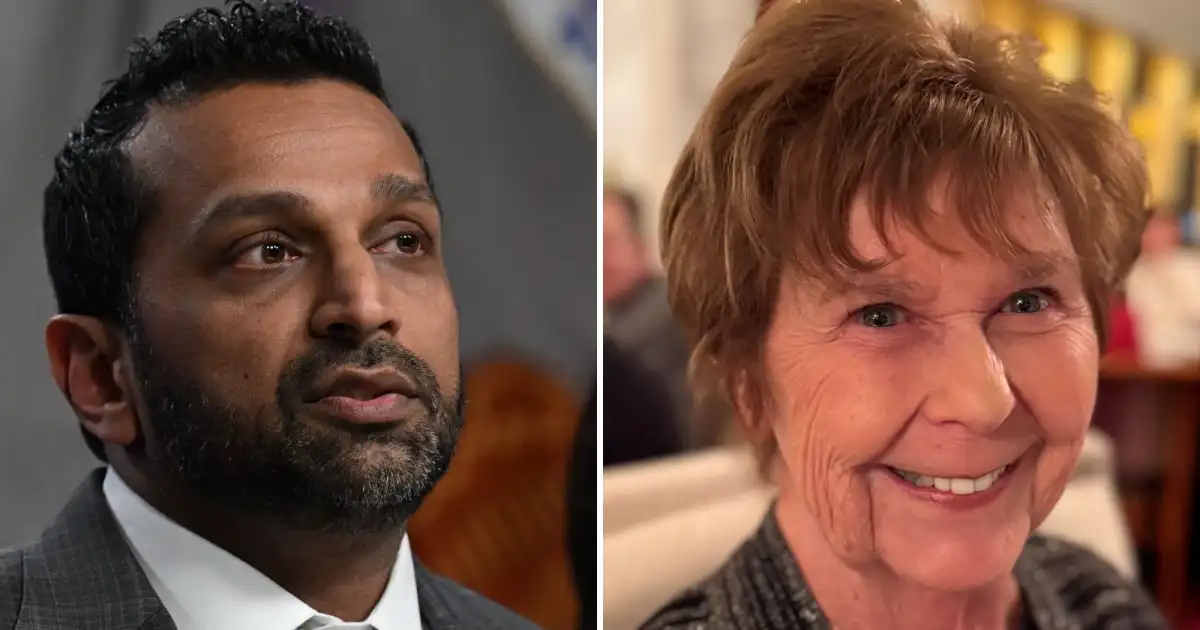
At the heart of the mounting public discord is FBI Director Kash Patel, who has repeatedly and publicly criticized the local authorities handling the initial stages of the search. The forty-six-year-old federal chief has refused to back down from his assertions that the Pima County Sheriff’s Department actively delayed the FBI’s involvement during those critical early hours when a victim’s chances of survival are highest. Speaking with a firm, uncompromising resolve on NewsNation, Patel painted a picture of a federal agency eager to help but sidelined by administrative gatekeeping. According to Patel, the FBI mobilized immediately upon learning of Nancy’s disappearance, offering the vast intelligence, technological, and tactical resources of the federal government to local investigators, only to be kept waiting outside the operational perimeter for four crucial days. To make matters worse, Patel highlighted a controversial decision by Pima County officials to bypass the FBI’s world-renowned, state-of-the-art forensic laboratory in Quantico, Virginia, opting instead to send crucial DNA evidence recovered from the crime scene to a private facility in Florida. For Patel and his supporters, these decisions represent a baffling rejection of top-tier federal support at a time when every second, and every strand of forensic evidence, carried the weight of a human life.
In sharp contrast to the FBI’s narrative of exclusion and delay, the Pima County Sheriff’s Department, under the veteran leadership of Sheriff Chris Nanos, has mounted a fierce and detailed defense of its actions. Local law enforcement officials have flatly rejected Patel’s characterization of their response, arguing that cooperation was not only immediate but seamless from the very beginning. According to a formal statement released by the department, Sheriff Nanos was personally on the scene the very night Nancy went missing, providing hands-on leadership and managing the chaotic initial response in the dark desert terrain. Local authorities emphasize that an active member of the FBI Task Force was present alongside their deputies on that fateful night, actively working the scene and ensuring that federal eyes were on the case from hour one. From the perspective of the sheriff’s department, the accusation of a four-day blackout is a distortion of the reality on the ground—one that ignores the tireless, round-the-clock efforts of local deputies who searched the ravines and neighborhoods of Tucson. They maintain that both the sheriff’s office and the Guthrie family initiated contact with federal authorities immediately, arguing that while high-ranking officials in Washington may not have been physically present in the Arizona dirt, the working relationship between field agents and local detectives began without any procedural delay.
Behind this war of words lies a massive, complicated investigation that continues to burn through resources and wear down the spirits of those involved. The search for Nancy Guthrie has required an immense mobilization of manpower, with Director Patel revealing that at least 150 FBI agents and intelligence analysts have been stationed at the bureau’s Tucson field office, sorting through a mountain of digital data, local tips, and surveillance footage in a race against time. The physical challenges of the investigation are immense; the Arizona desert is vast, rugged, and unforgiving, offering countless places where secrets can be hidden and making ground searches a grueling endeavor. Yet, the forensic mystery of the DNA evidence sent to Florida remains one of the most perplexing chapters of the case, raising questions among criminal justice experts about the strategy behind local law enforcement’s reliance on private labs over federal institutions. In any abduction case, the first forty-eight hours are considered the “golden window” where physical evidence is freshest and leads are warmest; as that window closed and turned into months of unresolved silence, the administrative friction between Pima County and the FBI has only heightened the sense of frustration for a public watching the case unfold, leaving many to wonder if bureaucratic pride has gotten in the way of justice.
For Savannah Guthrie, the administrative sparring between law enforcement agencies is a secondary noise to the overwhelming, quiet grief that has defined her life since February. The fifty-four-year-old television anchor, who is a daily source of comfort to millions of American households, was forced to take a painful, months-long leave of absence from her hosting duties on the Today show to focus on her family and the search for her mother. When Savannah finally returned to the anchor desk in early April, her face bore the unmistakable grace of a daughter carrying an unimaginable burden, her professional return marked by a silent vulnerability that resonated deeply with viewers nationwide. The depth of her pain was laid bare on Mother’s Day in May, when she shared a heartbreaking tribute on her Instagram account, posting pictures of her mother alongside a poignant message that reminded the world of the human being behind the headlines. Addressing her mother directly, Savannah wrote of the unbearable ache of her absence, calling her “Mother, daughter, sister, Nonie,” and declaring to her followers that her family would never cease their search, nor would they ever find true peace until Nancy was brought home. It was a stark, beautifully human reminder that while politicians and law enforcement heads debate protocols and laboratory choices, a real family is waking up every single morning to an empty chair and a devastating silence.
As the investigation remains unresolved, the public clash between FBI Director Kash Patel and Sheriff Chris Nanos serves as a sobering reminder of the complex, sometimes fractured nature of the American justice system when faced with high-profile tragedies. The unresolved disappearance of Nancy Guthrie stands as an open wound, a painful testament to the fact that money, status, and international media attention cannot always guarantee swift answers in the face of criminal mystery. If there is to be any hope of solving this case and bringing closure to the Guthrie family, the division between federal authority and local expertise must ultimately be bridged by a shared commitment to the truth, rather than a battle over bureaucratic territory. Behind the headlines, the press releases, and the finger-pointing lies a seventy-five-year-old woman whose laughter, warmth, and presence are desperately missed by her children and grandchildren. Until Nancy is found, the desert outside Tucson will keep its secrets, Savannah Guthrie and her family will continue to search the horizon with hopeful, tearful eyes, and a nation will watch and wait, hoping that unity and relentless dedication will eventually triumph over discord and bring a beloved mother home.