





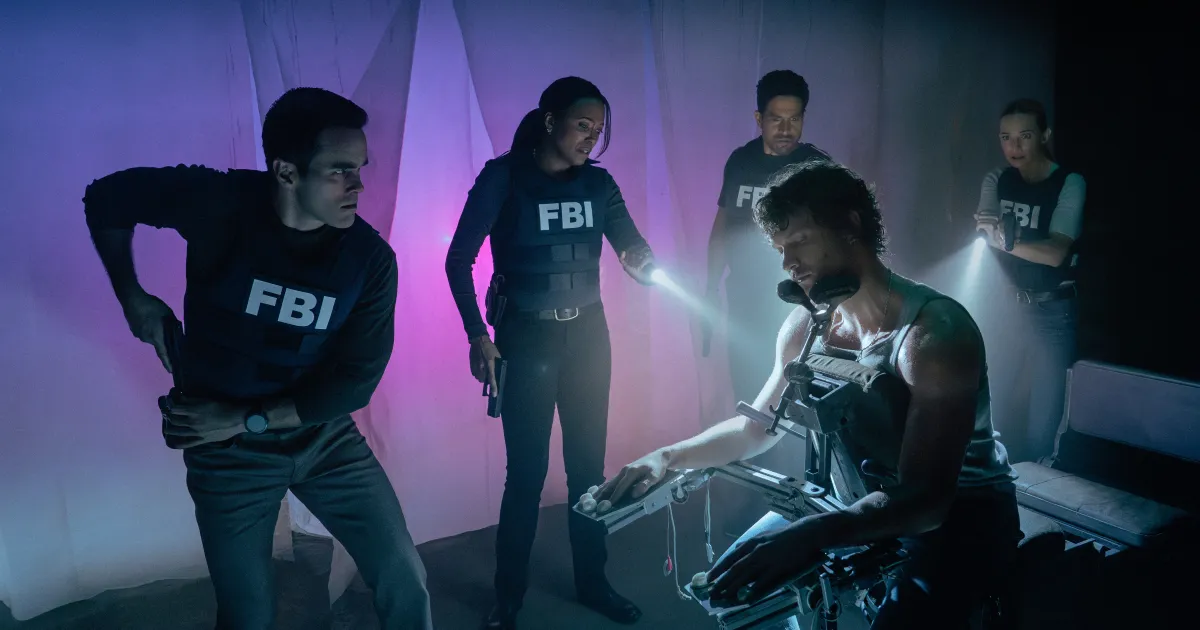
The landscape of modern television is rarely as unforgiving or as chillingly gripping as the darkness carved out by the long-running procedural franchise Criminal Minds: Evolution. In its latest installment on Paramount+, the series proved once again that it is not afraid to deeply rattle its dedicated audience by pushing creative boundaries to their absolute limits, particularly during the intense episode that aired on Thursday, June 18. Fans of the psychological thriller were left reeling after a visceral, high-stakes sequence that seemed to mark a tragic and gruesome end for a newly introduced character named Lance, portrayed with raw, heart-wrenching vulnerability by newcomer Connor Storrie. In this nerve-shredding storyline, Elias Voit’s—the franchise’s formidable and calculating primary antagonist played chillingly by Zach Gilford—most obsessive follower kidnaps Lance, transforming him into a helpless pawn in a sadistic game of psychological warfare designed to extract classified answers from the Behavioral Analysis Unit (BAU). As the show’s veteran profilers and Voit himself listened in horror over a live audio connection, the devastating consequences of a wrong answer manifested in the brutal acoustic reality of Lance being violently tortured in real-time. When the line abruptly went dead, the empty static felt deafening, leaving both the characters in the briefing room and millions of viewers at home to grapple with the terrifying likelihood that Lance’s journey had reached a premature, horrific end. This shocking narrative pivot not only highlighted the show’s enduring willingness to take massive storytelling risks, but it also cemented Storrie’s brilliant ability to command the screen, transforming what could have been a standard victim-of-the-week arc into a heartbreaking, unforgettable anchor for the season’s escalating tension, reminding us all of the fragile line between survival and systemic violence that defines the series.
To understand the profound impact of Storrie’s introduction to the tense, shadow-drenched world of FBI profilers, one must look at the meteoric rise of his career earlier this year, which was catalyzed by his breakout performance in the highly celebrated serial adaptation Heated Rivalry. Based on the widely popular, queer-coded Game Changers romance book series penned by bestselling author Rachel Reid, the television adaptation became an instant cultural sensation, presenting a deeply nuanced and high-octane look at the secretive, high-pressure lives of professional athletes. Storrie, at just twenty-six years old, took on the incredibly complex role of Ilya Rozanov, an enigmatic Russian hockey superstar whose fierce, aggressive rivalry on the ice with rival player Shane Hollander—played with magnetic charm by the twenty-five-year-old Hudson Williams—conceals a deeply passionate, tender, and secret romantic relationship. The show originally made its highly anticipated debut on the Canadian streaming service Crave in November 2025, but its reach expanded exponentially when it transitioned to HBO Max earlier this year, introducing their electric on-screen chemistry to an eager global audience. The transition sparked a massive wave of devotion across social media platforms like TikTok and X, with fans passionately championing the authentic, emotionally rich representation of queer athletes navigating the toxic masculinity of professional sports. Storrie’s portrayal of Ilya showcased a remarkable emotional range—balancing the outward bravado of an elite athlete with the quiet, agonizing vulnerability of a man hiding his truest self from a homophobic spotlight—making him an absolute standout and paving the way for showrunners in mainstream television to recognize his immense potential as a dramatic actor capable of anchoring high-stress narratives. This unique combination of athletic physical presence and soft emotional availability made his transition to the vulnerable, terrorized character of Lance in Criminal Minds all the more striking and painful for his rapidly expanding fan base to witness.
Behind the scenes of Criminal Minds: Evolution, executive producer and showrunner Erica Messer recognized the unique, captivating spark that Storrie brought to the table, deliberately crafting a multi-episode arc for him in Season 19 that would directly impact the overarching mythology of the season’s primary antagonist. In an exclusive conversation with Us Weekly, Messer confirmed that Storrie’s character, Lance, makes his pivotal debut in the season’s fourth episode, teasing that his fate and actions are intricately bound to the sinister web spun by this season’s “big bad,” even as she remained tight-lipped about the finer mechanics of the plot to avoid spoiling the mystery for eager fans. Messer emphasized that the guiding creative philosophy for this installment of the series is deeply rooted in the concept of “new beginnings,” reflecting a narrative leap of one year within the show’s universe that allows the legacy characters to confront fresh environmental and emotional trials with a renewed sense of optimism. While the franchise is famous for its descent into the darkest corners of human depravity, Messer sought to balance that inherent grimness with a rare glimmer of hope, suggesting that despite the trauma the BAU faces—such as the harrowing ordeal suffered by Lance—there lies a greater potential for healing and betterment on the horizon. This duality of hope and horror is precisely what makes Lance’s character arc so compelling; he represents the innocent lives caught in the crossfire of systemic evil, serving as a reminder of why the BAU continues to fight, even when the psychological toll seems far too heavy to bear. By weaving Storrie’s vulnerability into the very fabric of the season’s threat, Messer has heightened the emotional stakes, ensuring that every detective’s decision carries the heavy weight of a human life hanging in the balance, ultimately challenging the audience to consider how recovery is possible after experiencing such profound terror.
The creative synergy surrounding Storrie’s casting was so potent that the production team actively sought to recreate some of the on-screen magic from his breakout series by bringing his Heated Rivalry costar, Hudson Williams, into the Criminal Minds fold. Messer shared a candid behind-the-scenes anecdote with Us Weekly, admitting that the writers and casting directors were incredibly enthusiastic about the prospect of a reunion, openly questioning if Williams would be available to film a guest role that would surely have sent the internet into a frenzy of excitement. The production team went so far as to actively investigate his schedule, hoping to find a window of time where the two young actors could share the screen once more under very different, decidedly darker dramatic circumstances. Ultimately, however, the ambitious crossover idea fell victim to the realities of Williams’ exploding career and the relentless demands of television production schedules. Messer explained with a mix of disappointment and pride that Williams was simply too booked and busy, with his commitment to begin filming the highly anticipated second season of Heated Rivalry in August overlapping perfectly with the exact timeframe Criminal Minds required for their shoot. Although the creative team tried their best to make the logistics work, the timing proved insurmountable, leaving fans to dream of what kind of dynamic Williams might have brought to the gripping, high-stakes investigations of the BAU. This missed opportunity, while heartbreaking for shippers and casual viewers alike, highlights the bittersweet reality of young talent finding rapid, parallel success in a highly competitive industry where scheduling dictates destiny, proving that sometimes even the most passionate creative desires must bow to the practical demands of the physical production clock.
The intersection of a niche, beloved queer romantic series like Heated Rivalry and a staple network procedural like Criminal Minds represents a broader, fascinating shift in the contemporary entertainment ecosystem. Traditionally, actors who found their footing in passionate, specialized genres were often pigeonholed, but the modern television landscape increasingly celebrates versatility, allowing talent to jump from tender, romantic storytelling directly into intense, genre-defining suspense thrillers. This fluidity benefits both the actors and the networks, as it invites a younger, highly engaged demographic of viewers to cross over into legacy franchises, revitalizing shows that have been on the air for decades. When fans of Heated Rivalry tuned into Paramount+ to support Storrie, they were introduced to the sophisticated, serialized format of Criminal Minds: Evolution, while longtime procedural enthusiasts were introduced to a fresh, compelling talent whose previous work showcased a deep commitment to character-driven storytelling. This cross-pollination of fan bases underscores the power of modern streaming platforms, where complex character studies can thrive across different genres, proving that whether an actor is navigating the high-pressure dynamics of professional sports drama or the terrifying reality of a psychological kidnapping, human emotion remains the ultimate anchor that keeps audiences coming back for more. This democratization of content encourages a healthier, more diverse media landscape where stories of all kinds find common ground through the shared humanity of their leads, effectively breaking down traditional industry barriers that once kept diverse talent restricted to specific, often limited narrative boxes.
As Criminal Minds: Evolution continues to air new episodes on Thursdays, fans remain on the edge of their seats, parsing through every clue to discover if Lance’s tragic fate is truly sealed or if there remains a shocking twist that might bring him back into the fold after his horrific ordeal. Simultaneously, the anticipation for the upcoming season of Heated Rivalry continues to mount, promising viewers a deeper dive into the high-stakes world of Shane and Ilya as they navigate the trials of their secret love amidst the grueling demands of professional hockey. For Connor Storrie, this year has marked a definitive turning point, establishing him as an actor of remarkable depth who can easily transition from the tender, romantic nuances of Ilya Rozanov to the harrowing, high-stakes terror of Lance in Criminal Minds. His ability to humanize these characters in the face of extreme pressure—whether it is the societal pressure of a hidden romance or the physical threat of a sadistic killer—ensures that his career trajectory will remain on an upward path. Through these bold creative choices, both shows demonstrate a commitment to storytelling that does not shy away from emotional honesty, leaving an indelible mark on television and proving that the most memorable narratives are those that challenge our expectations and make us care deeply about the people at the center of the storm. As viewers wait in suspense, one thing is certain: Storrie has proven that he is not just a passing star, but a versatile dramatic force capable of reshaping how we experience hope, terror, and love on screen, proving that the human spirit’s capacity to endure is the most compelling story of all.