




If you have ever closed your computer at the end of a grueling workday only to feel as though your eyes have been gently toasted by an open flame, you are suffering from an incredibly common modern affliction. The relentless glare of smartphones, tablets, monitors, and television screens has created a widespread epidemic of digital eye strain, prompting millions of people to look for some form of daily relief. For years, the default remedy has been blue-light-filtering glasses, but for dedicated contact lens wearers, having to switch back to frames just to protect their eyes from screens feels like a frustrating step backward in terms of comfort and convenience. Thankfully, a massive evolution in optical material science has brought a brilliant alternative directly into the mainstream market: contact lenses with built-in blue-light-filtering technology. Unlike traditional spectacles, which usually rely on a thin, reflective surface coating that can easily scratch, smudge, or wear away over time, modern filtering contacts integrate specialized light-absorbing compounds directly into the physical matrix of the lens polymer itself. According to eye care experts at Greenwich Ophthalmology Associates, these cutting-edge lenses are specifically engineered with additives that absorb or block a predetermined percentage of high-energy visible (HEV) light within the critical 380 to 460 nanometer wavelength range. This means the lens acts as a built-in, invisible shield that quietly intercepts the most intense light waves before they can reach the sensitive structures of your eye. Depending on the brand and design, these lenses can filter anywhere from fifteen percent of blue-violet light in standard indoor office environments to upwards of fifty percent under bright, outdoor sunny conditions when using light-adaptive variations. For the active, screen-dependent professional, this integration provides an elegant, invisible, and highly effective way to enjoy crisp, corrected vision while shielding the eyes from the harsh and fatiguing glare of our digital lifestyle.
However, before you make an appointment with your optometrist to swap out your entire annual supply of contact lenses, it is incredibly important to separate the enthusiastic marketing claims of these products from actual, rigorous clinical science. The scientific community has maintained a refreshingly objective, measured perspective on the blue-light phenomenon, which can sometimes come as a surprise to consumers who have been told that screens are actively destroying their eyesight. The American Academy of Ophthalmology has repeatedly stepped in to demystify the conversation, clarifying that the blue light emitted by our consumer electronic screens has never actually been proven to cause permanent retinal damage, macular degeneration, or long-term blinding diseases. Instead, medical consensus suggests that the burning sensations, dryness, and muscle fatigue associated with digital eye strain are primarily driven by mechanical factors—specifically our tendency to stare intensely at screens and forget to blink, which dries out the tear film, combined with the continuous muscular effort required to maintain close-up focus for hours at a time. Yet, the story does not end there, as there is still room for appropriate defense; a landmark 2018 study published in the International Journal of Ophthalmology took a much more nuanced approach, acknowledging that while blue light is essential for healthy physical development and regulating our daily circadian rhythms, excessive and prolonged exposure to artificial blue light can indeed cause varying degrees of light-induced damage to the cornea, the crystal lens, and the delicate layers of the retina. Ultimately, while blue-light-filtering contacts might not be a medical necessity to protect you from blindness, they serve as a practical, comfort-enhancing tool that reduces visual fatigue, making them a worthy lifestyle choice for individuals looking to minimize the daily friction of screen-centered lives.
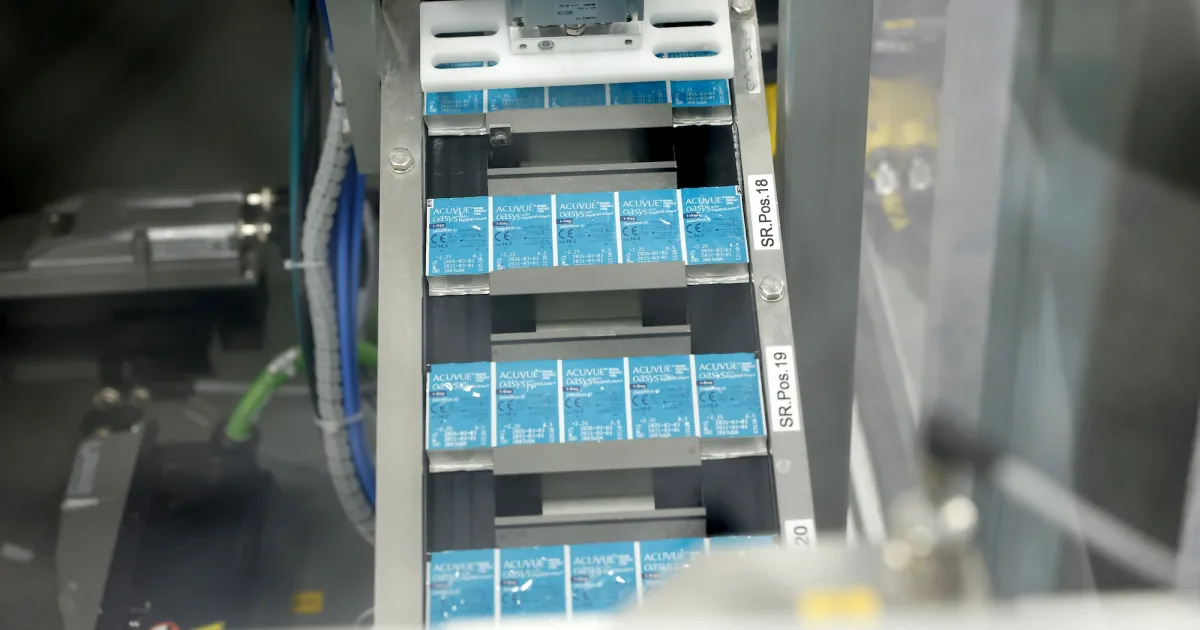
Responding to this growing demand, several of the world’s most prominent contact lens manufacturers have introduced highly advanced product lines that seamlessly combine blue-light filtration with superior hydration and UV-blocking capabilities. At the forefront of this technological shift is the Acuvue Oasys Max 1-Day, a daily disposable lens that has quickly established itself as a premier option for high-intensity screen users. As detailed by optical retailers like Warby Parker, the Acuvue Oasys Max 1-Day utilizes a combination of groundbreaking material sciences, including TearStable technology to provide unprecedented moisture retention throughout the day, and OptiBlue technology, which filters out up to sixty percent of blue-light waves to significantly reduce glare and visual fatigue from extended screen sessions. In addition to protecting eyes from digital displays, these daily lenses offer premium protection against environmental elements, filtering out eighty-two percent of UVA rays and ninety-seven percent of UVB rays, making them an incredible first-time option for people looking to transition to daily disposables. For those who prefer monthly wear options, CooperVision offers the highly regarded Biofinity Energys, a lens that actively pairs built-in blue-light adaptation with their trademark Aquaform technology to target the chronic dehydration that so often plagues office workers. Real-world feedback and consumer reviews from platforms like Web Eye Care strongly suggest that patients who wear these filtering lenses report a tangible improvement in comfort, finding that they can wear their contacts through long, screen-heavy workdays without experiencing the dry, heavy, and gritty fatigue that typically signals the end of their stamina. While these lenses are not a cure-all for the bad posture, dry air, and extended focus of modern desk jobs, they provide a very real, physical cushion that makes a major difference in how your eyes feel at the end of the day.
For individuals trying to decide between switching to blue-light contact lenses or sticking with standard eyewear, the decision-making process typically comes down to a simple evaluation of personal convenience, lifestyle patterns, and financial practicality. Blue-light contacts offer an incredibly seamless visual experience, remaining completely imperceptible to both the wearer and the people around them, while saving you from the common annoyances of glasses, such as frames sliding down your nose, fogging up from face masks or hot beverages, and reflecting distracting glare during video calls. They offer a constant, reliable layer of defense that is active the second you open your eyes in the morning. However, if you have already purchased a large supply of standard contact lenses and do not want to go through the hassle and expense of replacing them right away, there is absolutely no reason to worry. As noted by the experts at Contacts Direct, you can still easily shield your eyes from digital fatigue by purchasing a simple, affordable pair of non-prescription blue-light-blocking glasses to wear over your current contacts when you are working at your desk, giving you a wonderful, modular backup system that you can slide off whenever you walk away from your workspace. Whichever combination you ultimately choose to pursue, practitioners emphasize that safety should always remain your top priority, meaning that you must regularly swap out your lenses for fresh pairs, practice excellent hand hygiene, and follow the exact wear-and-care schedules recommended by your eye doctor to protect your delicate ocular health.
To cultivate a healthy relationship with our technology, we must also recognize that blue light is not an inherently evil force that we should try to eliminate completely from our lives. On the contrary, natural blue light is a vital biological catalyst that plays an indispensable role in maintaining our overall well-being by boosting alertness, sharpening cognitive function, improving memory retention, and keeping our emotional mood elevated throughout the day. In fact, this high-energy visible light is so beneficial to human psychology that specialized bright white boxes emitting significant amounts of HEV blue light are routinely prescribed as a primary, non-medicinal treatment for patients suffering from Seasonal Affective Disorder (SAD), helping them overcome winter depression. Beyond mood regulation, blue light is the fundamental environmental cue that syncs our circadian rhythm, signaling to our body’s master clock when it is time to wake up, feel energized, and eventually wind down for deep, restorative sleep. As the clinical team at Raleigh Eye Center points out, our bodies are naturally designed to receive the vast majority of our blue light exposure outdoors from natural sunlight rather than from digital hardware, but the true threat of our screen-dependent lives lies in proximity and timing. Because we hold our tablets, phones, and laptops incredibly close to our faces for hours at a time—especially during the quiet, dark evening hours right before bed—we subject our eyes to concentrated, artificial blue light that confuses our internal biology, suppressing melatonin production and throwing our sleep cycles into complete disarray.
Ultimately, surviving and thriving in our modern, screen-saturated reality is not about completely avoiding the digital world, but rather about learning how to manage our visual habits with care, wisdom, and the right supporting technologies. Blue-light-filtering contact lenses are a magnificent tool in this effort, giving contact wearers a highly convenient, invisible layer of protection that blends seamlessly into their daily personal and professional routines. However, relying on technology alone is never enough; the most healthy, sustainable approach to digital eye care always pairs these innovative products with mindful habits, such as practicing the famous 20-20-20 rule, making a conscious effort to blink fully and frequently while reading screens, keeping rooms properly illuminated, and turning off all personal electronic devices at least an hour before heading to bed to allow your mind and body to transition naturally into sleep. If your daily screen time is leaving your eyes feeling consistently dry, heavy, and exhausted, your first step should always be to schedule an open, detailed conversation with your eye care professional to explore your options and find the perfect match for your visual needs. By taking proactive charge of your digital eye health, adopting high-quality corrective solutions, and treating your eyes with the gentle, protective care they deserve, you can successfully banish screen-induced fatigue, enjoy crystal-clear vision, and confidently navigate our beautiful, connected world.