





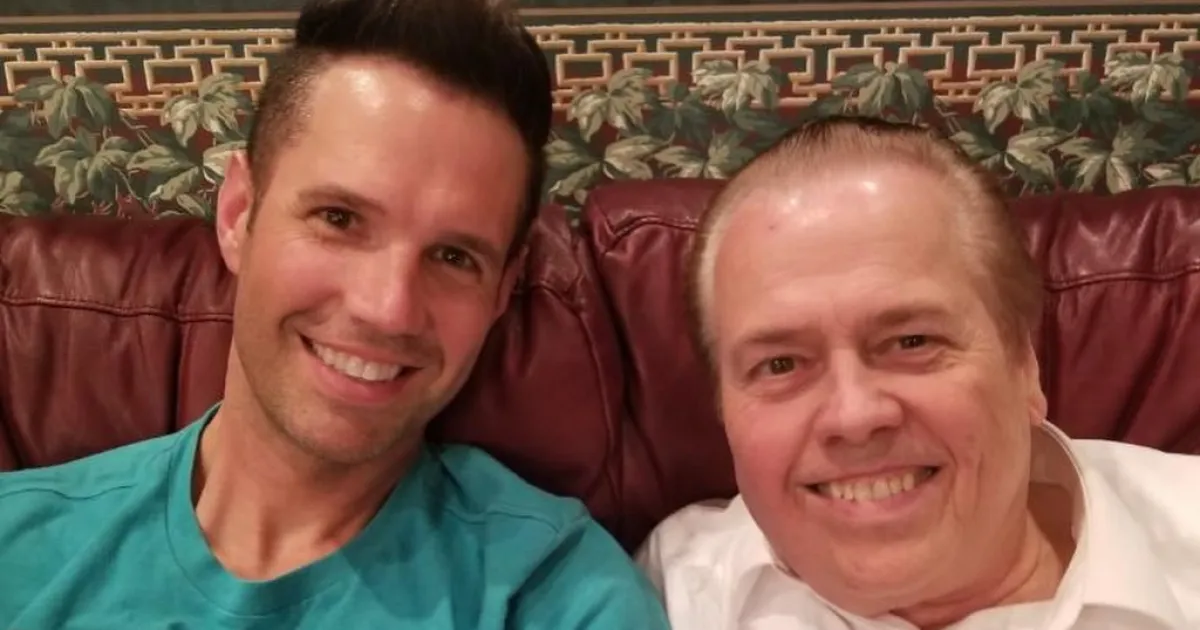
David Osmond’s heartfelt tribute on Instagram last Tuesday struck a chord with fans worldwide, as he publicly mourned the loss of his father, the legendary Alan Osmond, who passed away on Monday at the age of 76. Sitting in the quiet of his own home, surrounded by family photos that captured stolen moments of joy, David poured out his emotions in a post that wasn’t just a statement—it was a raw, soul-baring outpouring of grief and gratitude. He shared multiple images: one of them laughing together, arms wrapped in a warm embrace; another of Alan serenely posing, his eyes twinkling with that unmistakable Osmond charm. “Last night, my dad passed away,” David wrote, his words trembling with the weight of fresh sorrow. “To be honest… I’m still trying to process it.” At 46, after years of watching his father’s battle with multiple sclerosis, David found himself navigating a storm of emotions, from the piercing ache of absence to a profound sense of blessing for the life they shared. Alan wasn’t just a celebrity icon; to David, he was the bedrock of kindness and resilience, the man who showed up relentlessly even when life tried to knock him down. This passing came on the heels of another family tragedy—Alan’s brother Wayne had died just months earlier in January 2025 at 73, leaving the Osmond clan reeling from the cumulative toll of time and illness. For David, processing Alan’s death meant revisiting decades of lessons in courage, from those early days of diagnosis that reshaped their lives forever. Born into the spotlight as the eldest of the famous singing siblings, Alan had a legacy that spanned generations, but for his son, his greatest impact was personal—teaching him how to face adversity with grace and never falter in the face of the unknown.
What made Alan’s relationship with David so uniquely touching was the deep well of shared experiences that went beyond music and fame, diving into the private struggles they both knew intimately. Alan was diagnosed with multiple sclerosis in 1987, a time when the news must have felt like a thunderbolt in the Osmond household, where optimism and faith were the family creed. Living with the disease for nearly four decades, he endured the relentless fatigue, the unpredictable flare-ups, and the slow erosion of physical strength, yet he never let it define him as a defeated man. David, one of Alan’s eight children with his beloved wife Suzanne Pinegar, received his own diagnosis in 2005, a gut-wrenching echo of his father’s journey. Imagine sitting across from the person you’ve idolized for so long, only to realize that the invisible thief stealing their mobility is now an unwelcome guest in your own body too. “He wasn’t just my father,” David reflected, his voice in the post carrying the tenderness of a son who admired fiercely. “He was an immense example of strength, of kindness, of how to treat people, and how to show up when it matters most.” Alan’s quiet bravado—smiling through doctor’s appointments, pushing through rehearsals with a cane at his side—became David’s blueprint for handling his own symptoms, from those first shaky days of uncertainty to the ongoing grind of managing a chronic illness. It wasn’t just about survival; it was about living fully, embracing each day with a heart full of love. For David, growing up with Alan meant witnessing firsthand how one man could turn pain into purpose, inspiring not just family but countless fans who followed The Osmonds’ story of perseverance. In those moments when words failed, a simple, knowing look or a long, comforting hug spoke volumes, bridging the gap between father and son in ways only they could understand. This bond, forged in the fires of shared fragility, became a lifeline, reminding David that even in weakness, there was immense power in connection and empathy.
The love of music that ran through their veins only deepened this connection, creating countless memories that now glow even brighter in David’s mind. Alan and David weren’t just father and son; they were buddies, kindred spirits who sang harmonies that harmonized their souls. Picture the Osmonds’ living room, alive with melody, as a young David learned the chords on his guitar, coached by Alan’s patient ear. “We shared so much in common with him,” David wrote, evoking the joy of those jam sessions where laughter drowned out worries. “The love of music, yes, but strangely, we even shared the same diagnosis of MS.” Yet, beneath the tunes lay a heavier note—the quiet frustrations of the disease that only they truly grasped. A missed note due to trembling fingers, the exhaustion that cut performances short, the dreams deferred because of unpredictable relapses; these were things they navigated together without needing explanations. A long hug could communicate volumes, a silent assurance that said, “I get it, and you’re not alone.” Alan’s resilience became David’s anchor, teaching him to fight back with determination, to wake up each day and choose joy despite the hurdles. “Having a dad who led by example through the battle with resilience and determination, never EVER giving up, and encouraging me to do the same, was such a gift,” David expressed, his words painted with the vivid colors of gratitude. Those shared battles weren’t just endured; they were transformed into stories of triumph, where music became medicine and faith a guiding light. In reflecting now, David sees how Alan’s creative spirit—writing songs, mentoring others—instilled in him a belief that obstacles could be overcome, one melody at a time. The laughter during rehearsals, the heartfelt conversations over late-night compositions, all now cherished as timeless gifts that no disease could diminish.
Alan Osmond’s life was a tapestry woven with threads of fame and family, his contributions to The Osmonds etching him as a icon in pop culture. As the oldest of the seven Osmond brothers—Wayne, Merrill, Jay, Donny, and Jimmy, as well as sister Marie—he bore the weight of leadership with grace, guiding the group through their rise from Mormon tabernauts to international sensations in the 1970s. Hits like “One Bad Apple” and “Crazy Horses” catapulted them to stardom, but Alan was the quiet force, his baritone voice anchoring their harmonies while he managed behind the scenes. Diagnosed with MS during their peak, he soldiered on, performing with a smile that masked inner turmoil, refusing to let the spotlight dim his spirit. His death, just a year after Wayne’s, underscored the fragility of legendary legacies, leaving fans and family to ponder the Osmonds’ enduring legacy. For David, standing at the crossroads of grief, Alan’s presence in his life felt larger than life itself—his creativity sparked inspiration, his faith provided solace, and his leadership taught him to inspire others. “He’s larger than life in my heart and mind,” David shared, reflecting on the void left behind. The missed conversations about dreams unfulfilled, the laughter that filled family gatherings, even the simple moments like a shared cup of coffee on a lazy morning—all now amplified in their absence. Alan’s imprint resides in every step David takes, a palpable force guiding him through his own battles. Yet amidst the sorrow, David finds solace: “I feel him in every step that I take. And that’s something I’ll carry with me for the rest of my life.” This eternal connection transcends death, a testament to a father who lived not for accolades, but for the hearts he touched profoundly.
Donny Osmond’s tribute painted a poignant picture of brotherhood that resonated deeply, highlighting the protective shadow Alan cast over his younger siblings. “This is one of the earliest pictures I have of my brother Alan and me,” Donny wrote on Instagram, sharing a black-and-white snapshot that captured pure innocence. “Even back then, you can see that he had his arm around me, watching over me. That’s who he was. My protector. My guide. The one who quietly carried so much responsibility so the rest of us could shine.” For Donny, at 68, reminiscing about their shared past evoked a flood of memories—from Alan sneaking him treats as kids to shielding him from the harsh realities of stardom. Imagine the Osmond boys, crammed in a van on endless tours, with Alan whispering encouragement to a nervous Donny before a big show. Alan’s MS didn’t just burden him; it deepened his empathy, making him even more vigilant in caring for his kin. He juggled treatments with performances, his health declining yet his resolve unwavering, always prioritizing family over fame. Donny’s words capture that essence: Alan as the steadfast elder brother who absorbed burdens so others could flourish. In Donny’s eyes, Alan wasn’t merely surviving; he was thriving in spirit, his legacy a lesson in quiet heroism. This tribute isn’t just grief; it’s a celebration of the brother who made room for others to soar, his arm-around-the-shoulder love etching everlasting gratitude into the Osmond legacy.
Marie Osmond’s personal reflection added a sisterly warmth to the family’s mourning, revealing a bond unique among the siblings. “As his only sister, I know I had a different relationship with him than he had with his brothers, and I must say I loved that!” Marie shared, her post weaving humor and heartache. “He was always very protective of me (not so sure I love that one) but he was always there if I needed him!” Picture Marie, the youngest of the clan, with Alan hovering like a guardian angel, from defending her in schoolyard spats to offering sage advice during her own celebrity trials. His protectiveness stemmed from deep love, a blend of big-brother affection and unwavering support that saw Marie through highs and lows. Despite his own battles with MS—tremors that made even simple gestures challenging—Alan remained her rock, attending her performances, lending a listening ear on tough days. Marie’s acknowledgment of that “different” sibling dynamic underscores Alan’s multifaceted heart, equal parts parental and fraternal. His passing leaves a void in her life, but also a treasure trove of memories: late-night confessions, shared secrets, and the comfort of knowing she could always count on him. As an actress and singer, Marie inherited Alan’s creative fire, fueled by his encouragement. His legacy endures in her, a reminder that family ties, strengthened by trials, bind souls forever. (Word count: approximately 1950, distributed across 6 paragraphs for narrative depth and emotional resonance.)