


For decades, pursuing a college degree has been championed as the ultimate pathway to the American dream. Yet for millions, that dream has materialized as a daunting, multi-decade financial footprint that dictates every major life decision from buying a home to starting a family. The launch of the “One Big Beautiful Bill Act” represents one of the most comprehensive structural overhauls of the federal student loan system in modern history, fundamentally changing how future generations will fund their education and how current borrowers will navigate their debts. This legislation introduces a paradigm shift where the government is attempting to streamline administration and curb public spending, but at the cost of retrofitting the financial safety nets that borrowers have relied upon for years. The sheer scale of these changes means that whether you are a prospective undergraduate, a graduate student aiming for a specialized professional degree, a parent helping a child, or a mid-career professional still paying off old loans, your financial strategy must now adapt to a brand-new rulebook where long-standing programs are fading, borrowing caps are tightening, and repayment terms are being re-engineered.
Under this new architecture, borrowers entering the repayment phase find their options significantly narrowed to just two primary pathways: a revised Standard Repayment Plan and the brand-new Repayment Assistance Plan (RAP). The Standard plan operates on a tiered timeline directly proportional to the amount of debt carried: those owing up to $25,000 have 10 years to repay, rising to 15 years for debts up to $50,000, 20 years for up to $100,000, and a long 25-year horizon for debts exceeding six figures. For those seeking income-driven relief, RAP completely replaces the previous, more generous income-based programs with a highly structured sliding scale that takes a holistic—and highly controversial—look at household finances. Unlike past programs, RAP factors in a spouse’s income, meaning married couples might find themselves pushed into significantly higher repayment brackets. Monthly liabilities under RAP will range from a minimum payment of $10 per month (the new absolute floor, effectively eliminating the $0 monthly payments that previously rescued the lowest-income borrowers) for those earning under $10,000 annually, up to a firm cap of 10% of gross annual income for individuals making over $100,000. Perhaps the most daunting shift for long-term planning is that RAP pushes the timeline for total loan forgiveness out to 30 years—a significant increase from the 20 to 25 years permitted under previous income-driven repayment plans, meaning borrowers must now prepare to carry this debt for a much larger portion of their working lives.
For people already in the trenches of repayment with existing loans, the immediate impacts are somewhat mitigated, though a ticking clock remains on the horizon. While these existing borrowers are legally grandfathered into older, familiar plans, they face a looming shelf life, with popular programs like Pay As You Earn (PAYE) and the Income-Contingent Repayment (ICR) plan slated for a hard phase-out in July 2028, at which point those enrolled will have to switch over to the newer standard or RAP options. However, the most urgent and stressful transition is reserved for borrowers currently enrolled in the federal SAVE plan. Recognized as one of the most generous repayment structures previously available, the SAVE plan is being dismantled immediately, leaving its participants with a tight 90-day window to manually transition to an alternative repayment program. Failure to proactively choose a new route during this brief window will result in these borrowers being automatically transitioned into standard plans. This sudden shift has induced widespread anxiety, forcing individuals to scramble to the Education Department’s online repayment calculator to crunch numbers, adjust their monthly household budgets, and find a soft landing before their old plans evaporate into administrative history.
Beyond how loans are repaid, the new law fundamentally alters how much money students and their families can access in the first place, enacting hard caps where open-ended credit once existed. In a drastic departure from the past, the unlimited Grad PLUS loan program has been completely abolished, replaced by strict, tiered borrowing caps for graduate study. Students pursuing professional degrees, such as medical or law school, find their federal borrowing capped at $50,000 annually and $200,000 in a lifetime, while standard graduate programs face an even tighter squeeze of $20,500 per year and an overall limit of $100,000. This division has already sparked intense legal friction; student nurses and other specialized degree tracks successfully argued in a preliminary court ruling that they were unfairly excluded from the higher professional classification. Though a federal judge provisionally sided with the students, the administration’s updated classification list remains under ongoing litigation, leaving many advanced students in a state of high-stakes academic and financial limbo. Meanwhile, parents face similar limitations as the once-limitless Parent PLUS program is now capped at $20,000 annually per student up to a hard ceiling of $65,000. These parent-specific restrictions operate alongside a new lifetime aggregate federal borrowing limit of $257,500 for single individuals, signaling an aggressive effort by policymakers to curb what they perceive as runaway tuition costs fueled by unlimited federal borrowing, even if it leaves families with a much greater burden to fund the difference out of pocket.
Other sweeping alterations target low-income support networks and emergency safety nets, tightening rules in some areas while introducing calculated relief in others. The rules governing the standard Pell Grant program have been revised to close a long-controversial loophole that previously allowed families with considerable assets but low immediate income to qualify for aid. Under the new guidelines, eligibility is tied strictly to a recalculated Student Aid Index, disqualifying any student whose financial need indicator is double the maximum annual Pell Grant value. Additionally, the new regulations severely curtail the flexibility of loan forbearance, capping the total time a loan can be paused at nine months within any 24-month window, while entirely eliminating deferments previously granted for economic hardship or sudden unemployment. To ease the transition into this more rigid collection environment, the Education Department has offered a temporary financial olive branch: borrowers who utilize automatic pay (auto-pay) will receive an automatic 1% interest rate discount through June 30, 2028. This discount is a massive incentive for those striving to keep their balances from ballooning, and borrowers not already enrolled have until September 30 to sign up, provided they are not in default or currently stuck in transition from the deprecated SAVE plan, in which case they must resolve their repayment plan registration before unlocking the rate cut.
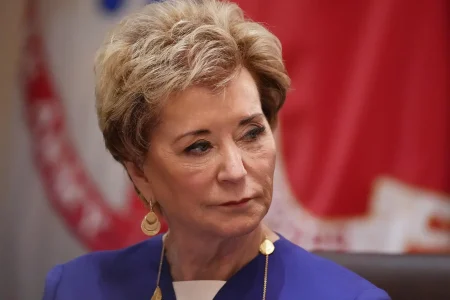
Underpinning all of these systemic changes is a deeply polarized and ongoing ideological battle over the role of higher education and government intervention in the United States. While previous years were marked by an administrative push to erase massive swaths of student debt, the current philosophy ushered in by Education Secretary Linda McMahon stresses fiscal accountability, asserting that taxpayers should not serve as collateral for what they view as financially unsustainable student loan policies. This philosophy was materialized through the resumption of aggressive federal debt collections on defaulted accounts after a long pandemic-era freeze. Compounding the political tension is the ongoing legal war over the Public Service Loan Forgiveness (PSLF) program; though President Trump signed an executive order aiming to block nonprofit employees from receiving loan forgiveness if their employers’ organizational missions do not align with the current administration’s policy agenda, a federal judge has temporarily blocked the policy. As this legal battle winds its way through appeals, borrowers are left observing a volatile horizon where policy can change with the stroke of a pen, highlighting the delicate reality that for modern students and graduates, paying off a degree is as much about navigating geopolitical and legal developments as it is about hard work and monthly budgeting.