


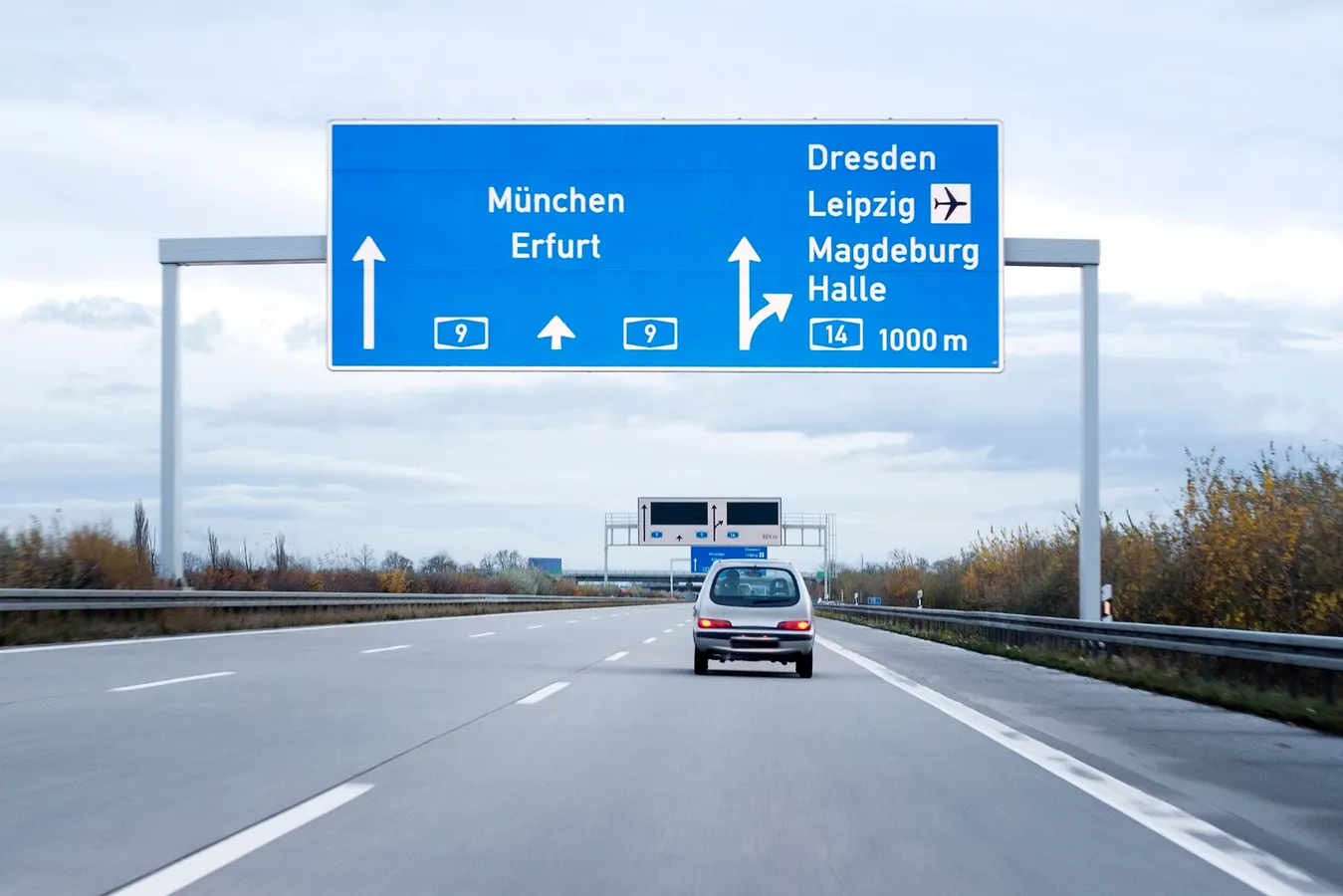
As Europe faces the daunting challenge of rewriting its industrial DNA to meet a zero-carbon future, a quiet yet powerful transformation is unfolding along a 400-kilometer stretch of highway in southern and eastern Germany. This geographical lifeline, connecting the historic Bavarian capital of Munich with the resilient, engineering-focused city of Dresden, has morphosed into the premier high-tech corridor of the European continent. It is here that the Fourth Industrial Revolution, or 4IR, is finding its physical form, driven by an ambitious wave of startup companies that are bridging the gap between digital software and heavy industrial hardware. Data gathered from the German Startup Association (Deutscher Startup-Verband) and local registries reveals that the Munich and Dresden metropolitan regions are now home to nearly 3,000 active startups, with more joining their ranks every week. Crucially, more than a quarter of these companies self-identify as pioneering ventures in clean energy, industrial optimization, deep technology, or carbon-neutral transport. far from being a sudden stroke of luck, this flourishing corridor is the byproduct of decades of deliberate ecosystem-building, uniting two highly distinct urban cultures to orchestrate the continent’s ambitious energiewende—a comprehensive energy transition that represents one of the most complex societal and economic scale-ups in modern history.
The western anchor of this corridor, Munich, acts as the financial engine and academic incubator of this industrial renaissance. Long celebrated for its high quality of life, the city has quietly developed one of the most sophisticated and concentrated venture capital landscapes in Europe, sustained by both institutional funds and low-profile Bavarian and Northern European family offices eager to deploy generational wealth into long-term technology plays. A dense network of venture capital firms—including names like HV Capital, Wellington Partners, Target Capital, Munich Venture Partners, UVC Partners, Occident, Picus Capital, 10x Founders, Possible Ventures, WorldFund VC, Future Energy Ventures, Vsquared Ventures, Venture Stars, Ananda Impact Ventures, and Fraunhofer Venture—operates side-by-side with the venture arms of corporate titans like the automotive pioneer BMW and the world reinsurance leader Munich Re. This immense financial ecosystem is so magnetic that even prominent VC fund managers from Berlin choose to run significant parts of their operations from Munich. As Herbert Mangesius, the founding partner of Vsquared Ventures, notes, the journey of an industrial startup requires a unique marriage of creative spark and structured, patient financing. It is not enough to have a brilliant laboratory breakthrough; a founder needs the financial runway to build massive physical prototypes and eventually manufacture at scale. Vsquared’s own diverse portfolio—which ranges from the zero-emission electric aviation pioneer Vaeridion to the green battery recycling disruptor Cylib, and from next-generation launch company Isar Aerospace to advanced energy storage material firm Group 14—vividly demonstrates this thesis. This robust financial playground is constantly fed by world-renowned academic foundations, chief among them the Technical University of Munich (TUM) and the Max Planck Institute, ensuring that highly specialized, scientific knowledge is continuously translated into commercially viable enterprises.
If Munich supplies the financial fuel and theoretical brilliance, Dresden provides the practical engineering soul and the physical grit needed to bring these ideas into reality. Nestled in the heart of Saxony, Dresden boasts an illustrious heritage of hardware manufacturing, precision machining, and materials science that has been revitalized over the last twenty years. Today, it stands proud as a central pillar of “Silicon Saxony”—Europe’s largest microelectronics cluster—world-renowned for its specialized focus on semiconductors, advanced photonics, and quantum technologies. Driven by strategic industrial investments supported by local government initiatives and private industrial leaders, Dresden has emerged as a premier hub for green hydrogen infrastructure, physical energy systems, and heavy-duty decarbonization solutions. The entire corridor between these two metropolitan giants is dotted with highly sophisticated corporate innovation campuses operated by world leaders like Airbus, Bosch, Siemens, and Infineon Technologies. This dense concentration of corporate giants creates a natural, supportive habitat for young startups, giving them immediate access to physical supply chains, advanced testing facilities, and corporate partners who can pilot their technologies in real-world settings. This organic crossover between young disruptors and established industrial giants creates an environment of mutual trust, allowing deeply complex technologies to scale far faster than they would in isolation.
To truly understand the human dimension of this corridor, one must look at the founders who have chosen to call this region home. Consider Kevin Berghoff and Fleming Bruckmaier, the co-founders of Quantum Diamonds, a startup developing atom-sized quantum sensors designed to revolutionize high-tech quality control. Recognizing the geopolitical urgency of securing European technological independence, this team of former McKinsey consultants and specialized quantum physicists is commercializing synthetic diamond sensors that utilize nitrogen-vacancy centers to perform non-destructive, microscopic magnetic imaging of advanced semiconductor chips. In an era where microchips are stacked in complex 2.5D and 3D architectures, finding a tiny structural defect is like finding a needle in an industrial haystack; Quantum Diamonds’ technology makes the invisible visible, saving manufacturers millions in precision testing. Backed by a newly secured €152 million ($175 million) investment for an advanced manufacturing facility in Munich, which will bring around 200 high-tech jobs to the local community, Berghoff and Bruckmaier cannot imagine building their dream anywhere else in the world. Similarly, Francesco Sciortino, the co-founder and CEO of Proxima Fusion, speaks of the deep local roots that have fueled his company’s rapid growth. Spun out of Munich’s Max Planck Institute of Plasma Physics in 2023, Proxima Fusion is attempting to commercialize “stellarator-based” magnetic confinement fusion, a clean energy technology that uses massive super-magnets to bottle the power of the sun. Sciortino points out that to realize these complex computational designs, a startup cannot survive on software talent alone; it requires master CNC machinists and expert physical technicians who can shape raw metals, composites, and plastics into nanometer-precise physical parts—a highly specialized talent pool that Germany, and this corridor in particular, has preserved and nurtured better than almost any other place on earth.
Yet, creating a world-class technology hub requires more than just capital, research institutions, and raw talent; it requires a dedicated human network of connectors, mentors, and program leaders who act as the essential glue, helping young scientists learn to think like battle-hardened chief executives. Leading this charge is Ignite Next, a specialized program spearheaded by co-founders Markus Bohl (CEO) and Alois Eder (CTO). Both are prominent veterans of the celebrated Intel Ignite accelerator program, which they took independent when the global semiconductor giant adjusted its corporate strategies, winning the active support of key industry giants like Infineon and Intel itself in the process. Ignite Next does not view itself as a conventional start-up incubator or commercial consultancy; rather, Bohl and Eder describe it as the “missing link” between deep science and operational reality, offering a founders-first, non-dilutive framework that helps IP-heavy startups scale up without forcing them to sacrifice their equity early on. Both mentors recognize that while a brilliant scientist may possess the domain expertise to design a world-changing physical solution, they often lack the operational confidence, manufacturing connections, or fundraising knowledge necessary to survive the transition from lab to factory floor. Bohl reflects on how this bottleneck has historically held European technology back, where world-class scientific foundations often faltered due to a lack of structured industrial collaboration. By bridging this gap and providing access to a curated network of more than 300 senior industry executives, Ignite Next ensures that startups working across semiconductors, photonics, advanced robotics, and quantum computing have direct lines of communication to the decision-makers who can deploy their solutions at scale.
When you look at the cold financial metrics, the massive economic impact of this highly coordinated and supportive ecosystem becomes blindingly clear. Outside of the consumer-internet focus of Berlin, Munich has established itself as Germany’s powerhouse of deep-tech value creation, routinely attracting approximately €3 billion ($3.5 billion) in fresh venture capital investments each year. According to comprehensive data from Dealroom, the combined enterprise value of Munich’s startup ecosystem has soared past the €101 billion ($115 billion) mark, representing more than a quarter of the total value of all venture-backed German startups founded since 1990. While Dresden’s highly specialized and targeted ecosystem is approximately one-fifth the size of Munich’s in terms of total deal flow, its laser-like focus on hardware excellence and microelectronics makes it an incredibly capital-efficient and high-impact partner in the corridor. Leaders like Mangesius, Bohl, and Eder freely admit that while these regional investment figures might appear conservative when contrasted with the aggressive, multi-billion-dollar fundraising rounds common in Silicon Valley or the sovereign-wealth-backed ecosystems of the Middle East, the capital deployed along the Munich-Dresden corridor is heavily targeted, sustainable, and increasingly backed by global co-investors from the US and Asia who recognize the unmatched engineering quality of the region. As Europe’s traditional manufacturing, processing, and energy industries increasingly embrace artificial intelligence, autonomous robotics, and low-carbon solutions, this unique corridor stands as a glowing testament to what can be achieved when scientific brilliance, deep capital, and a rich culture of precision craftsmanship work hand in hand.