



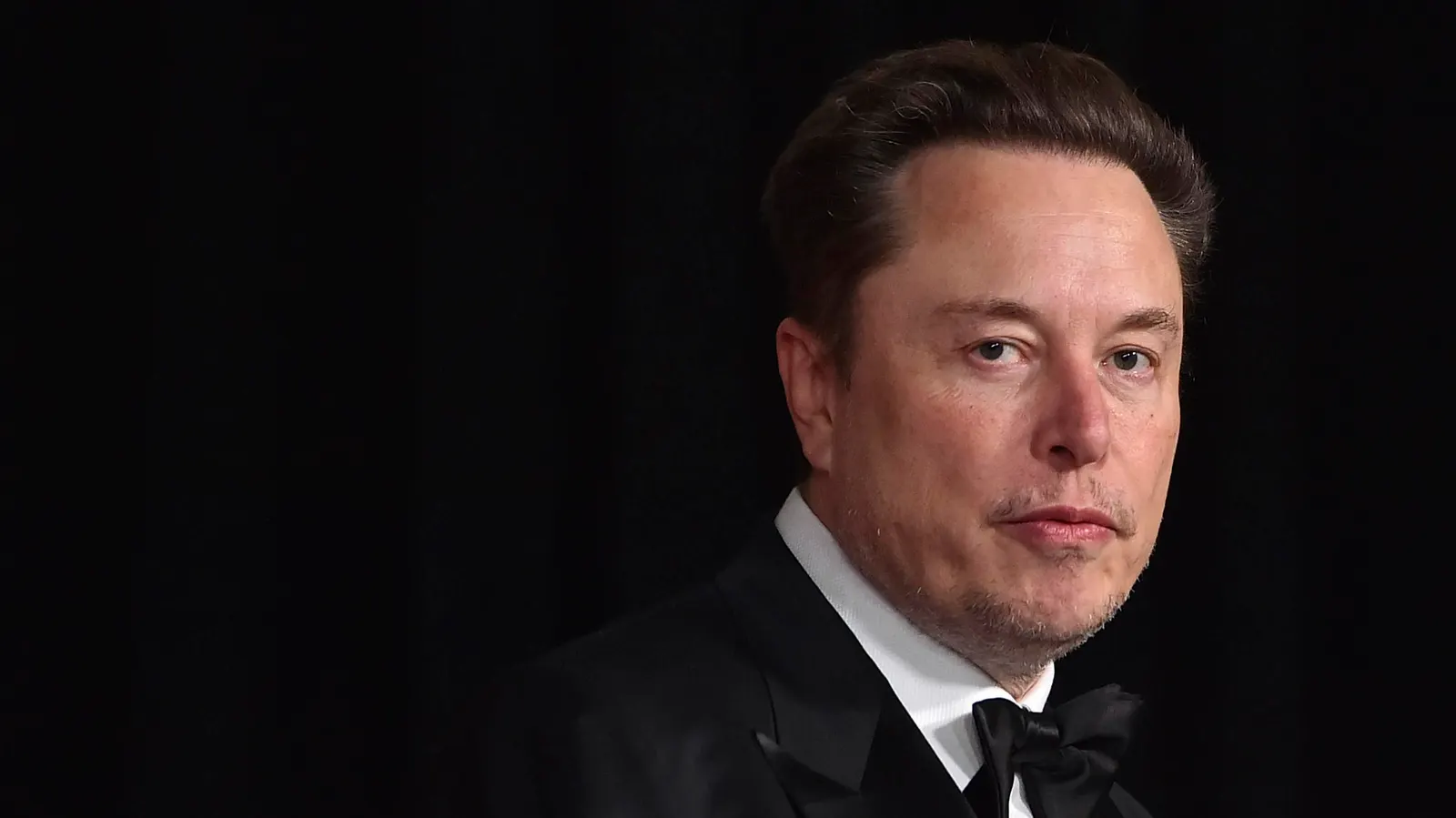
The sheer scale of modern wealth has reached a point where the addition or subtraction of tens of billions of dollars resembles the shifting scores of a high-stakes video game rather than tangible, real-world finance. For Elon Musk, the world’s most famous and unpredictable industrialist, this abstract reality took a dramatic turn on Wednesday as he officially slipped below the astronomical threshold of “trillionaire” status. A sudden 6.2% slide in the share price of his aerospace company, SpaceX, wiped over $50 billion—specifically a staggering $59 billion—from his personal balance sheet in a matter of hours. This downward correction dragged his estimated net worth down to $994.1 billion. To the average observer, the difference between having one thousand billion dollars and ninety-nine percent of that amount is purely academic, yet psychologically and symbolically, the drop marks a significant moment in the public narrative of modern capitalism. It highlights the incredibly volatile nature of paper wealth, where a single day of nervous trading can erase fortunes larger than the gross domestic products of many sovereign nations, even as the man at the center of the storm continues to go about his business of trying to colonize Mars and overhaul global transit.
To understand how Musk’s fortune can swing by the value of a major car manufacturer in a single afternoon, one must look at the unique crown jewel of his empire: SpaceX. Long operated as a private entity away from the daily scrutiny of public markets, the rocket manufacturing and satellite internet giant recently made its historic debut on the public stage with a highly anticipated initial public offering. In the initial euphoric wave following the IPO, investors pushed the company’s valuation to dizzying heights, briefly driving Musk’s net worth to a historic peak of $1.45 trillion. Since then, however, the stock has behaved like a roller coaster, demonstrating the intense volatility that often accompanies highly anticipated tech debuts. Wednesday’s 6.2% drop was a sobering reversal from a spectacular three-day run where the stock had surged nearly 12%. Because Musk’s financial destiny is so intricately bound to the company—he personally holds a massive reservoir of 4.8 billion SpaceX shares alongside 350 million stock options waiting to be exercised at a bargain price of $8.40 per share—even minor tremors in investor sentiment trigger massive seismic shifts in his personal valuation.
Despite this breathtaking paper loss, Wall Street’s most influential voices are urging the public not to lose sight of the broader horizon. On the very same day that SpaceX shares stumbled, Dan Ives, a highly respected and perennially optimistic analyst at Wedbush Securities, initiated formal coverage of the rocket maker with a glowing assessment. Ives, widely known for his bullish and often prophetic stances on Musk’s other major venture, Tesla, described SpaceX not merely as an aerospace company, but as “one of the most differentiated assets within the tech market.” Setting an ambitious price target of $190 per share, Ives argued that the short-term fluctuations of the stock market fail to capture the company’s true potential as a “hyperscaler” poised to dominate the three pillars of global connectivity, orbital launch logistics, and next-generation artificial intelligence infrastructure. From this analytical perspective, Wednesday’s dip is a minor blip in a decade-long trajectory, suggesting that while the public focuses on the dramatic headline of a lost trillion-dollar status, the industrial machinery Musk has built is quietly anchoring itself as the indispensable substrate of the future economy.
However, the path to remaining a trillionaire is paved with complex corporate governance issues as much as it is with market dynamics. Musk’s drop below the twelve-digit mark was not solely the result of Wednesday’s stock market movements; it was also the product of quiet, behind-the-scenes adjustments to how his wealth is calculated. Just last week, Forbes made the decision to strip approximately $116 billion of restricted Tesla stock from its official estimates of his net worth. This recalculation followed a major corporate restructuring at Tesla, where the board replaced Musk’s historic 2018 CEO performance compensation package with a new, highly structured agreement. Under these new terms, the massive payout is strictly contingent upon Musk remaining in an active, senior leadership role at the electric vehicle company through January 2028. This administrative adjustment serves as a powerful reminder that elite wealth is rarely sitting in a liquid bank account; rather, it is a complex, fragile web of legal agreements, performance milestones, and restricted equities that can be revalued at the stroke of a regulatory pen.
While Musk was experiencing a cooling trend in his financial atmosphere, his long-time rival and fellow tech titan, Mark Zuckerberg, was watching his own fortune bask in a warmth of a different kind. On that very same Wednesday, Zuckerberg’s net worth ballooned by $19.1 billion, climbing to a healthy $212.6 billion as shares of Meta surged by more than 10%. The catalyst for this massive jump was a blockbuster report detailing Meta’s ambitious plans to construct its own proprietary cloud infrastructure business. By preparing to sell direct access to AI computing power and sophisticated language models, Meta is positioning itself to go head-to-head with established cloud giants like Amazon Web Services, Microsoft Azure, and Google Cloud. This stark contrast in single-day fortunes perfectly captures the ongoing, dramatic narrative of the Silicon Valley elite: while Musk builds the physical infrastructure to carry humanity to the stars, Zuckerberg is building the virtual and intellectual infrastructure to define how humanity thinks, communicates, and computes in the digital age.
Ultimately, even with a temporary step back from the trillionaire threshold, Elon Musk remains comfortably perched at the absolute summit of global wealth, far outstripping his closest historical rivals. To put his $994.1 billion fortune into perspective, he still commands a lead of more than $700 billion over Google’s legendary co-founders, Larry Page and Sergey Brin, who occupy the second and third spots on the global wealth leaderboard with $292.7 billion and $270 billion, respectively. This massive gap highlights a fundamental truth about the modern economic landscape: we are living in an era where a select few individuals wield financial resources that rival the economic output of entire continents. While the daily rise and fall of stock tickers will continue to dictate whether Musk is officially labeled a trillionaire or a multi-billionaire, his true influence lies in his ability to mobilize these unimaginable sums toward rewriting the rules of space travel, satellite communication, and automotive technology. In the grand theater of human ambition, the loss of $59 billion is a dramatic footnote, but the underlying empire remains fully intact and aimed directly at the future.