





At a Monetary Crossroads: New Fed Chief Kevin Warsh Faces His First Policy Crucible Amid Stubborn Inflation
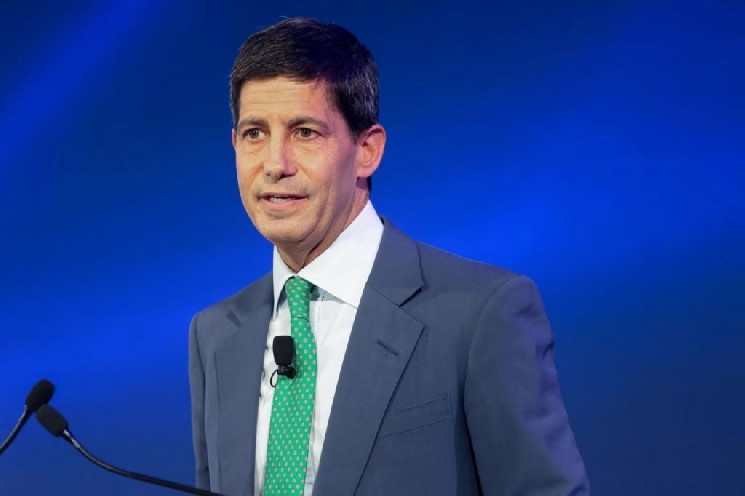
The global financial community is focused on Washington as the Federal Reserve prepares to announce its first interest rate decision under the leadership of its newly minted Chairman, Kevin Warsh. Nominated by President Donald Trump at the end of January to steer the world’s most influential central bank, Warsh now stands at an extraordinary monetary crossroads, caught between the conflicting forces of political pressure and stark macroeconomic reality. For months, the primary question lingering over trading desks and boardroom tables has been whether the new Chairman will assert his independence by pursuing further interest rate hikes to tame a stubborn resurgence in domestic inflation, or if he will bow to the long-standing, vocal demands of the Trump administration to open the floodgates to rate cuts. This initial policy crucible represents far more than a simple adjustment of benchmark borrowing costs; it is a defining test of the Federal Reserve’s institutional autonomy and a crucial signaling moment for a global economy that has grown increasingly sensitive to the whims of the American debt market. As Warsh prepares to gavel his historic first meeting of the Federal Open Market Committee (FOMC) on Wednesday, the stakes could not be higher, and the financial world is watching closely to see how the new central banker will navigate a landscape characterized by rising consumer prices on one hand and political headwinds on the other.
FED POLICY RATE TRAJECTORY (2024 - 2026)5.50% – [Jan – Jul 2024: Peak Restrictive Period]
5.00% – [Sep 2024: First Easing Steps]
4.50% – [Nov 2024 – Jul 2025: Extended Easing & Pause]
4.00% – [Sep – Oct 2025: Late-Year Easing]
3.50% – `–[Dec 2025 – Jun 2026: The 3.75% Plateau / Warsh Era Begins]
0.00% +——————————————————————–>
The immediate focus of the incoming Chairman’s debut will be the post-meeting press conference, a highly anticipated media event where every word, pause, and subtle shift in body language will be analyzed for clues about the future path of monetary policy. Historically, the bond market serves as the ultimate arbiter of Federal Reserve communication, and yields are poised to react with extreme sensitivity to the narrative Warsh establishes during his first public appearance behind the famous press room podium. Highlighting this pervasive air of uncertainty, Jonathan Pingle, a respected chief economist at UBS, noted in a comprehensive research brief that this meeting represents an unprecedented blank slate for global markets, emphasizing that because this is Warsh’s first public appearance as chairman, the investing public remains largely in the dark regarding his fundamental, long-term policy views. This lack of clarity has introduced a distinct premium of volatility into the sovereign debt markets, with institutional investors hedging their bets across the yield curve. The financial sector is desperate to decode whether the new leader leans toward the hawkish camp—prioritizing price stability above all else—or if he will adopting a more dovish, growth-oriented outlook that aligns with the expansionist agenda of the executive branch. Historically, debut press conferences for Fed chairs are fraught with danger, as even minor misstatements can inadvertently erase billions of dollars in market value or spark frantic sell-offs in equity and debt markets worldwide.
To understand the immense challenge facing Warsh, one must examine the complex and hostile economic environment in which this policy decision is being made—a reality that is widely expected to force the new Chairman to adopt a staunchly neutral, defensive posture in his opening act. The primary obstacle preventing any immediate pivot toward interest rate cuts is the unwanted and persistent re-acceleration of inflation across the United States. Following several quarters of promising declines, consumer price metrics have once again ticked upward over the first half of the year, signaling that the underlying fires of inflation have not been fully extinguished. Compounding this challenge is the surprising resilience of the domestic labor market, which, after a minor slowdown at the tail end of last year, has staged a powerful recovery since the beginning of 2026. This dual phenomenon—sticky inflation coupled with a robust employment landscape—essentially strips away the standard economic justifications for lowering rates, as cutting borrowing costs in a hot economy risks triggering a painful inflationary spiral. Consequently, the Federal Reserve finds itself in a tactical holding pattern, expected to keep its benchmark policy rate completely unchanged at the current 3.75 percent level (with the effective rate hovering close to the 3.6 percent mark), a restrictive plateau where it has remained anchored since last December. For everyday consumers and corporate treasurers alike, this prolonged pause means that relief from high borrowing costs across various credit sectors—most notably in 30-year fixed mortgages, auto loans, and high-yield corporate credit facilities—will remain stubbornly out of reach for the foreseeable future.
To appreciate the gravity of the current 3.75 percent plateau, it is essential to trace the dramatic evolutionary arc of the Federal Reserve’s policy path over the last two years, which saw the central bank climb to historic heights before haltingly retreating to its current position. In the early months of 2024, the FOMC was entrenched at a multi-decade peak of 5.50 percent, a restrictive stance designed to crush the rampant inflationary pressures that characterized the post-pandemic recovery era. As shown in the comprehensive regulatory log of interest rate decisions below, this high rate was held steady through the summer of 2024 before the central bank embarked on an easing cycle in September of that year, systematically lowering the target rate to 5.00 percent, then 4.75 percent, and finally to 4.50 percent by December 2024. The year 2025 was defined by prolonged periods of stabilization punctuated by late-year cuts, as the committee held the line at 4.50 percent for the first half of the year before executing a series of incremental cuts that dragged the rate down to 4.25 percent in September, 4.00 percent in October, and ultimately to the current 3.75 percent benchmark in December 2025. This historical progression illustrates just how difficult it has been for the central bank to find a neutral equilibrium; each downward step was hard-fought, and the sudden halt of this easing cycle in early 2026 underscores the immense, unexpected resistance that sticky inflation has presented to policymakers attempting to normalize the monetary environment.
| Date of Decision | Announced Policy Rate | Market Expectation | Previous Target Rate |
|---|---|---|---|
| June 17, 2026 | Decision Pending (?) | 3.75% | 3.75% |
| April 29, 2026 | 3.75% | 3.75% | 3.75% |
| March 18, 2026 | 3.75% | 3.75% | 3.75% |
| January 28, 2026 | 3.75% | 3.75% | 3.75% |
| December 10, 2025 | 3.75% | 3.75% | 4.00% |
| October 29, 2025 | 4.00% | 4.00% | 4.25% |
| September 17, 2025 | 4.25% | 4.25% | 4.50% |
| July 30, 2025 | 4.50% | 4.50% | 4.50% |
| June 18, 2025 | 4.50% | 4.50% | 4.50% |
| May 7, 2025 | 4.50% | 4.50% | 4.50% |
| March 19, 2025 | 4.50% | 4.50% | 4.50% |
| January 29, 2025 | 4.50% | 4.50% | 4.50% |
| December 18, 2024 | 4.50% | 4.50% | 4.75% |
| November 7, 2024 | 4.75% | 4.75% | 5.00% |
| September 18, 2024 | 5.00% | 5.25% | 5.50% |
| July 31, 2024 | 5.50% | 5.50% | 5.50% |
| June 12, 2024 | 5.50% | 5.50% | 5.50% |
| May 1, 2024 | 5.50% | 5.50% | 5.50% |
| March 20, 2024 | 5.50% | 5.50% | 5.50% |
| January 31, 2024 | 5.50% | 5.50% | 5.50% |
While the headline rate is highly likely to remain unchanged on Wednesday, the truly significant, potentially disruptive shifts are expected to occur within the subtle prose of the official FOMC policy statement—changes that could severely disappoint market participants still clinging to hopes of a late-summer rate cut. Wall Street insiders and prominent economic analysts anticipate that the committee will officially excise any remaining dovish language from its policy statement, specifically removing references that framed the bank’s next logical step as a bias toward interest rate cuts. In its place, the committee is expected to adopt a rigorously balanced, data-dependent, and neutral tone, effectively informing the public that the path forward is an open question. This rhetorical recalibration is not merely academic; it reflects a growing, fundamental shift within the central bank itself, as several hawkish regional Fed presidents have openly mused in recent weeks that if inflation data does not resume its downward trajectory, the next appropriate step for the policy rate might actually be an increase rather than a decrease. This brewing internal debate highlights a stark reality: the era of easy money is not returning anytime soon, and the central bank is actively preparing the markets for a prolonged period of high-for-longer borrowing costs, even if it draws the public ire of the White House.
This hawkish shift is also expected to manifest in the Federal Reserve’s updated Summary of Economic Projections (SEP), commonly referred to as the “dot plot,” which will be released alongside the rate decision. During the last release of these quarterly projections in March, the consensus view among central bankers was that a single, isolated interest rate cut remained on the table for the latter half of 2026. However, given the economic realities that have unfolded since then, the macroeconomic environment has changed dramatically, leading researchers and private sector strategists to predict that the new dot plot will show no rate cuts for the remainder of 2026, pushing any potential easing of monetary policy out into 2027, where a modest one or two cuts might be penciled in as a tentative baseline. This expected delay is heavily supported by modern predictive forecasting instruments; on Polymarket, a decentralized information and prediction platform, the collective sentiment of global traders has coalesced into almost absolute unanimity, with the implied probability of a “no-change” decision tomorrow hovering at a near-certain 99 percent. Alternative outcomes, such as a surprise 25-basis-point cut or an unexpected, pre-emptive rate hike, are currently languishing with less than a one percent probability of occurring. Collectively, these market-derived indicators present a clear picture of the immense challenges facing Kevin Warsh as he steps to the podium: he is inheriting a central bank that must project complete stability and absolute resolve, proving to volatile global markets that the Federal Reserve remains independent, analytical, and completely dedicated to preserving price stability, regardless of the political noise surrounding the temple of American monetary policy.