





X Users Hit by Wave of Suspicious Password Reset Emails—Crypto Community on High Alert
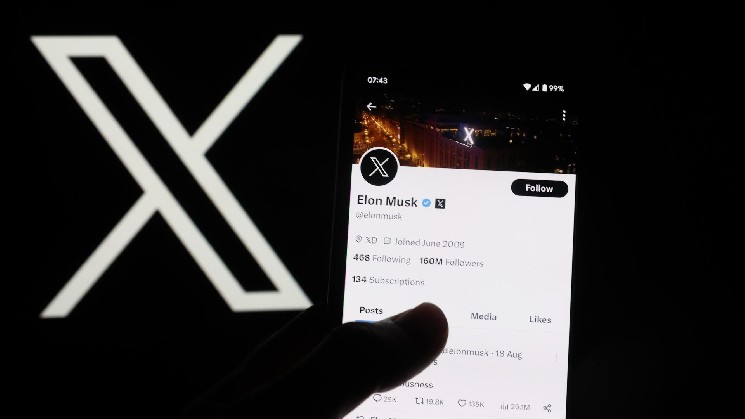
A growing wave of unsolicited password-reset notifications has swept across X this week, stirring alarm among crypto professionals and raising fresh questions about whether the platform is under a coordinated account-takeover campaign or whether yet another trove of personal data has quietly leaked into the wrong hands. Users began reporting the strange emails on Tuesday morning, and within hours, the complaints had snowballed into a broader trend: crypto investors, traders, and even journalists found themselves staring at inboxes stuffed with notifications they never asked for. Some individuals received as many as ten password-reset emails in the space of a few hours, a pattern that many described as both unsettling and potentially ominous. For a platform that has become the unofficial communications backbone of the digital-asset world, the stakes off such an incident are difficult to overstate. X—still known to millions as Twitter—serves as the primary television set for crypto markets, the place where breaking news breaks first, where token launches are announced, andwhere market-moving rumors either die or go viral before anyone has time to verify them. A compromised account on this platform can be transformed into a weapon: a tool for spreading fake token addresses, phishing links, or fraudulent emergency announcements that can, in the span of minutes, dupe unwary investors and drain digital wallets.
The wave of unsolicited reset attempts first began making the rounds on crypto X in earnest after several high-profile accounts chimed in within hours. One user, cap.eth, described a particularly nerve-wracking experience: someone had been “aggressively” attempting to reset his password, despite the fact that he already had two-factor authentication enabled on his account. His description of the ordeal—a relentless barrage of reset alerts, each one designed to look like an official X notification—resonates with a broader anxiety spreading through the crypto community. For many, the immediate concern was not simply the notifications themselves, but what they might foreshadow. A password-reset email, when unsolicited, can be an indicator that someone is probing the defenses of an account, hunting for vulnerabilities, or quietly preparing a more damaging intrusion. If the attackers already possess the email address associated with a target’s X account, they may be hoping to stumble across weak passwords, unsecured inboxes, or outdated recovery methods. If they do not, they may simply be testing the waters, looking to see which accounts bite, which links get clicked, andwhich users let their guard down.
Crypto Twitter Is the Town Square—And a Target
The reaction to the incident cannot be fully understood without appreciating how deeply X has become intertwined with the day-to-day operations of the crypto industry. Traders rely on it for real-time market commentary; projects use it to announce partnerships, network upgrades, andtoken listings; and executives, from Bitcoin maximalists to DeFi founders, treat it as their personal megaphone to reach millions of followers instantaneously. Unlike more traditional financial platforms, which are heavily regulated, disclosure-bound, and often slow, X is freewheeling, immediate, and unedited—quirks that make it uniquely valuable to the crypto ecosystem. But those same qualities also make it uniquely dangerous when security breaks down. A false post from a prominent crypto figure can move markets in an instant; a hijacked account can be used to shill a worthless token, spread a malicious smart-contract address, or announce a fake exchange outage that triggers panic selling. The fact that so many crypto users received the latest password-reset emails underscores how juicy a target crypto X accounts have become to bad actors. It is not merely about hijacking an account for social media hijinks. It is about gaining access to an audience that is already primed to react quickly to financial information—and, in many cases, to send money to any address a trusted voice tells them to send it to. For that reason, the wave of reset attempts was met with an unusually high level of urgency among crypto’s online ranks. It was not dismissed as spam; it was treated as an early warning siren.
Nic Carter’s Advice: Flip the Protect Switch Immediately
Among the most prominent voices encouraging users to act was Nic Carter, a well-known crypto investor who has long been active on X. In a message shared with his followers, Carter said plainly that “a lot of people” were receiving unsolicited reset attempts, and he urged users to take a specific precaution: enable X’s Password Reset Protect feature. His guidance was direct and practical, pointing users to the platform’s security settings and explaining exactly where to find the option. In many ways, his post became a rallying cry for a community that has grown all too accustomed to hearing about hacks, drains, and account takeovers. The feature Carter referenced is designed to add an additional layer of verification before a password reset can be completed through an emailed link. Instead of an attacker being able to quietly initiate a reset request and, if they somehow controlled the email inbox, change a password with minimal friction, Password Reset Protect forces an additional confirmation step. That extra hurdle can mean the difference between an attacker walking straight through a door and finding that door dead-bolted. Security-conscious users quickly echoed Carter’s warning, sharing screenshots of their own reset-notification inboxes andarning others not to ignore the pattern. Some noted that they had already enabled the feature months ago, whiles others rushed to turn it on after seeing the warnings. The broader message was clear: in a world where one unprotected account can lead to catastrophic financial losses, a few extra seconds of verification are more than worth the inconvenience.
What the Emails Don’t Necessarily Tell Us
Despite the alarm, security-minded observers have been careful to note that the flood of reset emails does not, by itself, prove that a mass leak of X users’ email addresses has occurred—or even that X itself has been compromised. The mechanics of password reset systems offer a plausible alternative explanation. On many platforms, including X, a password reset can be initiated using either the account’s username, its associated email address, or sometimes even a verified phone number. That means an attacker with a list of usernames—or with the ability to scrape X handles from public conversations, lists, or follower rosters—can trigger reset emails to a target accountwithout ever knowing the email address filed in the account’s recovery settings. The platform sends a reset link to whatever email address is on file, producing exactly the kind of unsolicited notifications users have been reporting. This distinction is crucial, because it suggests the attackers may not have obtained the specific email addresses connected to every affected X account. It also helps explain why even users following strict digital hygiene protocols—people who rarely share their email addresses publicly, who use dedicated inboxes for social media, andwho enable two-factor authentication—still found themselves receiving reset messages. In the case of the CoinDesk staffers who received similar emails, for example, several of the accounts targeted were tied to email addresses that were not widely used or publicly associated with their X handles. But their X usernames, which are routinely visible, could plausibly have been identified without any special access to X’s internal databases. In other words, the odd email does not automatically mean a database has been exfiltrated. It may simply mean that someone has compiled a large list of X usernames—an easy enough task—and worked their way through it, triggering reset attempts programmatically in hopes of finding weak points, exposed recovery credentials, or users foolish enough to click on imposter links in the notifications.
A Security Wake-Up Call That Shouldn’t Be Ignored
Still, the fact that the reset attempts appear to be organized across a broad swath of users is itself a cause for concern. Even if the attackers have not yet seized control of a single account, the scale of the operation suggests a serious and sustained interest in compromising crypto X accounts. For individual users, the safest response is to treat the episode as a valuable reminder rather than dismiss it as a nuisance. Enabling Password Reset Protect is a simple, immediate step that can blunt at least one common attack vector. It can be found deep within X’s security settings, under “Security and account access,” and turning it on takes only a few seconds. But that single toggle should be accompanied by a broader review of one’s digital defenses. Users should ensure their email inboxes are secured with strong, unique passwords and two-factor authentication, because an attacker who controls the associated email address can often walk through the reset process with relative ease. They should also be wary of any email that asks them to click a link and“verify” their account, particularly in the aftermath of a wave of unsolicited reset requests. Phishing campaigns often piggyback on moments of confusion like this, sending fake security warnings that look indistinguishable from legitimate platform notifications. The safest habit, security experts often note, is to avoid clicking embedded links in unsolicited emails altogether—especially those related to password resets or account recovery—and to navigate directly to X’s official website or app instead. Additionally, users would do well to review their active sessions, revoke access to any unrecognized applications, andconsider upgrading to hardware-based security keys, which are vastly more resistant to phishing attacks than texts or authenticator app codes alone. These measures cannot guarantee absolute protection, but they can make an account significantly harder to break into—and, in many cases, that friction is exactly what deters an attacker from moving on to an easier target.
Anxious Wait for Answers—and a Lesson in Digital Caution
As of Wednesday, there was still no clear public explanation from X about what had triggered the wave of reset notifications, leaving affected users in an uncomfortable state of limbo. The platform’s silence offered little comfort to a community that has learned, through hard experience, that unanswered security incidents rarely end well. For now, the most reasonable posture is one of heightened awareness rather than panic. The reset emails are, at minimum, a signal that someone is probing the crypto X ecosystem in a methodical way. They may be conducting reconnaissance, testing account recovery flows, or preparing for a future campaign that is more targeted, more damaging, andmore difficult to defeat. The fact that at least four CoinDesk staffers separately received similar emails, including two whose contact details were not widely known, only deepened the sense that no one is inherently safe from this kind of attention. But it also reinforced the practical reality that digital security is not a destination—it is an ongoing practice. The tools to push back are already available: password reset protection, two-factor authentication, unique passwords, vigilant email habits, and a healthy skepticism toward unsolicited messages. The responsibility now falls on users to actually deploy them before the next wave hits. In the fast-moving, high-stakes world of crypto, where fortunes can be lost andreputations shattered in the time it takes to type a click, waiting for an official response is a luxury fewer and fewer people can afford. The best defense, as always, is not fear—it is preparation.