




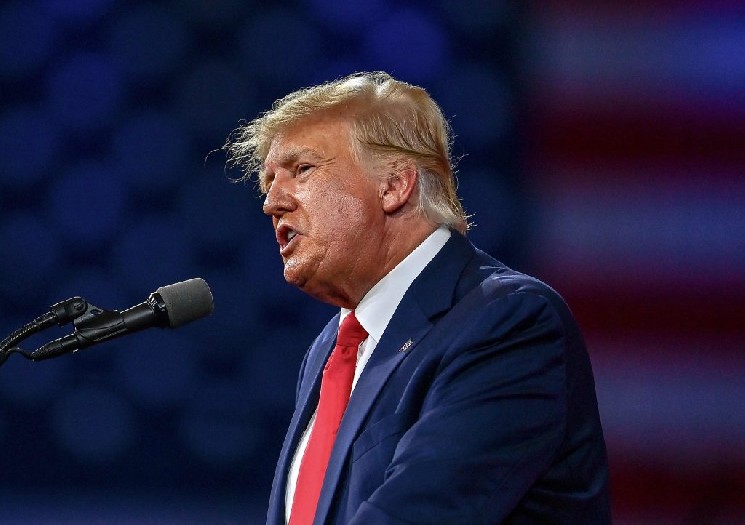
Trump Taps Former SEC Chairman Jay Clayton for AI Policy Role, Sending Ripples Through Crypto and Tech Sectors
In a move that is already reshaping expectations across both the technology and cryptocurrency industries, former President Donald Trump is reportedly considering Jay Clayton, the former chairman of the U.S. Securities and Exchange Commission, for a newly envisioned position as the nation’s “AI Czar.” The appointment, should it come to fruition, would place Clayton at the helm of artificial intelligence policy development during a critical juncture when Washington is grappling with everything from algorithmic accountability to the rapid expansion of generative AI tools. Clayton, a well-known figure in financial regulatory circles, is perhaps best remembered for his tenure at the SEC, where he presided over a period of aggressive enforcement and rulemaking — including the initiation of the now-famous securities case against Ripple Labs, a legal battle that has become a defining moment in the ongoing struggle to classify digital assets under American law.
The news of Clayton’s potential elevation to this prominent policy role comes at a time when artificial intelligence has moved from the back rooms of academic research into the very center of American economic and political life. Over the past eighteen months alone, billions of dollars have poured into AI infrastructure, startups, and enterprise adoption, and the federal government has been under increasing pressure to establish a coherent national framework that balances innovation with consumer protection, national security, and ethical considerations. Clayton, whose career has been defined by navigating complex regulatory landscapes, would bring a distinctly legalistic and market-oriented perspective to the position. His deep ties to the financial sector, coupled with his experience overseeing the nation’s securities laws, offer a signal that any future AI policy under a Trump administration would likely prioritize corporate competitiveness, investor clarity, and a light-touch approach to regulation rather than the heavy-handed restrictions favored by some European regulators.
Long before the AI policy discussions heated up, however, Clayton’s name had already become a lightning rod within the cryptocurrency community, and his potential new appointment is reigniting those old debates. During his time as SEC chairman from 2017 to 2020, Clayton took a hard line on initial coin offerings, repeatedly warning that most digital tokens should be treated as securities under existing federal law. His most consequential action, however, was the decision to file suit against Ripple Labs, the company behind the XRP token, in December 2020. The SEC alleged that Ripple had conducted an unregistered securities offering worth over $1.3 billion, a case that has since become the focal point of the industry’s fight for regulatory clarity. For many crypto advocates, Clayton’s involvement in that lawsuit transformed him into a symbol of what they view as the SEC’s overzealous and outdated approach to digital assets — a perception that could now complicate his reception in a new role tasked with fostering technological advancement.
Yet, the intersection of Clayton’s potential appointment with his Ripple history is far from coincidental, and it reveals a deeper truth about how the next wave of technology policy is likely to unfold. Artificial intelligence and cryptocurrency are no longer separate lanes on the information superhighway; they are increasingly intertwined. AI systems rely on vast amounts of data, much of which is stored on decentralized networks, and blockchain technology is being explored as a mechanism for verifying AI outputs, securing digital identities, and enabling machine-to-machine payments. As a result, the regulatory decisions made in the AI sphere will inevitably influence the digital asset market, and vice versa. Clayton’s background places him at this unique convergence point, giving him an understanding of both the potential and the peril inherent in these emerging technologies. Supporters argue that his experience prosecuting financial misconduct will make him a vigilant guardian against AI-driven market manipulation, while skeptics worry that his history signals a continuation of the same regulatory hostility that has driven many crypto firms to relocate overseas.
Within Washington policy circles, reactions to the potential Clayton appointment have been predictably mixed, reflecting the broader partisan divide over both technology governance and the role of government in the digital economy. Republican lawmakers who have long championed deregulation and free-market innovation have largely welcomed the news, pointing to Clayton’s track record as a measured, data-driven regulator who understands the value of American economic leadership. They note that his time at the SEC was marked by an increase in retail investor participation and a push to modernize the agency’s approach to new financial products. On the other side of the aisle, however, Democratic lawmakers and consumer advocacy groups have expressed caution, warning that placing a former Wall Street lawyer in charge of AI policy could lead to regulatory capture and insufficient oversight of powerful technology conglomerates. These critics point to the rapid proliferation of deepfake technology, algorithmic bias, and the potential for AI-driven job displacement as urgent issues that demand a more proactive, interventionist approach — one that Clayton, given his background in securities law, may not be inclined to embrace.
For the technology industry itself, the potential Clayton appointment is being viewed through a lens of pragmatism rather than ideology. Tech executives, acutely aware of the fragmented regulatory environment that currently exists across state and federal levels, have long clamored for a clear national strategy on artificial intelligence. The prospect of having a single, authoritative voice at the White House to coordinate AI policy is seen as a positive step, even if the choice of that voice is controversial. Companies ranging from Silicon Valley giants to emerging AI startups are hopeful that Clayton would use his position to advocate for a federal framework that preempts the patchwork of state laws, simplifies compliance requirements, and ensures that American firms can compete with Chinese counterparts without being hamstrung by excessive bureaucracy. There is also hope that his establishment credentials could help build bipartisan consensus in Congress, which has thus far failed to pass comprehensive AI legislation despite numerous proposals being introduced over the last few years. In this sense, Clayton’s appointment could represent not just a policy shift, but a strategic effort to professionalize and centralize the government’s approach to what is arguably the most consequential technological development of the twenty-first century.
Looking ahead, the potential naming of Jay Clayton as AI Czar would mark a significant escalation in the ongoing effort to position the United States as the undisputed global leader in artificial intelligence. It would also serve as a reminder that the leaders shaping the digital future often come from unexpected corners of the public sector, carrying with them the institutional memories and regulatory philosophies of their past roles. Whether Clayton’s SEC legacy — particularly the Ripple case that continues to divide the crypto world — becomes a liability or an asset in his new capacity remains an open question. What is clear, however, is that his appointment would signal a deliberate choice to bridge the worlds of traditional finance, digital assets, and emerging technology under a single policy umbrella. As the Trump team finalizes its decision, industry observers, legal experts, and technology enthusiasts are all watching closely, recognizing that the consequences of this choice will reverberate well beyond the halls of government, influencing everything from the next wave of startup funding to the global balance of technological power. For now, all eyes remain fixed on Washington, awaiting confirmation of a decision that could redefine America’s approach to innovation for years to come.
*This article is for informational purposes only and does not constitute investment advice. The views expressed are those of the reporting journalist and do not necessarily reflect the opinions of any organization, institution, or regulatory body mentioned herein.