





Bitcoin Market Poised for Autumn Revival, Says Strategy CEO Phong Le
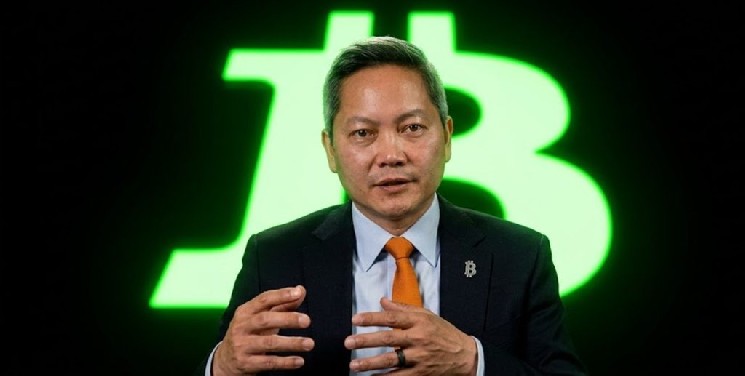
Cryptocurrency markets may be experiencing a late-summer lull, but institutional investors should prepare for renewed activity as autumn approaches, according to Phong Le, CEO of Strategy, the firm renowned for its bold Bitcoin-centric investment approach.
In a recent assessment shared via the social media platform X, Le painted a picture of a market catching its breath before what could be a significant resurgence. His commentary arrives at a pivotal moment when traders and institutional players alike are scanning the horizon for the next major catalyst to break the current period of relative price stagnation.
The executive’s perspective carries notable weight given Strategy’s substantial footprint in the digital asset space. The company has transformed itself into what many consider a de facto Bitcoin treasury operation, amassing enormous holdings that have made its stock a proxy for cryptocurrency investment. When its leadership speaks about market dynamics, the financial community tends to listen intently.
Regulatory Clarity Emerges as Primary Market Catalyst
At the heart of Le’s optimistic outlook lies a fundamental belief in the power of regulatory evolution to unlock pent-up institutional demand. He specifically pointed to the implementation of regulatory exemptions designed to accommodate innovative financial technologies, suggesting that these measures could provide the breathing room necessary for traditional financial giants to enter the space with greater confidence.
The passage of what Le referred to as the Clarity Act represents another cornerstone of his forecast. This legislation, anticipated to establish a more definitive legal framework for cryptocurrency operations in the United States, has been eagerly awaited by compliance officers and legal teams across Wall Street. The current regulatory ambiguity has long been cited as a primary obstacle preventing risk-averse institutional capital from flowing into digital assets at scale.
Industry observers have noted that clear regulatory guardrails typically precede significant waves of institutional adoption. When compliance teams can clearly articulate the rules of engagement, investment committees become substantially more comfortable allocating client capital to emerging asset classes. Le’s confidence appears rooted in this fundamental market dynamic, suggesting that the legislative calendar could prove more impactful to cryptocurrency prices than technical chart patterns.
Institutional Adoption and Market Infrastructure Evolution
Beyond regulatory developments, Le identified the expanding embrace of Bitcoin by traditional banking institutions as a potentially transformative force. The narrative of banks moving beyond skeptical commentary toward actual Bitcoin custody and trading services has gained momentum throughout 2024, with several prominent financial institutions launching or announcing cryptocurrency product offerings.
This institutionalization trend extends into what Le characterized as the growth of digital credit and digital currency markets. The maturation of lending platforms, yield-generating protocols, and stablecoin infrastructure has created a more complete financial ecosystem around Bitcoin and other digital assets. This infrastructure evolution matters because it enables more sophisticated investment strategies while providing the liquidity depth that institutional traders require.
The interconnection between traditional finance and the cryptocurrency ecosystem continues to strengthen through various channels. Payment processors are integrating digital asset capabilities with greater urgency, while asset managers are increasingly exploring ways to incorporate cryptocurrency exposure into client portfolios. Each integration point serves to normalize Bitcoin’s presence within the broader financial system, gradually eroding the skepticism that has historically limited its appeal to conservative investors.
Global Economic Stability and Risk Appetite
Le’s assessment also touched upon macroeconomic variables that traditionally influence investor behavior across all asset classes. He suggested that strengthening stability in the global economy alongside a meaningful decrease in geopolitical tensions could substantially increase appetite for riskier assets, including cryptocurrencies.
Bitcoin has demonstrated an evolving relationship with traditional market dynamics throughout its existence. During periods of economic uncertainty, it has sometimes behaved as a risk asset moving in tandem with equity markets, while at other moments it has exhibited characteristics more commonly associated with safe-haven assets like gold. This dual nature makes macroeconomic forecasting particularly relevant to cryptocurrency price projections.
The potential for easing inflationary pressures, stabilizing interest rates, and improved international relations could all contribute to a more favorable backdrop for digital asset appreciation. Conversely, escalating conflicts or unexpected economic deterioration could prompt investors to retreat from volatile positions, temporarily dampening cryptocurrency enthusiasm regardless of the sector’s fundamental progress.
Political Calendar and Market Sentiment
The approaching US midterm elections represent another factor that Le believes could significantly influence investor behavior in the cryptocurrency space. Political transitions often bring policy shifts, and the digital asset community has learned to monitor electoral outcomes closely given the regulatory implications embedded in various candidates’ platforms.
Historical patterns suggest that market participants tend to exhibit caution during periods of political uncertainty, preferring to await clarity before committing substantial capital to speculative positions. The resolution of electoral uncertainty often unleashes a wave of investment activity as portfolios adjust to reflect the new political reality.
Le’s acknowledgment of the political calendar demonstrates an understanding that cryptocurrency markets do not exist in isolation from broader societal developments. The sector’s maturation has brought with it greater sensitivity to traditional market forces, political developments, and macroeconomic indicators. This integration, while occasionally causing short-term volatility, ultimately represents a sign of the market’s growing legitimacy and permanence.
Strategy’s Recent Bitcoin Transactions Draw Investor Attention
While Le’s market commentary has generated considerable discussion, the company’s recent trading activity has equally captured the attention of market observers. Strategy announced the sale of approximately 3,327 BTC over the preceding two-week period, a transaction that has been subject to intense scrutiny by those tracking the company’s Bitcoin-related strategies.
These sales have been framed within the context of Strategy’s long-standing approach to managing its substantial Bitcoin holdings. The company has consistently maintained that its digital asset strategy involves periodic rebalancing and strategic transactions designed to optimize its balance sheet position rather than any fundamental shift in its commitment to Bitcoin.
The disclosed transactions were accompanied by the standard disclaimer that the content does not constitute investment advice, a routine but important reminder that even sophisticated institutional strategies carry inherent risks. Retail investors looking to emulate Strategy’s approach should conduct thorough research and consult with qualified financial advisors before making significant cryptocurrency investment decisions.
Looking Forward: Long-Term Growth Potential Despite Short-Term Stagnation
Le concluded his assessment with a perspective that manages to acknowledge current market realities while maintaining conviction in the sector’s trajectory. His characterization of the cryptocurrency sector as being in its early stages of development suggests that patient investors may be rewarded despite temporary periods of underwhelming price performance.
This long-term orientation has become increasingly common among institutional cryptocurrency advocates who have weathered multiple market cycles. The pattern of dramatic rallies followed by significant corrections has taught seasoned investors to focus on adoption metrics, technological development, and regulatory progress rather than short-term price fluctuations.
The current period of relative quiet may ultimately prove constructive for the market, allowing for infrastructure development, regulatory clarification, and institutional preparation to advance without the distraction of speculative fervor. As autumn approaches and these foundational elements continue to solidify, the stage may be set for the renewed market activity that Le anticipates.
For investors positioned in the cryptocurrency space, the coming months will likely provide clarity regarding whether Le’s optimistic assessment proves prescient. The convergence of regulatory developments, institutional adoption trends, macroeconomic conditions, and political events suggests that multiple powerful forces could align to catalyze the next significant market movement.
This article is for informational purposes only and does not constitute investment advice. Cryptocurrency investments carry significant risk, and readers should conduct their own research before making investment decisions.