




The Quiet Revolution in Volatile Markets: STRC Preferred Stock Stuns with Rock-Stable Returns
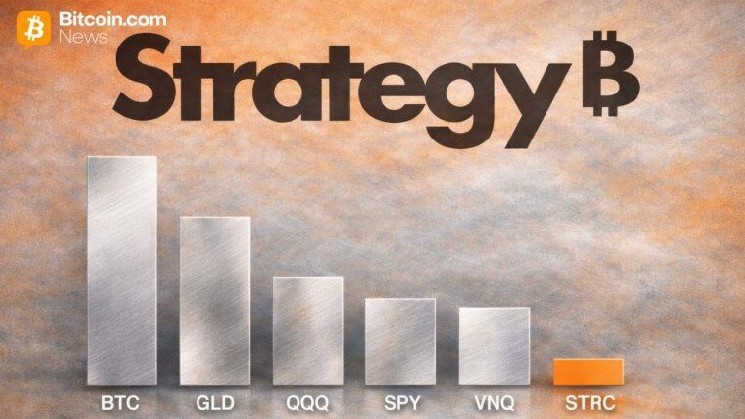
In a financial landscape where market swings can feel like riding a rollercoaster through thunderstorms, one asset is turning heads for its remarkable composure. Michael Saylor, the outspoken executive chairman of Strategy Inc., ignited a firestorm of discussion last month when he unveiled data on social media highlighting the low volatility of STRC preferred stock. This instrument, engineered as part of the company’s bitcoin-centric treasury strategy, boasted a feather-light 2% volatility over 30 days, dwarfing the turbulence of giants like bitcoin at 50%, gold at 37%, or even stalwart ETFs tracking the Nasdaq-100 at 19%. But what makes this narrative gripping isn’t just the numbers—it’s the broader implication that traditional asset classes might have a challenger in this deceptively simple preferred share. As investors grapple with inflation fears, geopolitical uncertainties, and the wild pendulum of the stock market, STRC’s promise of a steady 11.5% dividend yield while keeping the drama at bay is prompting a reevaluation of risk across equities, bonds, commodities, and even the crypto realm. Saylor’s post on X, formerly Twitter, on March 29 didn’t just drop statistics; it sparked debates on engineered stability versus organic market forces, inviting both admirers and skeptics to ponder if this is innovation or illusion. This article delves into that very tension, exploring STRC’s design, its place in Strategy’s ecosystem, and the critical questions swirling around its sustainability in an ever-shifting economic climate.
Challenging the Status Quo: Saylor’s Data Paints STRC as the Calm Eye in a Storm
When Michael Saylor shares data, the cryptocurrency community—and increasingly, broader financial markets—leans in. Known for his “Bitcoin or Bust” philosophy, Saylor has long championed digital assets as a hedge against fiat currency woes, with Strategy Inc. transforming into a quasi-bitcoin bank. His March 29 X post was no exception, positioning STRC against a diverse array of assets to underscore its outlier status. Over those fateful 30 days, STRC’s volatility of 2% stood in stark contrast to bitcoin’s frenetic 50%, commodifying gold’s 37%, the QQQ ETF’s 19%, and the bond-heavy BND ETF’s more subdued 6%. Even S&P 500 staples like the SPY ETF and real estate-focused VNQ ETF hovered at a jittery 15%, painting bitcoin as the undisputed king of chaos. These figures, sourced from market trackers, weren’t just fodder for charts—they shone a spotlight on how STRC, Nasdaq-listed under its full moniker Short Duration High Yield Credit Stretch, might rewrite the rules for steady income seekers. Investors, weary from the equity market’s whipsaws triggered by interest rate hikes and earnings surprises, are eyeing this data with a mix of curiosity and caution. Is STRC truly a beacon of built-in stability, or does its performance hinge on mechanisms that sidestep real market dynamics? As Saylor pointed out, no major company in the S&P 500 matched its low volatility while squeezing out double-digit yields, a claim that’s resonating in boardrooms and on trading floors alike. This comparison isn’t arbitrary; it forces a conversation about diversification in an era where bonds offer paltry returns and commodities dance to supply-demand symphonies.
Unveiling STRC: A Perpetual Preferred Stock Born from Bitcoin Ambitions
To understand STRC’s allure, one must trace its origins to Strategy Inc.’s bold pivot under Saylor’s leadership. Launched in July 2024 as a cornerstone of the company’s bitcoin-focused treasury reserves, STRC is no ordinary share—it’s a perpetual preferred equity instrument designed to complement, not compete with, the volatility of the underlying bitcoin holdings. Priced at a $100 par value, it promises an annual dividend of 11.5%, paid out monthly in cold, hard cash, making it an attractive proposition for income investors navigating uncertain times. Unlike fleeting dividend hikes in dividend aristocrats, STRC’s rate adjusts dynamically each month, incentivizing traders to keep prices hovering near par and snuffing out the kind of short-term spikes that can rattle portfolios. This engineered approach stems from Strategy’s vision of creating financial tools that align with the digital asset’s long-term potential, potentially locking in funds that could otherwise fuel bitcoin acquisitions. Market observers note that while traditional preferred stocks offer seniority in bankruptcy but often lack dynamism, STRC introduces a layer of interactivity—its resets ensure payouts scale with performance, blending elements of familiar credit instruments with innovative risk mitigation. As Joan Thompson, a senior analyst at a leading financial research firm, remarked in a recent market briefing, “STRC represents a novel fusion, where the dividend isn’t a stagnant figure but a living incentive for market equilibrium.” This positioning has elevated STRC from a niche product to a focal point in discussions about sustainable yields, especially as global central banks pivot toward tighter monetary policies. Yet, beneath the surface lies a narrative of cautious optimism: can this instrument weather broader economic headwinds without succumbing to the very volatility it aims to evade?
Engineering Calm: How STRC’s Dividend Mechanics Craft Stability
At the heart of STRC’s intrigue is its variable dividend mechanism, a clever contraption that differentiates it from conventional preferred shares and could be the key to its reported poise. When the stock’s price dips below its $100 par value, the dividend rate climbs to reward buying and accelerate reversion to par; conversely, if prices soar above that benchmark, payouts diminish to discourage speculative selling. This monthly recalibration isn’t arbitrary—it’s a deliberate strategy to quell short-term fluctuations while ensuring consistent income flows, effectively turning the instrument into a self-regulating entity that prioritizes stability over rapid gains. Imagine it as a financial shock absorber: volatile market currents push against it, but the dividend adjusts the tension, preventing breakdowns. Experts liken this to managed funds or structured products where incentives align holders’ interests with price targets, yet STRC does so without external hedges, relying solely on algorithmic adjustments. Such design finesse has drawn praise from yield-hungry investors, who see it as a buffer against the intraday thrills of equities or the boom-bust cycles of commodities. However, the mechanics begs deeper questions about efficacy; does suppressing volatility through dividends mask underlying weaknesses, or does it genuinely foster resilience? As one seasoned portfolio manager commented off the record, “It’s innovative, sure, but only time will tell if it can hold the line when broader market tremors hit.” This intrinsic engineering not only sets STRC apart but also fuels debates on whether borrowing from credit markets’ playbook misses the raw trading freedom of assets like bitcoin, where transparency and organic discovery drive value.
Skillfully Layered Capital: STRC’s Role in Strategy’s Comprehensive Stack
Strategy Inc.’s capital structure is akin to a well-orchestrated symphony, with each instrument playing a distinct melody to harmonize risk and reward across its bitcoin hoard. STRC doesn’t stand alone; it’s flanked by peers like MSTR common stock, which directly absorbs the notorious swings of bitcoin volatility, offering exposure for those who relish the ride. Then there are the fixed-yield preferreds: STRF, the 10% Series A “Strife” Preferred for convertible options with a bite, STRK at 8% for middle-ground appeal, and STRD at 10% for senior stability. STRC, however, is the outlier—the only one expressly built to minimize volatility via its active dividend tweaks. This multi-tiered approach allows Strategy to cater to a spectrum of investor appetites, from conservative income seekers drawn to STRC’s engineered calm to adventurers banking on bitcoin’s parabolic potential. By integrating these layers, Saylor’s company aims to create a fortress around its treasury, using STRC as a defensive bulwark tosource funding that might otherwise destabilize the system. Analysts point out that this structure echoes strategies in modern finance, where hybrid securities bridge traditional and alternative assets, potentially attracting institutional money wary of pure crypto plays. Yet, it also raises eyebrows about dilution risk or how dividends are financed—likely through Strategy’s operational profits or bitcoin sales, a topic of intense scrutiny. As the market digests this, STRC emerges not just as a single asset but as a piece in a larger puzzle, challenging investors to weigh its virtues against the cacophony of equities, bonds, and commodities vying for attention in a post-pandemic recovery.
Navigating Risks and Realities: Criticisms and the Path Ahead for STRC
While the allure of low volatility and high yields is undeniable, STRC faces a chorus of critiques that underscore the complexities beneath its polished exterior. Detractors argue that its stability isn’t market-tested tenacity but rather a byproduct of issuer-manipulated mechanics, making apples-to-oranges comparisons with freely traded assets like ETFs or bitcoin problematic. After all, STRC operates more as a structured credit instrument, tethered to Strategy’s dividend robots, than a dynamic market player subject to buyer-seller negotiations. Concerns mount over sustainability: Can Saylor’s firm keep the payouts flowing amid fluctuating bitcoin prices or economic downturns? Funding sources, too, are a wildcard, with worries about over-reliance on a single entity’s fortunes and unmitigated tail risks that short-term metrics overlook. Exposure to Strategy Inc. alone injects a layer of corporate risk, where bankruptcy or strategic shifts could crater returns. Yet, amid the skepticism, advocates counter that STRC’s design fosters discipline in a haphazard world, potentially outperforming bonds’ meager yields or commodities’ erratic nature. FAQs from investors reveal common queries—why the low volatility? Thanks to its incentivizing dividends. How does it differ from bitcoin or ETFs? It’s a credit-like entity, not a pure tradable. Is the yield sustainable? Pending Strategy’s strategies. And risks? Issuer dependence looms large. As markets evolve, STRC’s story is far from over; it prompts a broader dialogue on innovation versus transparency in finance, urging investors to look beyond headlines and into the mechanics. Whether STRC evolves into a staple or a cautionary tale remains to be seen, but its emergence challenges complacency in volatile times.