



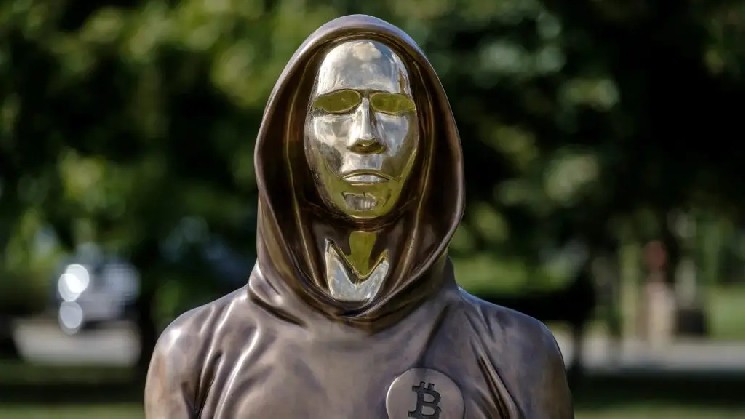
The Quantum Shield: Nakamoto’s Resurfaced Blueprint for Defending Bitcoin Against Tomorrow’s Supercomputers
1. A Voice from the Past Addresses Bitcoin’s Ultimate Future Threat
In the fast-evolving landscape of global finance and cryptocurrency, few mysteries capture the public imagination quite like the identity and philosophy of Satoshi Nakamoto. The pseudonymous creator of Bitcoin vanished from the public eye over a decade ago, leaving behind a revolutionary decentralized ledger and a treasury of digital archives. Recently, a fascinating correspondence from 2010 has resurfaced on the legendary BitcoinTalk forum. This digital artifact has reignited intense debates among blockchain developers, cryptographers, and institutional investors alike. Written exactly sixteen years ago, Nakamoto’s message provides a surprisingly pragmatic and visionary blueprint for addressing one of the most existential threats facing modern cryptography: the rise of quantum computing. By demonstrating that the system’s architect had already anticipated these future vulnerabilities, the post serves as a powerful reminder of Bitcoin’s inherent adaptability and the forward-thinking engineering that underpins its design.
                  +---------------------------------------+
                  |     Satoshi Nakamoto's 2010 Forum     |
                  |          Resurfaced Message           |
                  +------------------+--------------------+
                                     |
                                     v
                  +---------------------------------------+
                  |   Existential Threat Identified:      |
                  |   Quantum Computers vs. ECDSA Algo    +--+
                  +---------------------------------------+  |
                                                             |
     +-------------------------------------------------------+
     |
     v
+——————+ +——————+
| SUDDEN BREAK: | | GRADUAL DECLINE: |
| Emergency Fork / | | Soft-Fork Rules |
| Code Replacement | | & New Addresses |
+——————+ +——–+———+
|
v
+——————+
| User Action: |
| Migrate Assets |
| into Post-Quantum|
| Keys (Signature |
| Multi-signing) |
+——————+
2. Deciphering Satoshi’s Cryptographic Contingency Plan
The specific forum entry, dated July 10, 2010, goes straight to the heart of how Bitcoin secures wealth. Currently, the network relies heavily on Elliptic Curve Cryptography (ECC)—specifically the secp256k1 curve—to generate public and private key pairs. While practically unbreakable by conventional supercomputers, these mathematical structures are theoretically vulnerable to Shor’s algorithm, an execution model that future quantum computers could run to reverse-engineer private keys from public addresses. Satoshi Nakamoto, however, was neither alarmed nor caught off guard by this inevitability. “If this happens suddenly, that’s fine,” Nakamoto wrote to the forum members, explaining that a sudden failure would require swift, coordinated code replacements. “But if it happens gradually, we can switch to a more robust system. When you run the updated software for the first time, all your money will be re-signed with the new, more powerful signature algorithm.” This elegant operational philosophy confirms that the protocol was never intended to be static. Instead, it was conceptualized as a living, evolving ecosystem capable of replacing its own cryptographic foundation without discarding its ledger history.
3. The Graceful Migration to Post-Quantum Cryptography
To understand the mechanics of Satoshi’s proposed solution is to understand the elegance of decentralized asset migration. Rather than forcing a disruptive, top-down execution that could split the network, Nakamoto’s blueprint advocates for a voluntary, user-led transition to new addresses secured by post-quantum cryptography (PQC). If developers detect that the existing elliptic curve standard is weakening, they would issue a software update implementing a more robust signature algorithm, such as lamport signatures or lattice-based cryptography. Users would then generate a new wallet address utilizing this stronger security key and transfer their balances. Upon executing this transaction, the network’s updated consensus rules would automatically verify and securely lock the funds using the new algorithmic standard. In essence, this process turns a potentially catastrophic system failure into a routine software upgrade, demonstrating that human coordination and soft-fork consensus can easily outpace the looming shadow of hardware-based cryptographic decay.
| Metric / Aspect | Current Elliptic Curve Standard (secp256k1) | Proposed Post-Quantum Cryptography (PQC) |
|---|---|---|
| Primary Threat | Shor’s Algorithm via Quantum Computing | None currently known (Lattice-based/Lamport) |
| System Vulnerability | Keys could be reverse-engineered over time | Highly resistant to both classical & quantum attacks |
| Migration Method | N/A (Standard Transactions) | Voluntary transfer to updated, secure addresses |
| Implementation | Current protocol default | Soft-fork integration of alternative algorithms |
4. Quantum Computing and the Reality of the Timeline
While Nakamoto’s reassurances have brought comfort to long-term holders, the discussion has forced the blockchain industry to reckon with the real-world timeline of quantum development. Tech giants like IBM, Google, and IonQ, alongside state-sponsored laboratories, are locked in an intense race to achieve “quantum supremacy” and build machines boasts millions of physical qubits. Cryptanalysts estimate that a quantum computer capable of successfully breaking secp256k1 would require roughly 1.9 billion physical qubits, whereas today’s advanced systems are still operating below the thousand-qubit threshold. Nonetheless, the threat remains highly relevant for inactive addresses, particularly those containing early mined blocks—including Satoshi’s own estimated collection of one million Bitcoins—that have public keys directly exposed to the blockchain ledger. Developing a proactive defensive framework is therefore not merely an academic exercise; it is an active security measure required to prevent ancient, inactive whale accounts from becoming vulnerable targets in a post-quantum world.
5. Security Evolution and the Global Regulatory Horizon
The resurfacing of Nakamoto’s decades-old instructions coincides with a broader, institutional push toward cryptographic standardization across the globe. The National Institute of Standards and Technology (NIST) in the United States has already finalized its first set of encryption algorithms designed to withstand quantum attacks, prompting financial institutions and cyber defense agencies to begin planning their transitions. In the realm of decentralized finance, public ledger updates require a delicate balance of technical testing and community consensus. If the Bitcoin network must eventually transition to a post-quantum standard, the biggest challenge will likely not be the mathematical code itself, but managing the coordination required to transition cold storage wallets and inactive users. By proving that the software can adapt dynamically, Satoshi’s early commentary validates the long-standing belief that the network’s governance model is fully capable of navigating major technological shifts without compromising its underlying security properties or hard-capped supply.
+—————————————————————–+
| HISTORICAL TIMELINE OF BITCOIN’S QUANTUM DEFENSE |
+—————————————————————–+
| |
| 2009: Bitcoin Network Launches |
| Secured by Elliptic Curve Cryptography (secp256k1). |
| |
| 2010: Satoshi Nakamoto’s Cryptographic Warning |
| Addresses quantum threats on the BitcoinTalk forum; |
| proposes gradual, safe mathematical signature migration. |
| |
| 2024: Rediscovery of Nakamoto’s Blueprint |
| Renewed interest amid real-world advancements in |
| quantum computing by IBM, Google, and NIST. |
| |
| Future: Implementation of Post-Quantum Cryptography (PQC) |
| Network transitions to lattice-based or multi-signature |
| quantum-proof safety layers via community consensus. |
| |
+—————————————————————–+
6. The Lasting Brilliance of Nakamoto’s Design Philosophy
Ultimately, the rediscovery of this archival forum post highlights the enduring brilliance of Bitcoin’s architectural design. Long before the general public was aware of quantum computing risks, Nakamoto was already designing safety nets for the network’s longevity. This forward-thinking mentality explains why Bitcoin continues to dominate the global digital asset space, defying its critics and surviving countless market cycles. By framing quantum computing not as an insurmountable disaster, but as a predictable variable that can be managed via routine software updates, the creator of Bitcoin demonstrated a profound understanding of network evolution. As researchers work to build the powerful computers of tomorrow, the cryptocurrency community can take comfort in knowing that the blueprint for securing the network’s future was written sixteen years ago, preserved in the very foundations of the blockchain itself.