



Conflicts of Interest or National Security Threats? US Senators Sound the Alarm Over President Trump’s Crypto Holdings
The Growing Intersection of Executive Wealth, Sovereign Wealth, and Legislative Influence
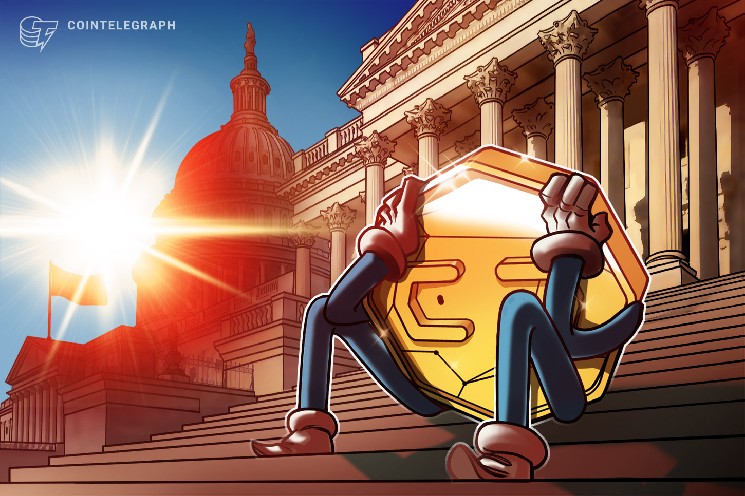
A high-stakes political battle is brewing on Capitol Hill as five influential Democratic senators have formally requested joint committee hearings to investigate what they term “grave national security implications” surrounding President Donald Trump’s sprawling cryptocurrency portfolio. The urgent demand arrives at a critical juncture, directly intersecting with the Senate’s scheduled vote on the Digital Asset Market Clarity (CLARITY) Act—a sweeping piece of legislation poised to permanently rewrite the regulatory framework for digital assets in the United States. In a joint legislative memorandum circulated on Friday, the Democratic ranking members of five key Senate committees and subcommittees urged their Republican counterparts to immediately address the President’s latest financial disclosures. According to official documents detailing his 2025 financial assets, the President reported earning an estimated $1.4 billion from diversas cryptocurrency ventures. These highly lucrative endeavors include high-profile meme coins issued in his likeness, alongside his family’s newly launched decentralized finance platform, World Liberty Financial. This unprecedented convergence of personal executive enrichment and active, industry-shaping federal policy has ignited a fierce debate over the integrity of the American legislative process, transforming what was once a technocratic debate over market structures into a high-stakes investigation of foreign influence and executive ethics.
Foreign Capital, Private Access, and the Sovereign Wealth of the United Arab Emirates
At the very heart of the senators’ public demand is a deeply troubling national security question: who exactly is funding, supporting, or holding leverage over the President’s private digital financial empire? Because decentralized finance (DeFi) platforms and meme coins often operate with less stringent transparency requirements than traditional banking institutions, tracing the ultimate beneficiaries or primary liquidity providers of these ventures is an incredibly complex endeavor. In their joint notice, the lawmakers explicitly called out potential foreign entanglements, expressing urgent concern regarding “the influence of the United Arab Emirates (UAE) or unknown third parties on President Trump’s actions.” Industry watchdogs have long warned that sovereign wealth funds, foreign oligarchs, or hostile nations could easily manipulate the price of family-owned digital assets or buy massive equity stakes in platforms like World Liberty Financial as a backdoor method of purchasing diplomatic favor or domestic regulatory relief. This dynamic represents a paradigm shift in how corruption risks are evaluated; unlike traditional real estate holdings—which are illiquid, highly regulated, and structurally transparent—crypto assets can be traded globally in milliseconds, allowing foreign state actors to bolster the President’s personal net worth under the veil of digital anonymity and decentralized protocols.
The CLARITY Act and the Fragile Balance of Power in a Divided Senate
This intensifying ethical storm looms heavy over the Digital Asset Market Clarity (CLARITY) Act, a landmark bill designed to establish a definitive regulatory taxonomy for cryptocurrencies and settle the long-standing jurisdictional turf war between the SEC and the CFTC. While Senate Republicans, led by digital asset champion Senator Cynthia Lummis of Wyoming, are pushing hard to pass the bill before the end of the legislative session, the sudden controversy has threatened to stall its momentum. Because of the Senate’s filibuster rules, which require a 60-vote threshold to shut down debate and advance major legislation to the floor, the Republican majority cannot pass the CLARITY Act alone; they must court a significant crop of moderate Democrats to secure a veto-proof majority. As Democratic lawmakers increasingly rally behind demands for robust, airtight executive conflict-of-interest provisions within the bill, the path to consensus has narrowed dramatically. Even prominent Republicans have quietly acknowledged the shifting political winds; Representative French Hill, the influential Chairman of the House Financial Services Committee who successfully shepherded parallel legislation through the House of Representatives, recently admitted in an interview that the President’s extensive personal crypto holdings have made passing comprehensive regulatory reform “considerably more complicated.”
The Quiet Enactment of the Landmark CBDC Prohibition
Compounding this regulatory friction is another major legislative developments on the digital asset front: the sudden, quiet codification of a federal ban on a Central Bank Digital Currency (CBDC). In a bizarre turn of events that bypassed the traditional fanfare of a White House Rose Garden signing ceremony, a bipartisan housing package containing a strict provision outlawing the Federal Reserve from developing, testing, or issuing a digital dollar until at least December 31, 2030, officially became federal law. President Trump had initially scheduled a highly publicized, formal signing ceremony for the sweeping piece of legislation, only to abruptly cancel the event at the eleventh hour. Rather than actively vetoing the bill—which would have required a difficult, politically fraught congressional override—the President simply took no action on the document, letting it sit on his desk for the constitutionally mandated 10-day period. Under Article I of the U.S. Constitution, bills left unsigned by the President automatically become law without an official signature if Congress remains in session, marking a quiet but historic victory for crypto advocates who have long argued that a government-backed digital dollar poses a severe threat to financial privacy and personal civil liberties.
Deciphering the Motivations of the Silent Executive Pocket Pass
The President’s choice to let the CBDCBDC ban quietly slip into law without his signature has left political analysts and market insiders scrambling to decode his administration’s ultimate strategy. On one hand, the passive enactment of the ban aligns perfectly with the broader cryptocurrency community’s fierce opposition to state-controlled digital fiat, which many fear would render decentralized alternatives like Bitcoin obsolete while giving the federal government unprecedented surveillance capabilities over citizens’ spending habits. On the other hand, the cancellation of the live signing ceremony suggests a complex, internal executive calculation. By avoiding a public, high-profile signing of a bill that explicitly curtails the Federal Reserve’s monetary innovations, the executive branch may have been attempting to downplay criticisms that its financial policies are being crafted to directly benefit the President’s private-sector crypto platforms. Under a federal CBDC ban, private stablecoins and decentralized lending protocols—such as those operated by the Trump family’s World Liberty Financial—are shielded from the potent threat of a government-run competitor, ensuring that private crypto enterprises remain the dominant players in the rapidly expanding digital payments arena.
A Turbulent Era for American Financial Integrity and Cryptocurrency Regulation
As Washington grapples with these twin crises of regulatory reform and executive accountability, the integrity of the American financial system stands at a historic crossroads. The calls for committee hearings issued by Senate Democrats highlight a fundamental structural challenge: how can the world’s leading democracy craft impartial, fair rules for a trillion-dollar frontier industry when the head of state serves as one of its most prominent stakeholders and financial beneficiaries? While Republican lawmakers view the CLARITY Act as a vital, overdue measure to foster domestic technological innovation and prevent capital from fleeing overseas, the opposition’s demands for ethical guardrails can no longer be ignored or dismissed as partisan posturing. Whether Congress successfully institutes rigorous oversight or plunges deeper into gridlock remains to be seen, but one reality is undeniably clear: the boundary between public policy and private profit has been deeply blurred, and the resulting fallout will shape the regulatory, economic, and geopolitical landscape of the digital asset industry for decades to come.