







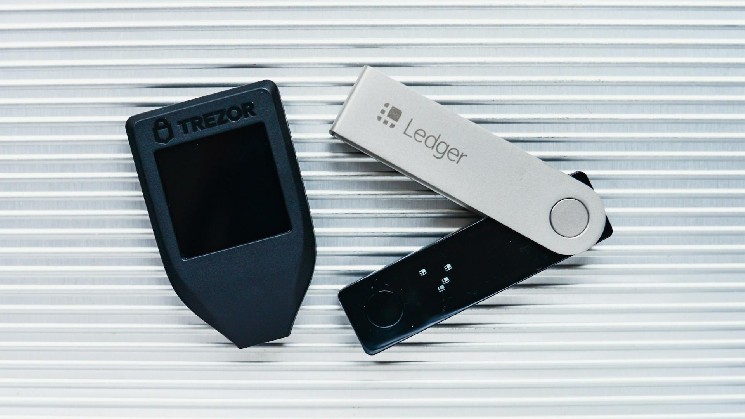
Securing the Digital Frontier: Why Russian Demand for Hardware Crypto Wallets Has Skyrocketed Ahead of the 2027 Regulatory Crackdown
A Dramatic Flight to Cold Storage: Inside Russia’s Crypto Boom
In the volatile arena of global digital assets, the behavior of Russian cryptocurrency consumers has taken a highly calculated turn toward self-reliance. During the first half of 2026, the demand for hardware crypto wallets across the Russian Federation more than doubled, marking a monumental shift in how everyday investors choose to protect their digital wealth. This unprecedented surge in consumer acquisition of physical security devices reflects a broader societal rush to secure financial sovereignty in an increasingly fractured global economy. As geopolitical isolation and domestic capital controls continue to squeeze traditional banking pathways, the allure of “cold storage”—storing private keys completely offline on specialized physical hardware rather than on vulnerable, internet-connected software platforms—has transitioned from a niche practice reserved for tech-savvy cypherpunks into a mainstream financial imperative. Faced with the reality of international sanctions that have locked domestic investors out of premier global trading hubs, alongside looming domestic regulations designed to corral digital currencies within a tightly monitored state infrastructure, Russian retail and institutional investors are rapidly turning to hardware wallets as their ultimate shield against both cybercriminals and state overreach.
Inside the Numbers: How Retail Giants Are Fueling the Boom
The scale of this migration to self-custody is vividly illustrated by raw data emerging from the country’s leading consumer marketplaces, which have experienced an extraordinary sales trajectory over the past several quarters. According to figures released by the prominent consumer electronics retailer M.Video, unit sales of hardware wallets on its digital marketplace surged by an astonishing 107 percent in the second quarter of 2026 compared to the first quarter of the year, while the overall monetary value of these transactions increased by 92 percent over the same period. Simultaneously, Wildberries, Russia’s premier e-commerce giant, documented a similar trajectory, reporting an 84 percent increase in unit sales during the first half of 2026 compared to the corresponding period in 2025, with sales value jumping by 60 percent. While both retail conglomerates opted to withhold absolute unit totals—a strategic omission that industry analysts attribute to corporate caution in a highly sensitive economic landscape—the stark percentage increases speak volumes about a coordinated rush toward hardware acquisitions. This dramatic variance in purchasing patterns, where consumers are rapidly absorbing inventory across both specialized tech outlets like M.Video and mass-market consumer platforms like Wildberries, underscores how deeply the drive for digital asset security has penetrated the general public, transcending traditional demographic barriers.
The Imperative of Self-Custody in a Sanctioned Economy
To fully comprehend this dramatic surge in retail demand, one must analyze the unique technical and psychological advantages that hardware crypto wallets provide over their digital counterparts. Unlike hot wallets, which are hosted on mobile phones, desktop computers, or centralized exchange platforms constantly exposed to the internet, hardware wallets function as isolated vaults that generate and store cryptographic private keys completely offline, ensuring that transaction signing occurs in a secure environment immune to remote malware, phishing schemes, and network intrusions. In the Russian context, however, this technical superiority is heavily reinforced by a profound sense of systemic distrust and geopolitical necessity. Following the escalation of international sanctions, major global centralized exchanges like Binance, Coinbase, and Kraken restricted or completely terminated their services for Russian nationals, highlighting the extreme vulnerability of keeping digital assets on third-party platforms that must comply with Western regulatory bodies. By transitioning to hardware wallets, Russian investors are embracing the foundational decentralized maxim of “not your keys, not your coins,” effectively removing their capital from the jurisdiction of foreign platforms, mitigating counterparty risks, and insulating themselves from potential domestic banking freezes or arbitrary exchange insolvencies.
The Regulatory Clock is Ticking: The July 2027 Cutoff
This rush to secure physical wallets is not merely a defensive reaction to external pressures; it is also a proactive race against a ticking regulatory clock ticking within Russia’s own borders. The Russian government has systematically moved to formalize and restrict the domestic cryptocurrency market, seeking to establish a controlled digital asset environment that minimizes capital flight while enabling state-monitored international trade. Under the latest legislative framework, Moscow is preparing to enforce strict rules that will fundamentally alter how digital assets are transferred. Most notably, the impending regulations feature a strict prohibition on withdrawing digital assets from licensed domestic digital depositories and sovereign exchanges directly to personal, non-custodial wallets. While the state has graciously implemented a generous transition period running until July 1, 2027, to allow the market to adjust, the writing is on the wall for local crypto holders. This multi-year grace period has acted as a catalyst, sparking a sense of urgency among investors who recognize that the window of opportunity to seamlessly move their assets off centralized domestic platforms and into private, unhosted hardware wallets is closing, prompting a massive preemptive purchasing wave.
Navigating the Legal Labyrinth of Russian Crypto Ownership
As the legislative landscape shifts, the legal status of hardware and non-custodial wallets remains a critical area of focus for investors trying to navigate Russia’s complex financial laws. Prominent legal experts and defense attorneys specializing in digital assets have clarified to domestic news outlets, including RBC, that Russian law does not outlaw the possession or use of non-custodial, hardware wallets, nor does it treat the act of self-custody as an inherently illegal activity. Instead, the state’s regulatory crosshairs are firmly trained on the points of intersection where the traditional fiat banking system meets the decentralized crypto ecosystem. By prohibiting direct withdrawals from regulated domestic depositories to private wallets after the July 2027 deadline, the government aims to create a closed loop where all institutional digital transactions remain completely visible to tax authorities and financial regulators. Consequently, Russian citizens are currently operating in a unique gray zone: they retain the absolute legal right to buy, own, and transfer digital assets using private devices, yet they face a future where the bridge between regulated state financial systems and independent decentralized networks will be heavily restricted, forcing a strategic hurry to establish robust, self-hosted infrastructure before the gates are locked shut.
The Rise of an Offline Crypto Economy and the Sovereign Future
Looking ahead, the explosive adoption of hardware wallets in Russia points to the emergence of a highly resilient, parallel digital economy that operates largely outside the view of centralized financial authorities. By locking their assets away in cold storage, Russian consumers are creating a massive, decentralized reserve of capital that cannot be easily frozen, seized, or monitored by domestic tax agents or foreign sanction enforcement offices. This trend presents a profound challenge to Moscow’s long-term monetary ambitions, particularly its plans to route domestic financial activity through the state’s upcoming digital ruble and heavily supervised national crypto exchanges. If a significant portion of the country’s active crypto-holding population secures their wealth on private offline devices, the state’s capacity to control capital flight and enforce domestic financial compliance will be substantially weakened. Ultimately, the record-breaking sales numbers reported by M.Video and Wildberries in 2026 are more than just retail milestones; they represent a fundamental declaration of financial independence by Russian investors who, staring down a future of absolute regulatory oversight, have chosen to place their trust in cryptography, physical hardware, and the enduring power of self-sovereign wealth.