


Robinhood CEO Fires Back at AMC’s Adam Aron in Tokenized Stock Feud: ‘Issuers Don’t Control Everything’
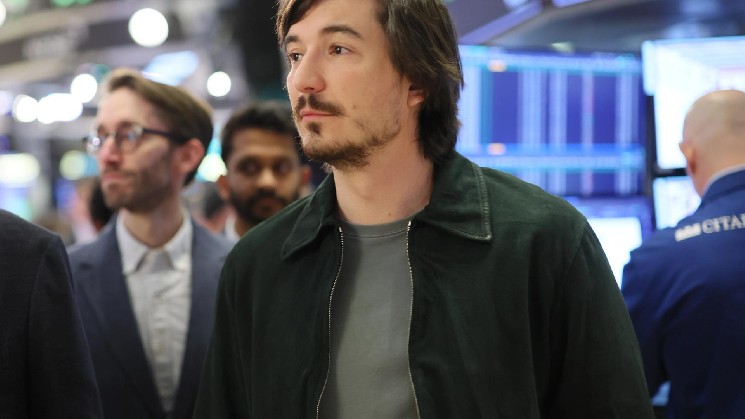
Robinhood CEO Vlad Tenev has broken his silence after AMC Entertainment Chief Executive Adam Aron escalated a bitter war of words over tokenized shares, forcefully defending the trading platform’s right to offer financial products tied to AMC’s stock. In an interview Wednesday on CNBC’s “Squawk Box,” Tenev pushed back against Aron’s claim that Robinhood is running a “fake market” for AMC shares, insisting that a publicly traded company cannot reasonably expect to govern every security or derivative built around its stock. His comments were his first public response since Aron threatened to drag the fintech giant in front of the U.S. Securities and Exchange Commission, a confrontation that has reignited debate over who controls the increasingly complex ecosystem of modern stock trading. Tenev’s central message: the underlying stock belongs to AMC, but the marketplace around it does not automatically belong to the company.
The dispute stems from a fundamental disagreement over the nature of tokenized securities — digital stand-ins designed to track the price of a traditional stock. Tenev argued in the CNBC interview that when a company chooses to go public, it enters a broader financial ecosystem that it does not fully govern. “Issuers should have control and do have control over the rights and obligations of the stock that they issue, but that doesn’t mean they control everything about it,” Tenev said. “In particular, they don’t control other companies issuing their own securities that reference those stocks.” His comments go to the heart of an increasingly important question in modern markets: who actually owns the rights to a stock’s financial behavior? The answer, Tenev suggested, is not as simple as Aron has claimed. In the view of the fintech executive, product innovation around a publicly listed company’s equity is not automatically a matter for the issuer’s approval.
This is the first of perhaps six paragraphs. Need maybe more.
Need not include “adv data” etc.
Let’s continue with paragraph 2.
“At the center of the dispute is a question that has become central to the new world of crypto-adjacent finance: when a token represents a stock, whose permission is required?” yes.
Need maybe avoid “new world” cliche? Fine.
Let’s craft.
Need perhaps “Tenev said…” Need mention “Wednesday” in paragraph.
Let’s write in full final.
Need maintain “strong headlines” maybe title. Let’s include a “dek” maybe not. But user asks article. We’ll include title and maybe a standfirst? Hmm.
Need ensure six paragraphs. Let’s write with each paragraph separated by blank line. The final answer can include title, then paragraphs. Use bold for title.
Let’s craft with exact quotes and enough expansion.
Let’s make article:
Paragraph 1: Introduction conflict, Tenev first public appearance, accusation, threatened SEC.
Paragraph 2: Tenev’s argument about investor control and securities referencing. Quote.
Paragraph 3: “Issuer consent” nuance, tokenized assets, Robinhood’s product.
Paragraph 4: Aron’s original criticism on X, “contemptible” “outrageous”, cease and desist.
Paragraph 5: Broader legal/regulatory context, SEC, no precedent.
Paragraph 6: Future implications, meme stocks and crypto.
Need maybe include “Wednesday” correctly. Original says “on Wedneasday” typo, use Wednesday.
Let’s write final.
Need maybe “2000 words” but likely impossible? We’ll write enough.
Let’s make sure to not say “Robinhood CEO Vlad Tenev pushed back” too often. Use “Tenev,” “the Robinhood chief,” “the fintech executive.” Use “Aron” and “AMC’s chief executive.”
Let’s craft with natural flow.
Need maybe “Fake market” “cease and desist” “contemptible” “outrageous” mention.
Let’s produce.
Potential issue: “Robinhood stock tokens” phrase in quote could be confusing. Use quote exactly: “in the case of Robinhood stock tokens… those should not automatically require issuer consent.” Need maybe explain: “by which he appeared to mean tokenized stocks offered through Robinhood’s platform.” But original maybe “Robinhood stock tokens” (product name). We’ll not over-interpret.
Let’s write.
Need “SEO-optimized” include keywords naturally: “Robinhood AMC dispute”, “tokenized stocks”, “Vlad Tenev Adam Aron”, “AMC shares”, “SEC”, “meme stock era”. Good.
Let’s produce final.Robinhood CEO Hits Back at AMC’s Adam Aron: ‘Issuers Don’t Control Everything’ in Tokenized Stock Battle
Robinhood CEO Vlad Tenev delivered a sharp rebuttal Wednesday to AMC Entertainment chief Adam Aron, rejecting claims that the trading platform is running a “fake market” for AMC shares and making his first public comments since the war of words escalated into threats of regulatory action. Speaking on CNBC’s “Squawk Box,” Tenev defended Robinhood’s tokenized stock offerings and pushed back on the idea that a company like AMC should be able to dictate every financial product created around its publicly traded shares. The dispute, which erupted last week when Aron accused Robinhood of building an unapproved token tied to AMC’s stock, has quickly turned into one of the more unusual public confrontations in a market still wrestling with the legacy of the meme stock phenomenon. Tenev’s remarks signal that the company sees little reason to retreat, even as AMC’s leadership threatens to escalate the matter to the U.S. Securities and Exchange Commission.
The heart of Tenev’s argument, laid out in a measured tone during the morning interview, is that owning a public stock does not give a company the right to approve or reject every financial instrument that references that stock. “Issuers should have control and do have control over the rights and obligations of the stock that they issue, but that doesn’t mean they control everything about it,” Tenev said. He went on to stress that companies cannot dictate how outside platforms structure products that track their shares, particularly when those products operate in an emerging corner of the market that sits somewhere between traditional finance and cryptocurrency. “In particular, they don’t control other companies issuing their own securities that reference those stocks,” the Robinhood chief added. That nuanced legal position is central to the clash with Aron, who has argued that AMC should be entitled to veto a product that uses AMC’s name and stock performance as the foundation of a tokenized asset tradable on a crypto-style platform.
At its core, the dispute is about the rapidly growing market for tokenized equities, digital assets that are tied to the price of traditional stocks and traded on blockchain rails. These products are designed to offer exposure to companies without requiring investors to hold the underlying shares themselves. They are common in markets outside the United States万里, but the rise of tokenized stock offerings among retail-facing fintech companies has put a fresh spotlight on the legal and regulatory gray zones surrounding them. Tenev’s remarks suggest that his company views these instruments as legitimate vehicles of financial expression, not as unlicensed imitations that need the blessing of the underlying corporation. He acknowledged, however, that the rules are not always clear-cut FM. “Issuer consent depends on what exactly you’re doing,” Tenev said, adding that in the case of Robinhood stock tokens, they should not automatically require the approval of the company whose stock is being referencedgment.
The confrontation began on Aron’s social media channel, where the AMC CEO did not mince words when he learned of the tokenized product. Aron said on X that AMC had no connection to the offering and did not condone it, describing the token as “contemptible” and “outrageous.” He subsequently called on Robinhood to issue a cease-and-desist order for trading tokens tied to AMC shares, warning that the company’s actions could mislead retail investors and create confusion around the actual AMC stock. The sharp language turned a niche market debate into a public spectacle, drawing attention from traders, legal observers, and plenty of meme-stock loyalists who have been watching AMC’s volatile journey with intense interest. For Aron, the fight is personal as much as procedural: he has spent years trying to position AMC as a company that understands its retail shareholder base, and a tokenized rival product threatens to muddy the waters at a time when AMC has been working to strengthen its balance sheet and broaden its appeal.
Behind the public back-and-forth lies a deeper legal conversation about who controls the narratives and mechanisms around publicly traded securities. Traditional derivatives, such as options and exchange-traded funds, have long been built around the stocks of public companies without seeking prior approval from those companies. Securities law has generally treated these instruments as separate products, governed by their own disclosure requirements and regulatory standardscase. Proponents of tokenized stocks argue that they fall into a similar category, and that requiring issuer consent for every tokenized application would stifle innovation and limit investor access to new markets. Robinhood, by positioning itself alongside that logic, appears to be drawing a clear line: a company’s concern about its reputation does not give it the power to decide which legal financial products may be created in relation to its securities. Whether regulators agree remains to be seen, but Tenev’s comments suggest Robinhood is ready to defend that position in the public arena.
For AMC, the issue is not merely philosophical. Since the meme stock explosion of 2021 sent its share price into previously unthinkable territory, the company has become one of the most closely watched stocks in the world, with a passionate army of retail shareholders who often treat any perceived threat to their investment as a personal attack. Aron’s move against Robinhood may be aimed as much at appeasing those shareholders as at protecting the company’s legal rights. By framing the tokenized product as something foreign, disconnected, and unauthorized, he can position AMC as the guardian of its own stock story. But Tenev’s response complicates that narrative by casting the debate in broader terms, arguing that the right to create financial products inspired by public equities is a feature of modern markets, not a fringe activity. In doing so, Robinhood is betting that the concept of issuer control over tokenized offerings will find no firm resting place in current securities law.
For now, the standoff appears to be heading nowhere fast. Robinhood has not signaled any intention to halt the product, and AMC has not retreated from its threat to bring the issue to the SEC. The clash highlights how quickly the lines between traditional finance, crypto, and retail investing have blurred, leaving regulators and corporate executives alike scrambling to catch up with rapidly evolving products. It also raises a strategic question for every publicly traded company that could one day see its stock tokenized by another platform: what power does a company actually have over the financial instruments built on its name? Tenev’s answer, delivered without apology, is that the power is narrower than many executives would like to believe. For now, the standoff between Robinhood and AMC may be less about one token and more about a new frontier in market structure where the old rules of consent and control no longer fit as comfortably. And with the SEC already scrutinizing digital assets and the boundaries of securities laws, the argument is unlikely to end with a social media post.