



The Great Digital Divide: Why Wall Street is Buying the Crypto Future While Retail Investors Panic
The Paradox of Modern Cryptocurrencies: A Tale of Two Markets
                   THE CRYPTO BIFURCATION

 RETAIL SENTIMENT                       INSTITUTIONAL ADOPTION
[ Fear & Panic Selling ] [ Long-Term Infrastructure Build ]
│ │
▼ ▼
• ETF Outflows ($ Billions) • Asset Tokenization (Cash, Equities)
• Mt. Gox FUD / Regulatory Fear • Major Allocations (BlackRock, Fidelity)
• Media-Driven Volatility • Structural Shift to Digital Plumbing
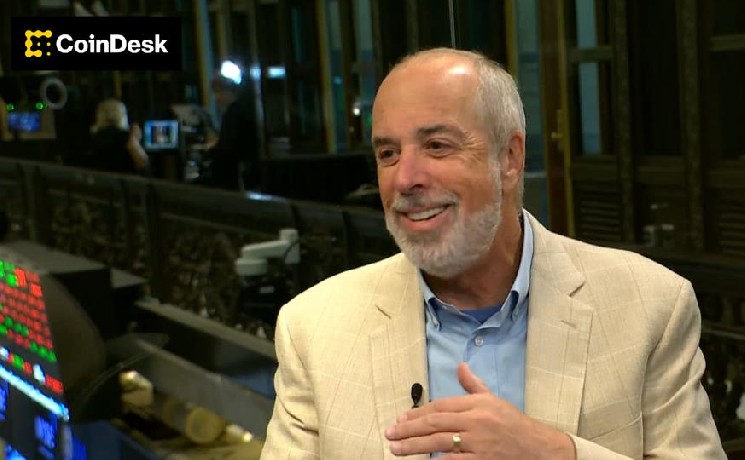
In the rapidly evolving landscape of digital finance, a striking and unprecedented divergence has emerged between short-term market psychology and long-term structural development. According to Ric Edelman, the veteran financial advisor and founder of the Digital Assets Council of Financial Professionals, the cryptocurrency sector is currently experiencing a historic bifurcation where public sentiment and industry fundamentals are moving in diametrically opposite directions. Speaking in an in-depth interview with Jennifer Sanasie on CoinDesk’s Public Keys program, Edelman highlighted a bizarre phenomenon: while the daily financial headlines remain dominated by retail anxiety, panic-driven liquidations, and dramatic accounts of capital flight, the world’s most powerful institutional asset managers are quietly and systematically integrating blockchain technology into the very bedrock of global capital markets. This disconnect has created a highly fragmented marketplace where casual investors, spooked by transitory macroeconomic headwinds and regulatory theater, are selling their positions at the exact moment that traditional financial powerhouses are scaling up their digital asset operations. The result is a classic market paradox—a superficial environment of fear and retrenchment obscuring a deep, underlying epoch of institutional accumulation and technological maturation that is poised to permanently redefine the plumbing of global wealth management.
The Capital Flight: Deconstructing the Retail Panic and ETF Outflows
RETAIL PANIC CYCLE:
Mt. Gox Rumors ──► Negative Headlines ──► Panic Selling ──► ETF Outflows ($ Billions)
To understand the current wave of market anxiety, one must look at the tangible metrics of recent retail capital flight, most notably exemplified by the consecutive days of multi-billion-dollar outflows from newly launched spot Bitcoin exchange-traded funds (ETFs). This massive retreat of retail and speculative capital has been exacerbated by a self-reinforcing loop of negative media coverage, centering around the long-dreaded distributions from the wallet of the defunct Mt. Gox exchange and the looming threat of billions of dollars in legacy tokens hitting the open market. For the average individual investor, the specter of massive supply overhangs combined with prevailing macroeconomic uncertainties has acted as a catalyst for risk aversion, driving them to capitulate and redeem their ETF shares in search of safer, yield-bearing traditional assets. This skittish behavior highlights the fundamental difference between speculative retail traders—who view digital assets through the lens of short-term price volatility and media sensationalism—and sophisticated market participants who evaluate the asset class on its underlying utility and infrastructural progress. By focusing almost exclusively on short-term price disruptions and historical ghosts like Mt. Gox, retail investors are failing to realize that these temporary liquidity bottlenecks have little to no bearing on the long-term viability of decentralized networks, ultimately leading to a premature surrender of valuable market positions.
The Washington Battleground: The CLARITY Act and the Politics of Regulation
         ┌──────────────────────────────────────────┐
         │            THE CLARITY ACT               │
         │   (Proposed Stablecoin/Crypto Framework)  │
         └────────────────────┬─────────────────────┘
                              ▼
     ┌────────────────────────┴────────────────────────┐
     │              CONGRESSIONAL FRICTION             │
     ├────────────────────────┬────────────────────────┤
     │   PRO-REGULATORY COALESCION:   │  PROGRESSIVE PUSHBACK:  │
     │   Seeks institutional  │  Sens. Warren & Sanders│
     │   guardrails and market│  demand restrictive    │
     │   standardization.      │  oversight measures.   │
     └────────────────────────┴────────────────────────┘
Compounding this atmosphere of retail anxiety is the ongoing political and regulatory drama unfolding in Washington D.C., where the legislative fate of the CLARITY Act has become a central point of contention for industry stakeholders. Designed to establish a comprehensive federal regulatory framework for payment stablecoins and clear operational guidelines for digital asset oversight, the bill represents a critical step toward legitimizing cryptocurrency within the American financial system. However, the path to consensus has been severely complicated by intense pushback from progressive lawmakers, including Senator Bernie Sanders and Senator Elizabeth Warren, who have consistently lobbied for much stricter regulatory provisions, heavier compliance burdens, and aggressive consumer protection enforcement. This highly publicized congressional debate has injected a heavy dose of regulatory uncertainty into the domestic market, leading many retail participants to fear an impending, government-led crackdown on the digital asset ecosystem. Yet, as Edelman points out, this regulatory friction is a natural and necessary step in the maturation of any nascent asset class; the political grandstanding in Washington, while distressing to short-term speculators, is actually paving the way for the robust legal guardrails and compliance protocols that major institutional investors require before deploying billions of dollars in long-term capital.
Wall Street’s Quiet Accumulation: The Institutional Giants Doubling Down
INSTITUTIONAL ACCUMULATION:
BlackRock ────► JPMorgan ────► Morgan Stanley ────► State Street ────► Invesco
───────────────────────────────────────────────────────────────────────────────►
[ Building Crypto Infrastructure ]
While retail investors flee and politicians debate, the institutional elite of Wall Street are enacting an entirely different playbook, quietly accelerating their adoption of digital asset infrastructure at an unprecedented scale. Global financial institutions such as BlackRock, JPMorgan Chase, Morgan Stanley, Franklin Templeton, Fidelity, State Street, and Invesco are not merely observing the crypto space from the sidelines; they are actively developing proprietary blockchain platforms, expanding their digital custody solutions, and preparing for massive, long-term capital allocations. For these multi-trillion-dollar asset managers, short-term fluctuations in the price of Bitcoin or temporary political debates in Congress are secondary to the strategic necessity of preparing for a digitized global economy. Industry surveys and market intelligence suggest that rather than backing away during periods of market weakness, a growing queue of sovereign wealth funds, pension systems, and family offices are planning their initial allocations or systematically increasing their existing exposure to cryptocurrencies. This highly organized, institutional embracement of digital assets reveals a profound confidence in the asset class’s structural longevity and effectively counters the prevailing retail narrative that cryptocurrency is a transient, speculative fad.
The Tokenization Paradigm: Re-Engineering the Plumbing of Global Finance
ASSET TOKENIZATIONTRADITIONAL ASSETS ON-CHAIN REPRESENTATION
[ Equities / Cash ] ────► [ Tokenization ] ────► [ Liquidity Pools ]
[ ETFs / Real Estate ] [ Instant Settlement ]
The true horizon of this institutional migration lies not merely in holding cryptocurrencies like Bitcoin, but in the revolutionary concept of asset tokenization—a process that Edelman identifies as the ultimate future of global finance. Tokenization involves representing real-world assets, such as corporate equities, fiat currencies, real estate, and exchange-traded funds, as digital tokens on highly secure blockchain networks, thereby streamlining transaction processes and eliminating traditional intermediaries. By migrating these multi-trillion-dollar traditional assets onto shared ledger systems, Wall Street firms can achieve near-instantaneous trade settlement, significantly reduce counterparty risk, eliminate expensive operational frictions, and unlock unprecedented pools of liquidity. This shift represents a fundamental re-engineering of the global financial system’s underlying plumbing, transforming static, slow-moving paper assets into dynamic, programmable, and highly composable digital instruments. As financial giants like BlackRock and Franklin Templeton launch tokenized money market funds and explore on-chain settlement mechanisms, the boundary between traditional finance and decentralized technology is rapidly dissolving, making the total adoption of digital networks an inevitable structural evolution rather than a speculative possibility.
Navigating the Chasm: What the Future Holds for the Digital Economy
                     THE ROAD AHEAD

       Market Consolidation & Shakeout of Weak Hands
                            │
                            ▼
       Passage of Comprehensive Regulatory Guardrails
                            │
                            ▼
       Mass Migration of Global Wealth to On-Chain Assets
Ultimately, the dramatic divergence between fearful retail sentiment and aggressive institutional adoption is standard for a maturing asset class transitioning from speculative infancy to institutional-grade integration. As the emotional reactions of retail traders continue to fuel short-term volatility, the systematic construction of blockchain infrastructure by Wall Street’s legacy players ensures that the financial ecosystem of tomorrow will be built upon digital ledgers. When regulatory frameworks like the CLARITY Act are eventually finalized, they will provide the legal certainty needed to unleash a wave of institutional capital, bridging the gap between today’s fragmented crypto market and the fully integrated digital economy of the future. For astute observers and long-term investors, looking past the immediate noise of ETF outflows and political policy debates reveals a landscape rich with opportunity. The underlying market fundamentals are stronger than ever, and the ongoing shift of economic power from emotional retail speculators to highly disciplined, long-horizon institutional custodians marks the beginning of a highly sophisticated era for global finance.