



Rewrite the following content into a 2000-word, SEO-optimized article in English. Write it in the style of a professional journalist or news reporter. The article should be fully humanized, natural, and engaging — not robotic or repetitive.
Focus on clarity, flow, and storytelling while preserving the meaning of the original. Structure the article into 6 well-developed paragraphs with smooth transitions, strong headlines, and a professional tone. Use varied vocabulary, sentence lengths, and natural phrasing to make it read like human-written journalism.
Avoid keyword stuffing, but naturally integrate important SEO keywords throughout the article. Ensure the final article feels like it was written by a skilled reporter for a reputable news outlet.
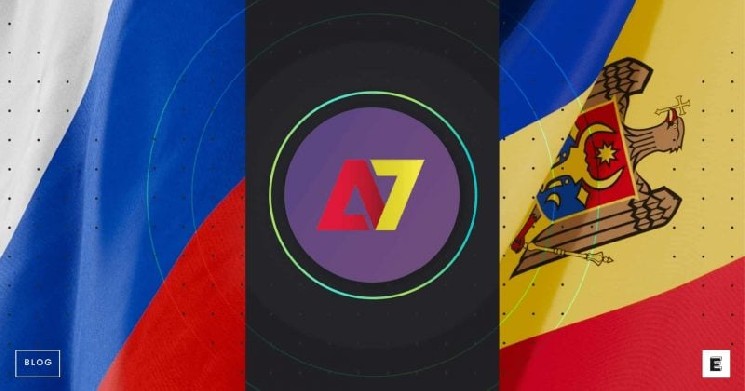
There’s a stablecoin you’ve probably never heard of that has quietly become one of the most geopolitically significant tokens in crypto. A7A5, a ruble-backed stablecoin launched in January 2025, has processed over $100 billion in on-chain transactions in less than a year. And now it says it can thrive even if the sanctions it was designed to circumvent disappear entirely.
That’s a bold claim for a token that just got hit by the US Treasury’s Office of Foreign Assets Control, the EU, and the UK in rapid succession. But A7A5’s pitch to Russian businesses has shifted: it’s no longer just about dodging Western restrictions. It’s positioning itself as permanent infrastructure for non-dollar trade settlement.
From sanctions workaround to trade backbone
A7A5 was built to solve a very practical problem: Russian companies couldn’t move money across borders efficiently because most international payment rails run through Western banks that won’t touch sanctioned entities. Issued by Kyrgyzstani firm Old Vector LLC and backed by reserves held at Promsvyazbank, a sanctioned Russian bank, the token gave businesses a way to settle trades in rubles on blockchain rails. Primarily operating on Tron and Ethereum, it found an audience fast.
By late 2025, the stablecoin had become a key settlement medium for Russian trade with China, Southeast Asia, and Iran. Trading volume concentrated heavily against $USDT on the Grinex exchange, creating a ruble-to-dollar-stablecoin corridor that bypassed traditional banking infrastructure entirely.
The sanctions hammer drops
On August 14, 2025, OFAC sanctioned A7A5 and its associated entities, citing facilitation of sanctions evasion and illegal financial activities. The EU followed with its own ban on October 23, 2025. The UK piled on as well.
The impact was immediate and measurable. Daily transaction volumes for A7A5 fell from peaks above $1.5 billion to roughly $500 million. The sanctions also effectively cut A7A5 off from mainstream exchanges and liquidity providers, as compliant platforms had to delist it or risk secondary sanctions themselves.
Can it survive peace?
A7A5’s backers argue that even in a post-sanctions world, Russian businesses would still benefit from a ruble-denominated stablecoin for cross-border settlement. For bilateral trade corridors between countries already motivated to reduce dollar dependence, a ruble-pegged token could find a permanent niche. Russia’s trade with China alone represents hundreds of billions of dollars annually.
What this means for investors
For Western crypto market participants, A7A5 is essentially untouchable. Holding it, facilitating its trade, or providing liquidity for it carries serious legal risk in the US, EU, and UK.
A7A5 is a proof of concept for the use of stablecoins as geopolitical instruments. If a ruble-pegged token can process $100 billion in transactions in under a year, the infrastructure clearly works. Tether in particular faces questions, given that $USDT is the primary trading pair for A7A5 on Grinex. While Tether has cooperated with law enforcement in freezing sanctioned addresses, the sheer volume of A7A5-$USDT trading creates uncomfortable optics.
For the Tron and Ethereum networks that host A7A5 transactions, neither network can prevent a sanctioned token from using its infrastructure, which is the entire point of decentralization. Secondary sanctions targeting exchanges and OTC desks that facilitate A7A5 liquidity could further compress daily volumes below the current $500 million level.