





Goliath Ventures and CEO Face Twin Regulatory Actions Over Alleged $425 Million Crypto Ponzi Scheme
Federal regulators have filed simultaneous enforcement actions against a California-based crypto investment firm and its chief executive, accusing them of orchestrating one of the largest cryptocurrency fraud schemes in recent memory.
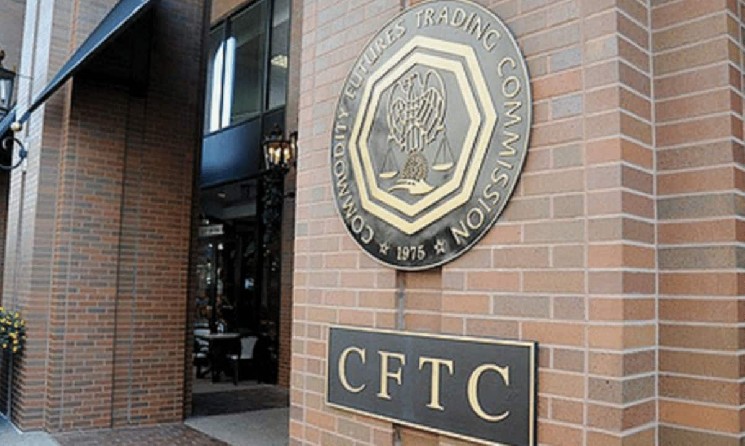
In a striking display of regulatory coordination, the Commodity Futures Trading Commission and the Securities and Exchange Commission both filed actions on the same day against Goliath Ventures and its CEO, Christopher Alexander Delgado. The twin complaints, lodged in the US District Court for the Middle District of Florida, allege that the company operated a massive Ponzi scheme that defrauded thousands of investors who believed they were participating in lucrative crypto asset trading opportunities.
The regulatory actions arrive roughly two months after Delgado entered a guilty plea to criminal charges stemming from the same underlying conduct, signaling what appears to be the final chapter in a scheme that regulators say spanned more than two years and pulled in hundreds of millions of dollars from unsuspecting investors. The case highlights the ongoing risks facing retail investors in the largely unregulated cryptocurrency markets, where promises of outsized returns often mask fraudulent activity.
The Alleged Scheme: Promises of Easy Money in Crypto Liquidity Pools
According to the regulators’ filings, Goliath Ventures operated its alleged scheme from at least January 2023 through January 2026, conducting what the SEC characterized as an unregistered securities offering. The company’s pitch was deceptively simple and, for many investors, irresistible: individuals were told they could “partner” with Goliath to invest in cryptocurrency asset liquidity pools, a legitimate trading strategy that involves providing capital to facilitate trades in exchange for fees.
The company promised investors monthly returns ranging from 3% to 10%, money that supposedly came from fees paid by buyers and sellers trading crypto assets in those liquidity pools. Investors were also guaranteed the return of their principal, creating what appeared to be an exceptionally safe, high-yield investment opportunity. This combination of promised security and outsized returns proved compelling enough to attract substantial capital from a broad base of investors.
The CFTC’s complaint provides stark numbers to illustrate the scale of the alleged fraud. Approximately 1,600 customers contributed at least $397 million to the scheme, while the SEC’s filing puts the total amount raised at around $425 million from more than 1,300 investors. The discrepancy between the two figures likely reflects slightly different methodologies in calculating the total amount of funds gathered during the scheme’s operational period.
Where Did the Money Actually Go? A Classic Ponzi Pattern
Despite the sophisticated veneer of crypto trading expertise, the reality of what happened to investor funds tells a far more troubling story. According to the SEC’s complaint, Goliath never actually invested the money in the liquidity pools that were promised to investors. Instead, the company employed a classic Ponzi scheme structure, using funds from new and existing investors to pay promised returns to earlier investors.
This arrangement, typical of fraudulent investment operations, works smoothly as long as new money flows in faster than existing investors seek to withdraw their funds or demand their promised returns. The system inevitably collapses when the flow of new capital slows below the level needed to satisfy payment obligations to existing investors.
The CFTC’s filing paints an even more personal picture of how investor funds were diverted. Customer funds were allegedly used not only to pay fictitious profits but also to support what appears to be an extravagant lifestyle enjoyed by Delgado. The CEO reportedly took at least $51 million for personal use, spending money on homes, luxury vehicles, a yacht, and travel—the kind of conspicuous consumption that often accompanies large-scale financial fraud.
A Web of Deception: Fabricated Accounts and Sales Incentives
Beyond simply misappropriating funds, the company allegedly constructed an elaborate web of deception designed to keep investors complacent and attract new capital. The SEC’s complaint details how Goliath hired sales agents specifically to bring in more investors, paying them commissions from investor funds. This multi-level structure, which bore increasingly heavy commission costs as more agents were recruited, further hastened the scheme’s inevitable collapse.
To maintain the illusion of legitimacy and profitability, company representatives reportedly fabricated account balances and investment performance figures. Investors were shown documentation making it appear that they were earning steady profits and that their assets were actually being invested in crypto pools, when in reality no such investments existed. The CFTC additionally alleged that the defendants issued false account statements and falsely guaranteed investment returns to maintain investor confidence.
This combination of fabricated documentation, false performance figures, and guaranteed returns created a powerful psychological hold on investors. Many likely believed they had found a reliable income stream, with the seemingly professional statements reinforcing the legitimacy of their investments. The alleged scheme follows a familiar pattern in financial fraud cases, but the crypto wrapper gave it an air of modern sophistication that likely eased investor concerns.
The Collapse: When the Music Stopped
By November 2025, the scheme’s structural weaknesses had become insurmountable. According to regulatory filings, Goliath could no longer bring in new money quickly enough to repay existing investors, leading to a cessation of monthly distributions. This moment, familiar to students of Ponzi scheme history, marks the critical tipping point when the fraud can no longer sustain itself through new capital infusions.
The collapse left hundreds of investors facing substantial losses, many of whom had likely been lured by the promise of steady monthly income from what they believed was sophisticated crypto trading. The fact that the scheme continued operating until January 2026, even after ceasing distributions two months earlier, suggests a desperate attempt to raise additional funds or delay the inevitable reckoning.
Regulators allege that the scheme’s collapse proved particularly devastating because many investors had reinvested their promised returns rather than withdrawing them, allowing their investments to compound unrealistically within the fabricated system. This reinvestment behavior, cultivated through the promise of even greater future returns, maximized the ultimate losses when the house of cards finally came down.
Legal Consequences: Guilty Pleas and Permanent Bans
Christopher Alexander Delgado’s legal troubles extend beyond the civil regulatory actions filed this week. In a move that underscores the criminal dimensions of the case, Delgado pleaded guilty to federal charges approximately two months before the regulators filed their enforcement actions. This guilty plea likely represents a coordinated strategy between criminal prosecutors and civil regulators, working in tandem to ensure comprehensive accountability.
Now, the SEC has charged Goliath and Delgado with violating multiple federal securities laws. In what appears to be a negotiated resolution, Delgado has agreed to a bifurcated settlement, which remains subject to court approval. Under this agreement, he would be permanently barred from violating the charged provisions, participating in certain securities transactions, and acting as or being associated with a broker or dealer.
The concept of a bifurcated settlement typically separates the determination of liability from the assessment of penalties and remedies. This approach allows defendants to accept responsibility for their actions while preserving their ability to litigate specific penalties or other remedies at a later stage. The requirement for court approval means that a judge will need to review and sanction the terms before they become final.
Implications for Investors and the Crypto Landscape
This case serves as yet another stark reminder of the dangers that continue to lurk in the cryptocurrency investment space. Despite increased regulatory attention and growing sophistication among investors, schemes promising outsized returns on crypto-related investments continue to attract substantial capital. The Goliath case demonstrates that even relatively elaborate presentations, complete with professional documentation and seemingly legitimate trading strategies, can mask fraudulent operations.
For the thousands of investors who entrusted their money to Goliath Ventures, the path to recovery remains uncertain. While regulatory actions and criminal prosecutions provide some measure of accountability, the reality is that recovered funds are often a small fraction of total losses in cases of this magnitude. The funds spent on luxury items, yachts, and personal expenses are unlikely to be recovered in their entirety, leaving many investors with substantial unrecoverable losses.
The coordinated response from the CFTC and SEC, combined with the parallel criminal proceedings, signals that regulators are increasingly treating cryptocurrency-related fraud as a priority area. This case may also serve as a warning to others contemplating similar schemes that the window between initiating fraudulent operations and facing enforcement consequences may be narrowing. Yet, as long as the promise of outsized returns continues to attract investors, the ecosystem for such frauds will likely persist, even as enforcement actions paint an increasingly clear picture of the risks involved.