



The Sovereign Defender: Why Ray Dalio Keeps Bitcoin on a Tight Leash While Clinging to Gold
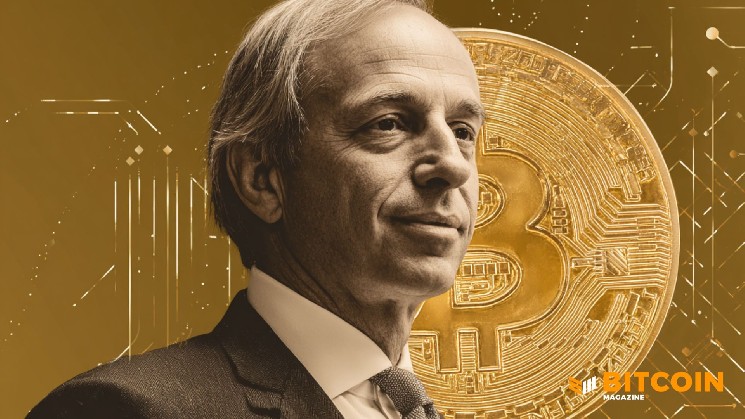
In a quiet, modern studio filled with the soft hum of production equipment, one of the world’s most influential macroeconomic minds sat down to dissect the very nature of money—and in doing so, laid bare the deep intellectual divide currently splitting the global financial elite. Ray Dalio, the legendary founder of Bridgewater Associates, the world’s largest hedge fund, recently appeared on a highly anticipated episode of The Diary of a CEO podcast hosted by Steven Bartlett. At seventyy-five years old, Dalio remains a towering intellectual colossus whose market insights can shift billions of dollars in global capital flows with a single sentence. During the wide-ranging conversation, the billionaire investor confirmed a detail that sent shockwaves through both traditional financial circles and the hyper-kinetic cryptocurrency community: he still restricts his personal allocation of Bitcoin to a mere one percent of his multi-billion-dollar portfolio, choosing instead to plant his flag firmly in the camp of physical gold. For Dalio, this highly conservative allocation is not merely a random quantitative decision, but a profound philosophical stance on asset preservation during an era of unprecedented inflation, ballooning sovereign debt, and shifting geopolitical power dynamics. By physically pointing toward imaginary gold bars during the interview, Dalio visually demonstrated his timeless allegiance to a tangible, non-debt-yielding asset that has successfully survived the fall of empires, sweeping plagues, and major structural revolutions for over five thousand years, contrasting it sharply against the digitized, cryptographic newcomers fighting for dominance in the modern portfolio.
The Evolution of a Skeptic: Tracing Dalio’s Reluctant Acceptance of the Cryptoconomy
To truly understand Dalio’s current position, one must trace his slow, highly calculated intellectual evolution from an outright cryptocurrency skeptic to a cautious, risk-mitigated participant. For years, the master of risk-parity investing maintained an unyielding public stance against Bitcoin, writing it off as an asset class far too volatile, speculative, and detached from fundamental economic utility to be taken seriously by major institutional allocators who manage capital on behalf of massive pension funds and sovereign wealth entities. Over time, however, as the decentralized network proved its operational resilience and survived multiple brutal bear markets, Dalio’s hardline approach began to soften, culminating in his quiet confession that he had finally added a tiny, fractional sliver of the digital asset to his personal holdings as a minor, speculative hedge. Yet, his latest comments reveal that his fundamental structural reservations remain entirely unappeased, as he meticulously laid out the profound technical vulnerabilities that prevent him from expanding his digital footprint. Chief among Dalio’s economic anxieties is the double-edged sword of technological advancement, particularly the looming threat of quantum computing, which could theoretically break the cryptographic consensus mechanisms that guarantee Bitcoin’s absolute scarcity. Moreover, Dalio highlighted the systemic vulnerability of public, digital ledgers to advanced government surveillance, sophisticated forensic auditing, and heavy-handed taxation, emphasizing that the libertarian dream of transactional anonymity has largely been replaced by a highly traceable digital trail that sovereign nations can easily monitor, exploit, and suppress at will.
The Iron Fist of the State: Why Governments Will Never Cede Monetary Monopolies
At the absolute core of Dalio’s structural thesis against heavy digital currency investment lies a cold, historical pragmatism regarding the geopolitical reality of sovereign power and the state’s absolute monopoly over the issuance of currency. Throughout human history, whenever an alternative transaction medium has risen to challenge the state’s sovereign capacity to tax, control capital flight, inflate away national debts, and manage domestic currency supplies, the ruling authority has inevitably utilized its legal, legislative, and physical power to either co-opt or completely crush the challenger. Dismissing the overly optimistic, cypherpunk narrative that decentralized digital networks are completely immune to government intervention, Dalio warns that central banks and national treasuries will never allow Bitcoin or any other private digital currency to achieve the status of a major global reserve asset, because doing so would strip them of their ultimate macroeconomic steering wheels. If a sovereign state begins to view an unregulated digital asset as a legitimate threat to its currency hegemony or its broader financial stability, it has an arsenal of destructive options at its disposal, including the outright criminalization of fiat-to-crypto gateways, the imposition of suffocating Capital Gains tax regimes, or the implementation of strict capital controls that can instantly sever digital assets from the traditional banking pipelines. According to Dalio, central banks will completely avoid holding digital currencies on their balance sheets because these global institutions require absolute transaction privacy plus total systemic control—attributes that run in direct opposition to the transparent, open-source, and permissionless design of public blockchains.
The Golden Anchor: Understanding the Timeless Resilience of Tangible Wealth
To fully appreciate why Dalio prefers the cold, heavy tangible reality of physical gold over the shifting pixels of cryptographic networks, one must examine the foundational economic rules of his world-famous “All Weather” investment framework, which prioritizes survival across all imaginable economic environments. Physical gold is an inherently unique, non-credit-associated asset class that cannot be printed by decree, defaults on absolutely zero counterparty obligations, and carries no direct risk of technological obsolescence, power grid failures, or software coding bugs. While digital currency proponents frequently argue that Bitcoin represents a modern “digital gold” because of its portability and algorithmically enforced supply cap of twenty-one million coins, Dalio views this marketing narrative as dangerously naive, pointing directly to the extreme, stomach-churning volatility of the cryptocurrency markets, which makes it highly unsuited to serve as a reliable store of value or a stable unit of historical account. For an elite global asset manager, gold functions as the ultimate monetary insurance policy precisely because it is an offline, non-hackable, universally recognized real asset that does not require an active internet connection, state-approved software updates, or collective trust in complex, unproven technological frameworks to retain its purchasing power. This timeless physical durability is precisely why central banks around the world have quietly embarked on historic gold-buying sprees in recent years, systematically replacing their foreign fiat currency reserves with physical bullion to insulate themselves from the looming threat of a western-dominated financial crisis, global weaponization of the SWIFT network, and systemic dollar debasement.
The Wall Street Divide: Legacy Macro Pragmatism Meets the New Digital Order
Dalio’s highly calculated, conservative posture highlights a historic intellectual divide at the highest levels of global finance, pitting the old-guard macro pragmatists against a new generation of Wall Street titans who are choosing to aggressively integrate digital assets into legacy investment frameworks. While veteran fund managers like Dalio demand decades of historical data and tangible capital preservation before allocating capital, institutional mega-firms like BlackRock, under the direct stewardship of CEO Larry Fink, have undergone a swift and stunning transformation, publicly validating Bitcoin as a legitimate, borderless international asset class that represents a profound technological upgrade to traditional financial railways. This dramatic paradigm shift has been permanently cemented by the historic regulatory approval of spot market Bitcoin exchange-traded funds (ETFs), which have channeled billions of dollars of legacy institutional capital into the digital ecosystem, effectively renaming cryptocurrency from a niche playground for tech enthusiasts to an essential, high-performing liquidity sponge for modern wealth managers. This conceptual divergence between Bridgewater’s classic, risk-averse protectionism and BlackRock’s aggressive digitalization push represents a larger cultural transition: on one side stand the classicists, who firmly believe that real wealth must possess tangible, physical presence to survive the eventual reset of the global financial system, and on the other stand the technocratic modernists, who argue that in an increasingly digitized, borderless, and high-velocity global economy, the most secure and liquid asset must be built upon public, tamper-proof mathematical protocols.
The Modern Investor’s Blueprint: Navigating the Turbulent Battle for Sound Money
Ultimately, the intellectual clash between physical gold and digital Bitcoin is not a simple, zero-sum game, but rather a sophisticated lesson in how modern investors must protect their capital in an era of rampant debt monetization and geopolitical instability. By dedicating a commanding percentage of his alternative asset holdings to physical gold while leaving a small, highly controlled one-percent allocation to Bitcoin, Ray Dalio has constructed an incredibly pragmatic, asymmetric hedge that acknowledges the brilliant mathematical design of decentralized networks while remaining heavily insulated from their potential systemic tail-risks. Real-world investors can draw immense value from Dalio’s analytical caution, realizing that while physical gold remains the ultimate foundation for long-term wealth preservation, a small, highly disciplined exposure to digital assets can serve as a powerful engine for capital appreciation and asymmetric growth in a highly digitized financial system. As global central banks continue to print fiat currencies to monetize staggering mountains of public debt, the quest for sound, unprintable money will only intensify, forcing every market participant to decide whether they will trust the ancient, physical elements of the earth or the complex, immutable mathematics of the blockchain to preserve their financial security in the highly unpredictable decades ahead.