


Tokenized Stocks Face Their First Big Test: 43 Companies Object to OKXICE, and the Industry Is Watching
A Wave of Objections Rolls Over OKXICE’s Debut
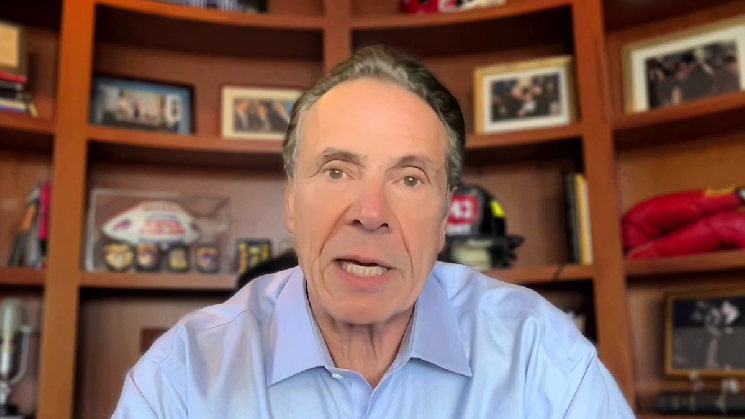
When OKXICE unveiled the initial lineup for its new tokenized stock marketplace, the message was bold: the future of equities would run on blockchain rails, and some of the world’s most valuable companies would be part of it from day one. For months, the platform had positioned itself as a bridge between traditional finance and the digital-asset economy, promising investors the ability to trade tokenized shares of household names with the speed and efficiency of cryptocurrency markets. The reality, however, has turned out to be more complicated. According to a CoinDesk tally, 43 of the 62 companies OKXICE originally selected for trading have now filed objections—about 69% of the initial list. Seven other companies, which were not part of that original selection, have also objected, bringing the total number of corporate refusals to 50. For a platform designed to bring the efficiency of digital assets to traditional stock trading, the backlash has been impossible to ignore. Andrew Cuomo, OKXICE’s co-chairman and the former governor of New York, addressed the pushback directly during a Friday press conference. He said many companies wanted to see how the market actually worked before making a commitment. “I think the more people become familiar with tokenization, and the more they see the benefits of tokenization, I think you’ll see more and more companies participate,” Cuomo said. “But we are at the very beginning of the rollout of fundamentally different market structure.” It was a measured response, one that acknowledged the anxiety while insisting that the project remains on track. Whether the market will share his patience is another question. The objections themselves, after all, are a sign of how much is at stake. No company objects to a platform that does not matter.
Why Tokenization Is Making Companies Nervous
To understand the objections, it helps to understand what tokenization actually means. A tokenized stock is a digital representation of a traditional equity security, issued on a blockchain and designed to be traded like a cryptocurrency. In many cases, the token is backed by real shares held in custody, so the economic value is identical to the underlying stock. Supporters argue that the model can transform the capital markets by enabling faster settlement, reducing costs, and opening the door to fractional ownership. An investor, for example, could buy a small piece of an expensive stock without waiting for traditional market hours or paying hefty broker commissions. But for the companies whose shares are being tokenized, the benefits are not always obvious. Corporate leaders see a marketplace they do not control, a regulatory framework that is still being written, and a technology that has yet to prove itself in a major market crisis. They also see potential legal risks. If tokenized shares trade on an unregulated or lightly regulated platform, who is responsible for investor protection? What happens if the platform is hacked? How do token holders exercise voting rights or receive dividends? These are not trivial concerns, and they help explain why so many legal departments have chosen to object rather than wait. Cuomo’s comment that companies are waiting to see how the market works was, in that sense, an accurate reading of the mood. But it also highlights a fundamental challenge: the market cannot work if the companies are not willing to participate. Tokenization may be the future, but the present is still governed by old rules, old habits, and old fears.
Who Hasn’t Objected? A Look at the 19 Names Still on the List
Yet not every company on the original list has objected. Nineteen of the 62 companies had no disclosed objection as of Friday’s notice. That group includes some of the most recognizable names in technology and finance: Apple (AAPL), Amazon (AMZN), Tesla (TSLA), SpaceX, Netflix (NFLX), Palantir (PLTR), Strategy (MSTR), Robinhood (HOOD), Coinbase (COIN), Circle (CRCL), SoFi Technologies (SOFI), Super Micro Computer (SMCI), Lam Research (LRCX), ServiceNow (NOW), GE Vernova (GEV), Boeing (BA), Home Depot (HD), Securitize, and BitGo. The list is a mix of crypto-native companies and established industrial giants, which makes it difficult to draw a single conclusion. For companies like Coinbase, Circle, Securitize, and BitGo, the decision to stay on the list is hardly surprising; they are building their businesses around digital assets and tokenization. For Boeing, Home Depot, and GE Vernova, the calculus is different. They may be waiting for more clarity, or they may simply have decided that the issue is not worth the public attention that an objection would generate. Either way, their presence on the list should not be read as a ringing endorsement. It is simply a reflection of the fact that no objection has been disclosed. And that could change at any moment. Corporate legal teams are still reviewing the platform’s terms, regulators are still weighing in, and the list of objectors and non-objectors remains very much in flux. Some companies may not want to be first through the door, but that does not mean they will stay away forever.
Silence Isn’t Endorsement: What “No Disclosed Objection” Actually Means
That last point is crucial. In the rush to count objectors and non-objectors, it is easy to overlook what a lack of objection does and does not mean. A company that has not objected has not necessarily approved the platform. It has not necessarily agreed to have its shares traded. It has not necessarily even made a decision. Nor does the absence of an objection mean that the company’s shares will actually be available when the venue launches. What it means is simply this: as of Friday, the company had not taken the affirmative step of filing a formal objection. The distinction may sound like legal hair-splitting, but it matters. Corporate silence can reflect any number of positions. A company may be waiting to see whether the platform gains traction before making a public statement. It may be concerned that an objection would draw unwanted attention to a niche issue. It may be in the middle of an internal review. Or it may have simply not yet engaged with the question. Securitize, a tokenization specialist, and BitGo, a digital asset custodian, previously told CoinDesk that they did not plan to object, making clear that their silence was a deliberate choice. But they are only two of the 19. For every company that has thoughtfully decided to stay on the list, there may be another that has not yet formed a position. The absence of a public objection is data, but it is far from the whole story. The market should be careful not to mistake a lack of resistance for an endorsement.
Why McDonald’s, Microsoft and Google Saying No Isn’t a Dealbreaker
Against that backdrop, the objections themselves have taken on an outsized importance. Reports have suggested that some of the world’s most famous brands—McDonald’s, Microsoft, Google—are among the companies that have said no to tokenized stocks on OKXICE. On the surface, that looks like a decisive rejection. If the companies that define the global economy are unwilling to participate, what chance does a new tokenized marketplace have? History offers a different perspective. Every major financial innovation has faced resistance from incumbents and from the companies that were expected to participate. When exchange-traded funds were introduced in the 1990s, they were dismissed as a niche product. When electronic trading networks first appeared, they were viewed as a threat to the established order. Over time, the skeptics were proven wrong—not because the resistance was irrelevant, but because the underlying utility of the innovation won out. Tokenization offers genuine benefits: faster settlement, lower costs, greater transparency, and the potential for fractional ownership. Those benefits are not erased by a list of objections. As Cuomo suggested, familiarity will be the deciding factor. The more companies understand tokenization, the more likely they are to participate. Regulators will also play a role. Clearer rules around digital securities could ease corporate concerns and pave the way for broader adoption. Until then, a certain amount of caution is not just expected; it is rational. Today’s objectors are not necessarily permanent objectors.
Early Days, Long Game: What Comes Next for Tokenized Markets
Where does that leave OKXICE? The platform is now in a position that every market pioneer eventually faces: it must prove its value to a skeptical audience. Cuomo’s Friday remarks were an acknowledgment of that reality. “We are at the very beginning of the rollout of fundamentally different market structure,” he said. The next several months will be critical. OKXICE will need to demonstrate that it can operate safely, attract genuine liquidity, and provide a trading experience that is better than the traditional alternatives. It will also need to engage directly with the companies that have objected, addressing their concerns about regulation, control, and risk. Some of those companies may never come around. But some almost certainly will, especially if the platform can show that tokenized stocks are not a threat but an improvement. The broader story, however, is bigger than any single platform. Tokenization is still in its infancy, and the questions raised by OKXICE’s rollout are the same questions that will shape the future of digital assets for years to come. The 50 companies that have objected have made their position clear—for now. The 19 companies that have not objected have left the door open. And the dozens of other companies watching from the sidelines are the real audience. The story of tokenized stocks is not a story of failure. It is a story of a market struggling to be born.