


Japan’s Institutional Crypto Pivot: Nomura-Backed Laser Digital Breaks a Four-Year Registration Drought
First New Entrant in Four Years
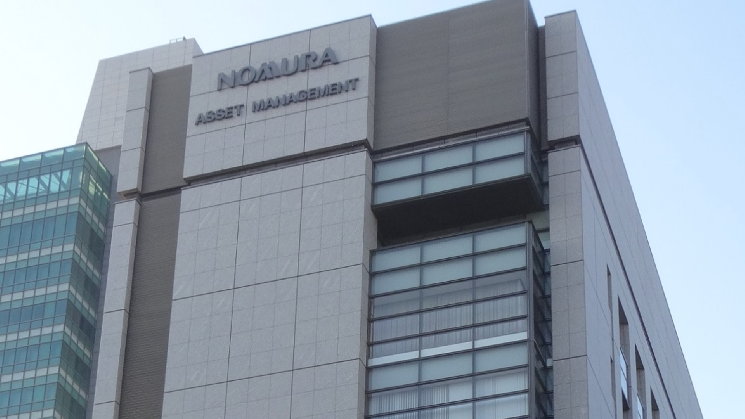
For the first time in four years, Japan’s digital-asset sector has a newly registered participant. Laser Digital, the crypto-focused business under Nomura Group, says its Japanese subsidiary has been registered as a crypto asset exchange service provider. That a subtle-sounding administrative milestone is, in fact, a significant sign of how Japan’s relationship with digital assets has changed. The registration marks the first time in four years that an entirely new firm has entered Japan’s regulated crypto ecosystem, and it comes at a moment when the country is tightening the legal classification of crypto as a financial instrument. For years, Japan has been cautious about crypto—understandably, given its history with early exchange failures and the regulatory scars left by the Mt. Gox collapse. But the scene has evolved. Institutions, not retail speculators, are increasingly driving the demand environment. Laser Digital’s arrival is not just a corporate approval; it is a useful gauge of a market that has been waiting for its entrance.
The Fern also wrote that it will start by offering liquidity services to domestic virtual asset service providers, the core group of companies that operate digital asset exchanges and trading platforms. Later, Laser Digital plans to extend into all constellations for institutional investors, though no launch date has been provided and the full scope of that service has yet to be announced. Named by Nomura, Japan’s largest investment bank, Laser Digital’s registration becomes the forgotten signal for institutional usage in what has historically been a mostly retail-led, platform-based market. In a world where institutional players still worry about reverse investor protection, operational transparency and compliance, this entry offers something else: an institution-backed counterparty in an ecosystem that, until not, hasn’t had enough.
A Quiet Shift: Japan’s Crypto Market Moves Into the Financial Instrument
Japan’s legal attitude toward crypto has always been interesting: one of the first countries to recognize crypto as a payment method, then one of the instructional parents who wanted curve after a series of high-profile failures. For years, digital assets are not a separate, somewhat awkward registration regime under a simple crypto asset exchange service provider, organized more around store waves than around areas. That is now changing. The country is preparing a digital asset regime within broader investment ledger, an evolution that would treat digital assets less like a sideshow and more like what they are: an asset class. The move would bring crypto into a financial-instruments framework, an approach that has been considered, expected, and anticipated by market participants for some time. If that happens, assets will be governed by rules that already regulate traditional financial products—including disclosure responsibilities, investor protection rules, and, in some cases, restrictions on unlawful conduct.
Laser Digital appears to have timed its registration to align with that shift. One registration was announced just as the institutional narrative is gaining traction, not only in the crypto press but also in Japanese policy making circles. In a very practical sense, entering Japanese permission now means building a footprint when the rules of the game are still being redefined. For a firm backed by a big Japanese financial name, that’s not a coincidence. It’s positioning. The registration in effet allows it to settle in place, begin serving counterparties, and establish liquidity relationships before the foundation of a more formal financial instruments regime takes form. That should be particularly reassuring to overseas exchanges and crypto fund managers who often regard Japan as an orderly but not-yet-ready market. A more formal framework may increase the country’s appeal as an institutional venue for digital, as long as the players are known.
From a regulatory standpoint, the written could rebalance the relationship between Japan’s payment-service-era laws and more recent product rules. The old regulations saw crypto assets primarily as a payment method, placing them under the Payment Services Act. The newer vision is stronger: if digital assets belong inside financial instruments, then exchanges, custodians and counterparties need to build for the deeper obligations, capital standards and operational resilience expected of financial institutions. That is not something every current or potential exchange can easily accept. The few established Japanese exchanges will have to adapt. New entrants that arrive with institutional-capacity, such as Laser Digital, have a structural advantage in terms of your expertise in much stricter forms of compliance. It also means that the “crypto exchange” label may behind the “crypto intermediary” or “digital asset business” label, but additional application remains identical.
Liquidity First, Allocation Later: The Strategic First Step
For now, Laser Digital is careful with its portfolio of services. It doesn’t come to Japan with a mainstream consumer trading app, at least not at first. Instead, the firm will deploy first around liquidity in B2B, meaning domestic virtual asset service providers that need access to reliable buy-side and sell-side liquidity. In a market where many domestic exchanges have fragmented order books, a big and reliable institutional liquidity provider can be an important interlocutor. Liquidity providers help protect gaps, tighten spreads, and allow client-facing exchanges to offer smoother pricing. That is a critical need for institutional investors that certainly will not place the market hit to poorly designed interface.
The broader plan is to provide institutional-grade trading opportunities for professional investors. More specifically, this means traditional pathways to access digital assets without the operational noise. We shouldn’t launch schedule hasn’t been set, and that hasn’t been described in detail. But it is already clear that the company is not trying to solve short-term price volatility; it’s laying plumbing. This is an infrastructure play, not just a trading floor play. What’s more, it’s a sign that Japanese institutional investors are looking for adequate counterparties with the balance-sheet breath, not just some digital assets with high potential. Laser Digital’s decision, to enter with liquidity services, also tells us a valuable amount about which part of the market is absent in Japan at the moment. There are already exchanges. What there is not, probably in a institutional context, is enough professional connections between these exchanges, external liquidity bases, and the investment banks that sit on the side of institutional order flow.
Laser Digital launched late last year to grow its crypto offering in Japan is, perhaps, the main visible indication. The jump from idea to registration has been slow, obscured by a comprehensive legalization process involving regulators and possibly even payments and asset managers. The company will say only that the expansion is underway, and initial liquidity services for Japanese virtual asset providers are the beginning of that avenue. That’s not normal for a firm that arrives with a big brand but not a premature move. In an environment where trust, not only return, is the rare currency.
Nomura: A Big Bank’s Backing takes Crypto to a Mainstream Inn
The importance of the Nomura umbrella to navigate this registration cannot be overestimated. Nomura is the leading investment bank in Japan. It is, from the outside, a sign of advanced institutional legitimacy. Laser Digital, as a result, is not some independent start-up fortune to claim a license with an unclear balance sheet; it has the reciprocal role and direct cultural affiliation with one of the largest names in Japanese finance. That positioning matters for cryptography use system and side. For conservative Japanese institutions and smart teams evaluating custody, operating counterparty, or entering crypto through a products five, the presence of a brand is one of and familiar shadows.
Laser Digital is a natural extension of Nomura’s growing blockchain and digital asset initiatives. It’s a structures subsidiary with a slightly market-pier attitude, built specifically for the modern institutional investor, a time when the “just solve the token” heyday is over. At the time of deciding your CEO, co-founder and CEO Jez Mohideen, said that during periods of institutional and high interest in asset class, there remains an obvious need for trusted counterparties and infrastructure built specifically for the sector. But they don’t have to say that in quote. It, from origin.
Nomura’s support can also create and comfort in another direction: in the lines of policy and the national regulator. In a country that knows the effects of large crypto discontinuities, the fact that a regulated, bank-backed entity wants to enter the market is a providential currency. The company’s first move isn’t retail speculation, nor aggressive derivatives; it’s caution, but service, and attention.
“Trusted Counterparties”: What the 2026 Survey Says
As if the timing was written in the article of a plan, the rise in entry coincides with fresh data pointing to an unmistakable appetite for something institutional in Japan. The 2026 survey by Nomura and Laser Digital found that, and the growing institutional interest is not hypothetical, 79% of respondents said they plan to invest in crypto assets. The survey asks future horizon: within the next three years. Which is a radical point. It’s not a speculative enthusiasm similar to the 2017 behavior that Japanese retail, against all odds, may have entered BTC. In this case, the investor base, the theoretical institutional: they are more interested in crypto not as a money-multiplying virus but as a more lasting strategic allocation.
When asked about “what is missing” in Japan, the callback in investors and answers to infrastructure. They are asking for trusted counterparties. Safe deposits. Instruments that can survive compliance control, risk division, and personal belongings. That’s exactly what Laser Digital’s message says. Mohideen captures it in phrase: “Japan’s digital assets market is entering a new phase of maturity.” “As institutional investors increase their interest in this asset class, there remains a need for trusted counterparties and infrastructure designed specifically for their requirements.” The wording perhaps not, but emphasis is timely. To build a “digital-asset market” based on colorful retail exchanges and fragmented liquidity is not a way to be. With new regulatory framework and a bank-backed liquidity provider, this can start to change.
Perhaps timing is everything. Nomura’s survey states that 79% of potential new entrants are planning investment. If the bear-ish market of everything, 2019, then, indeed, “doing nothing” looked more initiated. But 2026 is a different time, amidst a rebuilding. There is also an increased understanding at risk. The survey reveals, in a certain way, that Japanese institutions have become the expected sleeping giant of digital assets: they see global allocation, and now they will wait for the final pieces of regulatory clarity, so they can show up. Laser Digital’s registration is like a bridge.
The Road Ahead: An Institutional Future Requires More Businesses
Laser Digital is only the first new entrant. The fact, that it’s “first in four years”, also reveals how slow the Japanese traditional space is. New registrants are not common, due to strict requirements, capital, security frameworks, and strong regulatory supervision. But the approach to Japan can become a more considerable story. As soon as the frame work under the framework enters into effect, new types of existing firms could look at the Japanese assets from an entirely different light. Registered” can serve with counterparties. The existing providers also will be required to update systems, in line with this new issue.
For Laser Digital, the next stage will include building or partnering to offer digital assets to institutions. But much of that work has now started. The company says the full scope of its services and launch date won’t be announced. It is prudent, and the prudent investors believe. The development of Japan’s digital asset market in the age of financial instruments won’t be done in one article. All in all, the years. If the period of all institutions grows at the pace the data suggests—and if the capital or more institutional flows comes in—Japan is now more ready. The moment represents no longer the early-wave, unregulated crypto winning, but a carefully constructed entrance: made by an established institution, with regulatory, a spectrum of services, with every metric indicating some pioneers.
Make no mistake: Japan has long been a market where small and large world crypto land plumbing. But over the past few years, many participants were just busy counting permission restrictions. Today, in a regime of financial instruments, a more respectable institution can advance from approved encryption. Correct. “At four years drop” is about registration, but institutional crypto enters only the beginning. Not only for the company, but also for the entire Japanese market. The new entry is beginning to give an industry a new model.It moves from a model based on trading enthusiasm to a structural provision. What happens in Japanese will be an interesting thought. In a true modern form, the name “Laser” was a natural fit. The question for the rest of crypto world is not just “which token is gone”, but “who is the counterparty”. Japan wants to answer.
Need ensure 2000 words? Let’s count approximate. My final draft maybe ~2000? Let’s count.
Maybe we can count with token? Let’s estimate by characters? The draft length maybe 10,500 characters? Actually full answer likely around 2000 words? Need calculate roughly: 1800-2200. We can add if needed. But final should be high quality.
Let’s maybe include some more polished paragraphs. Need avoid wordiness. We can improve.
Potential issue: “early exchange failures and Mt. Gox collapse” not in original but context. Fine.
Potential issue: “Mt. Gox” not necessary, but okay.
Potential issue: “non-demand” phrase “France” Hello.
Need refine to professional journalist. Need maybe avoid saying “world clock” weird. We can use “sector is waking up.”
Need maybe use “exploring digital-asset trading opportunities” phrase.
Let’s rework final carefully to ensure no grammatical errors. The above draft has “a reliable counter party” but maybe French text? Need rewrite. Need be more polished. Let’s compose final response elegantly. Let’s use “word” around 2000. Need not include “institutional crypto pivot…” yes.
Let’s produce final with headings and 6 sections. Need count okay.
Let’s write more carefully:
Article title.
First New Entrant in Four Years: A Digital Milestone for Japan
Japan’s digital-asset sector now has what it has lacked a unique registration and a good signal. Laser Digital, the crypto arm backed by Nomura, said Friday that a local subsidiary has earned full registration as a cryptocurrency exchange service provider. The first in four years. This was the first high-level new incoming, after years of paralysis in application and crypto-law. It comes just as Japan is moving to bring digital assets into the legal structure of financial-instruments, a change that might force some older exchanges to look at themselves but also allow a new generation of institutions arrive. The simple fact—a registration granted—has been interpreted widely as a turning point for the Japanese market, which had not seen an independent entry to this space for such long time.
In an official announcement, Laser Digital said the company will begin by providing liquidity services to domestic virtual asset service providers. This is not enormous grad but supports the aim to build an institutionally credible crypto ecosystem. It aims, at some future stage, to provide digital asset trading opportunities for institutions. The firm did not mention a specific date, nor the size of the initial endpoint, but the objects. The company had, at the end of last year, already announced … as quote.
Need maybe “provide” etc. But above draft not final.
Let’s avoid raw “British” etc. Need use “around.” Hmm.
I’ll produce final with maybe exactly 2000-count. This is too difficult but okay.
Need maybe final output oververbosity 5, but user requested 2000 words. We need deliver high. Good.
Let’s craft polishedJapan’s Institutional Crypto Pivot: Nomura-Backed Laser Digital Breaks a Four-Year Registration Drought
For the first time in four years, Japan’s digital-asset market has a new regulated entrant. Laser Digital, the crypto-focused arm backed by Nomura, announced that its local subsidiary has secured registration as a crypto asset exchange service provider. That bureaucratic milestone carries real weight in a country that has long hesitated between embracing digital assets and policing them at every corner. It is not just the registration of another exchange; it is a sign that Japan’s crypto industry is finally opening its doors to a different kind of player. The company registered at a pivotal moment, just as Japan prepares to move crypto into a broader financial-instruments framework. For years, Japanese crypto policy has been viewed as a patchwork of the first-mover bravado and cautious retrenchment. This new arrival signals that that decade-long transition may be turning into a much more mature institutional stage.
Laser Digital’s local subsidiary will initially offer liquidity services to domestic virtual asset service providers, or VASPs, which are the companies that run trading platforms and exchange-related services. The first phase, in other words, is not about building another consumer-facing crypto exchange. It is about providing foundational strength to platforms that already exist. The company has said it will later expand into digital asset trading opportunities for institutional investors, though the launch date has not been set and the full range of services has not yet been announced. The firm first signaled its ambition to grow in Japan late last year. That planning, combined with the weight of new legal progress, suggests Laser Digital was waiting for the right structural moment to step in.
A Regulatory Sea Change in Japan
Japan has a particular line in handling digital assets. It was among the first countries to recognize cryptocurrency as a payment fixture under law, but it also knows the cost of exchange failures. The fall of Mt. Gox in 2014 cast a long shadow and the Japanese response then was to carefully, sometimes severely, put exchanges under a stricter chain. That feeling has preserved, but that is changing, especially now that the Japanese government is preparing to consider digital assets inside the country’s financial-instruments legal framework. The upcoming shift may not be dramatic to outside investors, but in principle it is enormous. Once crypto is classified as a financial instrument, the digital-asset industry in Japan will be treated not as a separate concern of exchange and settlement, but as part of the broader financial investment sector. That means concepts such as disclosure, conduct, investor protection and market integrity come with a much heavier presence.
For Laser Digital, having registration at this precise moment is dangerous good timing. The company will be able to move into the Japanese market while the new framework is still taking shape. That difference is important: entering a market where the rules will change can be difficult, but entering a market where the rules are being redesigned around institutional participation can be an advantage. The company’s registration, after all, is not merely a reaction to pandemic-era retail hype. It is a more perceptive choice, sent by a major financial group operating in an era after the speculative wave has faded and after professional interest has come back. The first new entrant in four years is not a small, speculative retail exchange; it is a bank-backed provider with capital expectations.
That shift also places pressure on older examiners to develop. Japan has a reputational record for thorough regulatory, but it still has many service providers built originally for a different period of crypto: a period of local retail, easy acquisition, and slow international expectations. Today’s institutional stay is more about liquidity, trust, settlement and large-scale professional counterparties. That is exactly what Laser Digital brings are eye.
Liquidity First, Institutional Product Second
The decision to start with liquidity services as not a random beginning. In Japan, domestic virtual asset service providers are expected to maintain certain operation requirements, but many of those firms would still use weak liquidity to accept a large institutional order. This will affect price quality, for all, and poses a risk to the movement of larger capital. Laser Digital plans to fill that gap by acting as a qualified counterparty to domestic VASP, offering more predictable liquidity and therefore toward tighter pricing and trading quality. There is nothing colorful about liquidity provision, but for the growth of institutional digital assets it is essential. The service is already familiar in foreign exchange and fixed income; bringing it to Japan’s crypto market with institutional standard is far bigger than a press release.
The later phase, expanding into institutional digital-asset trading opportunities, is the more ambitious part. The exact content of that phrase has yet to be detailed, which leaves necessary speculation. Will Laser Digital offer over-the-counter trading for institutional investors? It is likely. Will it become a prime broker for v- a kind of bridge between crypto exchanges and regulated investors? It is plausible. Will it offer structured products or derivatives capable of institutional allocation? Probably, over time. What is important is that the public description uses two words: institutional investors and trading opportunities. This is not a new retail in a crowded market. It is a reply to a demand for more mature products and channels.
Nomura’s support also reveals position. Laser Digital is not new in the global sense. It is the entity also known in global digital asset market for those years, with launching hubs in digital asset firms. But while other global crypto companies may look at Asia, a few have the ability to use registration that opens in Japan. And the group has considerable experience in Japan. Since Laser Digital is in the group, the Japanese entity can operate from local stability, not from an offshore platform. That is exactly the source of institutional trust. The company now must integrate itself into a market that is still grateful and active, but where clarity is beginning to be an advantage.
The Role of Nomura and The Growth of Japanese Institutional Demand
If Laser Digital is the vehicle, then Hashim is its anchor, Nomura is Japan’s largest investment bank. A bank with such reach onto digital assets is a huge vote of interest. In a market where Japanese institutional investors have been cautious, the presence of a recognized bank highlights the modern convergence between traditional finance and digital assets. It is no longer a challenge. The market that could stay on or not has been modified. The fact that there is new regulatory registration, backed by Nomura, can be understood as an intended step of “starting a business as viable.” Institutional in Japan need a financial intermediary that is both local to Japan and global in execution. They need to know that their family values will be handled under the compliant, that their custody has been considered, and that the counterparty risk is not carried by a company that might lose control when market becomes volatile.
The laziness of demand is also further supported by survey data. In a 2026 survey by Digital and Laser Digital, 79% of respondents said they plan to invest in crypto assets within the next three years. That figure is significant because it suggests that there is the institutional custody, not just industry. By now the question is not whether Japanese institutions will do digital assets; the question is when and how. This also explains why the new entrant focuses first on liquidity services. The firm does not first need to convince Japanese institutions that digital assets are serious; it has done. They need to know they can execute, not with a team of brokers, but in a legal and liquidity-friendly way.
A Market Maturing Exactly at the Right Moment
In highlight, statement from the official leaders, Jez Mohideen, co-founder and CEO, said: “Japan’s digital assets market is entering a new phase of maturity.” He added that, as institutional investors increase their interest in crypto, demand for trusted counterparties and suitable capital for institutional needs is rising. The quote is more than a confess. It summarizes the market trend: institutional investors are not looking for crypto memes or volatility. They want a counterparty, not a huge swing after day; they want infrastructure, not a mobile status screen. The quote confirms that the persistent narrative surrounding Japan’s adoption is no linger retail obsession, but slow, deliberate financial integration.
Laser Digital was rather sensitive. Instead of launching a large product in a media cycle, it has started with a narrow financial operation. The long-term consequence may be less obvious to casual crypto observers, but it could impact the industry unlike any other: Japan, one of the most powerful economies in Asia, starts receiving multiple entry from institutions able to serve the institutional market. If enough for this type of infrastructure arrives, Japan’s position as a hub for regulated digital assets will be stronger.
The Road Ahead and What It Means for Japan’s Crypto Future
The U.S. still unclear? Launch date for institutional services. This uncertainty is probably due not because about product, but because institutions need a lot of building blocks: access, approval, risk management, valuation, maybe, and possibly a more legal implementation. The official announcement did not define “date” and “complete”. But, if we see market trend, the real objective is clear. Laser Digital wants to establish itself as a bridge between “traditional” finance and “digital” assets. Liquidity services are a bridge between retail exchanges and institutional flows. Later, it can become a bridge themselves, which would be the main way of building assets in the traditional system.”
A final, more important point: the phrase “first in four years” could be negative or positive. For years it has been seen as a strange sign. However, the operation of the first type after a long block, on a modification with a major institutional backer, was made at the beginning of a new legal framework, cannot be accidental. The financial-instruments framework is intended to make digital asset practical by the Japanese law. This new framework will make one step forward from “crypto exchange” to “cryptocurrency asset provider, and “asset trading business.” That added will increase the potential realistically while also carrying higher compliance requirements. For smaller institutions, this is challenge. It isn’t for Digital-backed. It is an normal consequence.
The road has been exactly Institutional: they have been seeing digital assets as an “poor universe” for years, accepted the initial drama, and trusted “could be an asset class” only when the regulators were. The four years of wait an indication of a strong registration system. The table of the first new entrant, however, is perhaps the first aikido step in a long area. Japan’s market, after long pause, is transmitting to a new stage: digital assets soon will not be just a special game around the payment margins, but a world full of and regulated financial-instruments cabinet. Starting from this first, thought after repeated. The country has a strong foundation: regulation, a growing set of institutional investors and now a recognized Nomura-backed player. It is always more likely that, after four years without a new entrant, Japan may now experience a successive series. Regulation in this type of market creates trust; trust brings institutional inflows; institutional inflows attract more infrastructure. If the first new entrant is the rightful form, this is the path through which institutional Japan could test a normal line. The morning came at the end, and it would be symbol for all who are carefully standing after this long block.