




Moscow Exchange Launching Ruble-Settled Perpetual Futures on Five Crypto Indices
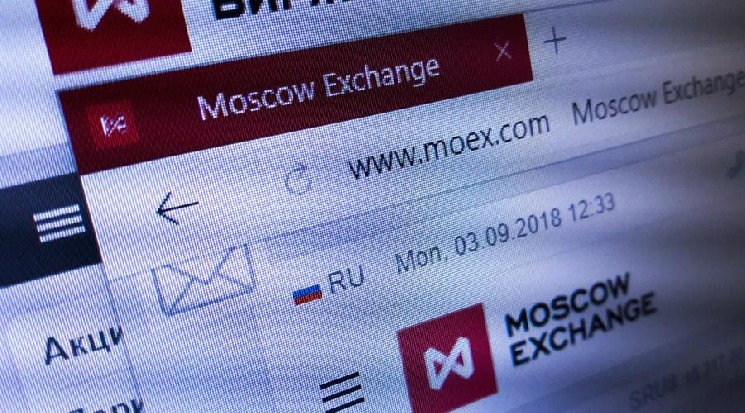
Moscow Exchange is set to launch five new perpetual-style futures contracts linked to cryptocurrency indices on 22 September, a move that expands Russia’s regulated derivatives market deeper into the digital-asset space. The instruments — BTCUSDF, ETHUSDF, SOLUSDF, XRPUSDF and TRXUSDF — will track price indices for Bitcoin, Ether, Solana, XRP and Tron, respectively, and are aimed specifically at qualified investors. The contracts are designed as cash-settled derivatives, meaning there is no delivery of the underlying tokens and no requirement to hold digital assets. Although each index and futures contract will be quoted in U.S. dollars, the exchange has confirmed that collateral, variation margin and final settlement will all be handled in Russian rubles. That dual structure is at the heart of the product’s appeal: it offers a familiar, globally recognized price reference while keeping the entire onshore transaction lifecycle inside Russia’s domestic financial system. For investors, the practical outcome is straightforward. They can take positions on crypto price movements without opening a digital wallet, without buying or selling stablecoins, and without registering on an offshore cryptocurrency exchange. The Moscow Exchange is effectively building a bridge between the global crypto market and Russia’s traditional, licensed financial infrastructure. And in doing so, it is sending a clear signal that digital assets can be made investable in a controlled, monitored, and regulated setting.
A Rapid Start for Crypto Derivatives on Moscow Exchange
The upcoming launch is not Moscow Exchange’s first foray into the crypto derivatives sector, but it may be the most significant. During the summer of 2025, the exchange introduced its initial range of crypto-linked derivatives, marking a quiet but important shift in how Russian financial institutions approach digital assets. The response from the market has been substantial. More than 72,000 qualified investors have traded those products, generating over RUB 600 billion — roughly $7 billion — in total turnover. Those figures are worth placing in context. They cover the entire crypto-derivatives family that has been available since the first instruments were introduced in the summer, not the five new perpetual futures, which have yet to begin trading. Even so, the numbers reveal a level of demand that was difficult to predict only a few years ago, when Russian regulators consistently took a hard line against cryptocurrency. The rollout also points to a broader strategic ambition. Moscow Exchange has spent years building out a sophisticated derivatives venue that already covers currencies, equities, bond indices, precious metals, and both Russian and foreign securities. Adding crypto-specific products to that lineup allows the exchange to capture a younger, more digitally oriented class of investors without compromising the standards of its existing infrastructure. The high turnover and the growing list of qualified participants suggest that the original crypto derivatives offerings found a receptive audience, and the new perpetual-style contracts are a logical next step in that evolution.
How the New Perpetual-Style Contracts Actually Work
The structural design of these new instruments is particularly important, because it differs from the perpetual contracts commonly offered by offshore cryptocurrency exchanges. On platforms such as Binance, Bybit and OKX, a perpetual swap has no expiry date; traders can hold positions indefinitely, and funding payments are exchanged between longs and shorts to keep the derivative price closely aligned with the spot market. Moscow Exchange is taking a different approach. Legally, its new instruments are one-day cash-settled futures contracts whose positions are automatically rolled over into the following trading day. This automatic rollover gives them a perpetual-like quality in practice, but it keeps the product recognizable as a traditional futures contract under Russian law. The exchange will also apply a daily funding adjustment, according to the announcement, in order to help keep the futures price aligned with the relevant crypto index. In effect, traders get an experience that is close to a perpetual swap, but with the legal clarity and operational discipline of a regulated exchange. For investors in Russia, this design solves a number of practical problems. Because the contracts do not involve delivery of Bitcoin, Ether or any other token, there is no need for the exchange to custody digital assets, no need for investors to manage private keys, and no need to engage with decentralized finance protocols. The entire cycle is measured in rubles, from the initial margin to the final settlement. At the same time, the use of U.S. dollar-quoted indices ensures that the prices track the global crypto market rather than a locally constructed benchmark. This combination of international price discovery and domestic settlement is likely to appeal to investors who want exposure to digital assets but are uncomfortable with the risks of offshore platforms, wallet management, and the volatility of stablecoin conversions.
A Regulatory Compromise Takes Shape
To understand why Moscow Exchange is moving in this direction, one has to look at the regulatory environment. The design of these products follows a policy framework introduced by the Bank of Russia in May 2025, when the central bank allowed financial institutions to offer qualified investors derivatives, securities and digital financial assets linked to cryptocurrency prices. That was a significant departure from the central bank’s earlier approach, which had been defined largely by caution and restriction. But the policy change was never an endorsement of cryptocurrency as money. One of the regulator’s central conditions was that such products must not provide delivery of the underlying cryptocurrency. The Bank of Russia has continued to warn financial institutions and investors against direct exposure to crypto assets, arguing that unbacked tokens carry excessive risk and are unsuitable as payment instruments. The new Moscow Exchange contracts are therefore a compromise in institutional form. Russia is expanding access to cryptocurrency price movements through licensed exchanges, regulated brokers and ruble settlement rather than by opening a conventional spot market where users can buy and sell tokens freely. This approach gives the central bank visibility into the trading flows, allows the government to monitor investor activity, and keeps the Russian financial system insulated from at least some of the wilder corners of the crypto world. It is a pragmatic middle path, and it reflects a broader trend among emerging-market regulators who are trying to balance investor demand with financial stability. Instead of banning crypto outright or embracing it unconditionally, the authorities are creating a supervised on-ramp and off-ramp that operates within the existing legal framework.
What the New Contracts Mean for Qualified Investors
For qualified investors, the practical appeal of the new contracts is clear. The most obvious benefit is the removal of custody risk. Buying Bitcoin directly means dealing with wallets, exchange hacks, forgotten passwords and regulatory uncertainty. Holding Ether or Solana in a self-custodied wallet requires knowledge and discipline. With a cash-settled futures contract, none of that matters. The Moscow Exchange clears the position, the margin is held in rubles, and the investor simply sees gains or losses in cash. That makes crypto exposure as straight-forward as trading a currency pair or an equity index future. There is also a hedging dimension that should not be underestimated. A Russian business that earns revenue in crypto can use these contracts to protect against a fall in the price of Bitcoin or Ether without liquidating its treasury holdings. A professional fund manager with a view that Tron or XRP is overvalued can take a short position without borrowing the token. In other words, the instruments allow the development of a more sophisticated crypto market ecosystem than a pure spot exchange would permit. The timing may also be relevant. Many Russian investors have seen their access to international trading platforms restricted or complicated in recent years, and offshore exchanges are not always available to domestic users. A regulated product on a major exchange like MOEX offers a domestic alternative that is both accessible and subject to standard investor protections. The new contracts will join Moscow Exchange’s existing range of 31 perpetual futures covering currencies, equity and bond indices, precious metals, and Russian and foreign securities. That infrastructure is already well established, which means the crypto contracts are not a side experiment but a permanent addition to a mature product suite.
The Road Ahead for Russia’s Crypto Market
The launch on 22 September will be watched closely by market participants not only in Moscow but in other jurisdictions where regulators are wrestling with the same questions about crypto integration. If the five contracts attract healthy volume and liquidity, Moscow Exchange will have demonstrated that a regulated, ruble-settled crypto derivatives market can function effectively alongside the offshore ecosystem. If the response is muted, it will underscore how difficult it is to compete with platforms that offer 24/7 trading, high leverage and direct access to global crypto liquidity. Yet the real significance goes beyond any single set of contracts. Moscow Exchange is building a template for how a major incumbent financial institution can offer crypto-linked products without surrendering its role as a trusted intermediary. This is not a story about Bitcoin being adopted as money, nor is it a story about Russia opening a freewheeling digital-asset economy. It is a story about control, calibration and compromise. The central bank still considers direct crypto ownership dangerous, and it continues to warn investors against unregulated exposure. But it has chosen to allow something new: a legal, taxable, observable pipeline for investors who want to bet on crypto prices. If the new contracts perform well, the most likely next step is expansion. Moscow Exchange could add more tokens, develop options on the same indices, or extend trading hours to accommodate different time zones. None of that would mean the Kremlin has embraced cryptocurrency as a tool for daily transactions. Rather, it would reinforce the message that digital assets are becoming a permanent feature of the regulated financial landscape. For investors, the question is whether the benefits of a clean, licensed, ruble-denominated route into crypto will outweigh the flexibility of offshore perpetual markets. On 22 September, the experiment begins.