





Silver Takes Center Stage as Robert Kiyosaki Warns U.S. Debt Is Nearing $40 Trillion
A Federal Debt Milestone Moves Into View
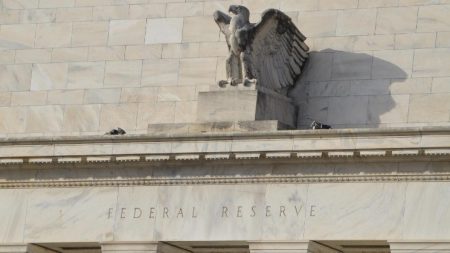
Robert Kiyosaki, the author of Rich Dad Poor Dad, has built a career out of asking uncomfortable questions about money. On Aug. 15, he asked one of his most pointed yet. In a post on X, the personal finance icon flagged the U.S. national debt and wrote: “$40 TRILLION US NATIONAL soon!! Q: What are you doing about it?” The timing was hard to ignore. According to the U.S. Treasury’s Debt to the Penny dataset, total public debt outstanding stood at roughly $39.93 trillion on Aug. 13, leaving the government only $65.18 billion — a rounding error in Washington terms — below the $40 trillion threshold. The figure includes $32.20 trillion held by the public and $7.73 trillion in intragovernmental holdings, the latter representing money the government effectively owes to itself through trust funds and other accounts. Economists often focus on the debt held by the public because it reflects actual borrowing from outside lenders, but for Kiyosaki, the total is the point. He has never been one to parse the accounting details; he looks at the headline number and sees a system that will eventually have to be reconciled. Round numbers like $40 trillion are not policy triggers, but they shape investor psychology, and that is exactly what Kiyosaki is aiming at. The post landed while markets were already trying to navigate inflation, fiscal policy, and a lingering question: whether scarce assets can protect purchasing power better than cash when the government’s balance sheet keeps expanding. For Kiyosaki, the answer is obvious, and his message was less a prediction than a challenge. If the debt keeps climbing at this pace, what is the plan?
Silver Overtakes Gold in Kiyosaki’s August Playbook
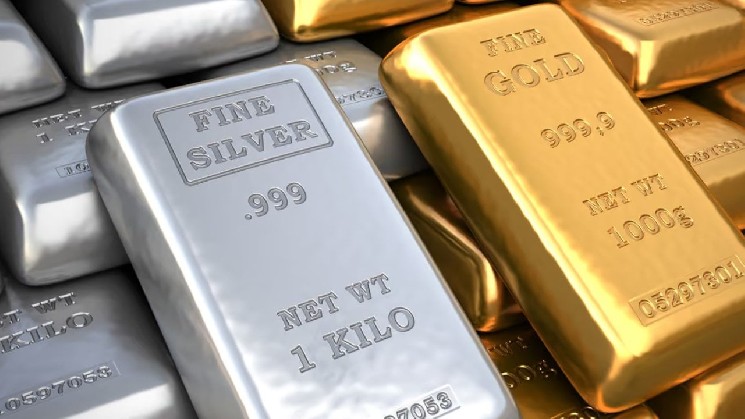
But Kiyosaki did not stop with a debt warning. He attached a more specific, market-moving message to the post: precious metals, and silver in particular. “Friends who are much smarter than me, such as Jim Rickards are predicting $200 an ounce for silver and $10,000 an ounce gold soon. Of the two… I think silver is the best choice in August 2026,” he wrote. The comment was vintage Kiyosaki — bold, unhedged, and deliberately provocative. Rickards, a macro investor and author, has argued that gold could reach $10,000 before the end of 2026, pointing to central bank demand, constrained supply, and broader institutional buying as the forces behind such a move. Kiyosaki, however, made it clear that if he had to choose between the two metals, silver would get the nod. He did not provide a timetable or a calculation to support the target; that is not how he tends to operate. Silver, he seems to believe, has more room to run because it is less expensive, less institutionalized, and more sensitive to supply disruptions. At the time of his post, silver was trading near $65.33 an ounce, roughly a third of the $200 mark and well below the highs above $121 reached on Jan. 29. That kind of valuation gap is precisely what appeals to him. This is not a call he made on impulse. In December, he predicted silver could reach $200 in 2026, linking the forecast to currency erosion and inflation risks. And he has stayed loyal to that view through some dramatic swings, describing pullbacks as opportunities to accumulate rather than reasons to run. In July, after both gold and silver experienced steep retracements, he reaffirmed his bullish outlook while acknowledging that more volatility could be in store. That ability to hold the course through turbulence is part of his appeal.
Cash Has a Target On Its Back
The debt warning fits into a much broader narrative that Kiyosaki has developed over decades: cash, in his view, is a trap. The Aug. 15 post was not an isolated comment; it was the latest chapter in a story he has been telling since the Rich Dad Poor Dad days. In June, he asked how the government can justify heavy taxation while continuing to pile on debt, and he connected that contradiction to his preference for assets that cannot be endlessly printed — gold, silver, and bitcoin. His latest post went further, using all caps to drive the message home. “Savers of cash are the BIGGEST LOSERS!!!!” he wrote. The claim is deliberately blunt, but it rests on a real economic concept. Inflation reduces purchasing power when prices rise faster than the returns on cash holdings, and even when official inflation numbers are moderate, the cumulative effect of rising costs can be relentless. Yet the relationship between federal debt and consumer prices is not as direct as Kiyosaki tends to imply. A larger national debt does not automatically produce proportional inflation. The price level responds to a complex mix of monetary policy, consumer demand, supply chain disruptions, wage growth, and expectations about future costs. Fiscal conditions play a role, but they are not the only actor. Kiyosaki simplifies that reality into a straightforward warning: the government borrows, the currency loses value, and the wealth of savers is quietly transferred elsewhere. That argument may not satisfy economists who prefer nuance, but it has a powerful emotional pull, especially at a time when deficits are rising and interest payments on the national debt are becoming a more visible part of the federal budget. Whether or not cash is destined to be the biggest loser, the debate he is forcing is one that many families cannot afford to ignore.
The Market Math Behind Gold and Silver Forecasts
For all the rhetorical heat, the distance between current market prices and the forecasts cited by Kiyosaki is enormous. Gold would need to more than double from its level on Aug. 14, when it traded near $4,365 an ounce, to reach Rickards’ $10,000 target. Silver would need close to a threefold increase from $65.33 to touch $200. These are not modest moves; they would represent one of the most explosive precious metals rallies in modern memory. There is some evidence that conditions are aligning. Gold averaged $4,506.29 an ounce in the second quarter, up 37 percent from the same period a year earlier. The World Gold Council’s second-quarter Gold Demand Trends report, published July 30, highlighted strong central bank buying — 288.9 metric tons in the quarter — even as gold ETFs recorded 44.8 metric tons of outflows. That split suggests the market is being powered less by retail enthusiasm than by official and institutional demand. Central banks, especially those looking to diversify away from dollar-denominated assets, have become a structural force in the gold market. Gold’s direction remains sensitive to interest rates, currency movements, geopolitical risks, and investor demand. The same report cautioned that stronger economic growth, elevated yields, or a firmer U.S. dollar could restrain performance. Silver’s path is even more complicated because it is both a monetary metal and an industrial one. Investment demand for silver is rising, but the industrial side of the ledger is cooling, creating a tension that could define its performance for the rest of the year.
A Silver Market Running on Empty?
The supply picture is where the bullish silver story gains its strongest footing. The Silver Institute’s World Silver Survey 2026, published April 15, forecasts global silver supply will contract by roughly 2 percent this year. Mine production is expected to remain essentially flat after reaching 846.6 million ounces the previous year, and the market is still projected to post a deficit of 46.3 million ounces — the sixth consecutive annual shortfall. In a world of surplus thinking, that kind of persistent deficit usually forces prices to adjust upward at some point. Demand for physical silver is also showing strength. The survey projects coin and net bar demand will climb 18 percent to 257.6 million ounces this year, up from 217.7 million ounces in 2025. That is a direct reflection of increased investor interest in owning the metal outside of the financial system. The industrial side, however, is pulling in the opposite direction. Industrial demand is expected to ease another 3 percent, and photovoltaic consumption — one of the fastest-growing uses of silver in recent years — is forecast to drop 19 percent to 151 million ounces. That decline is partly a function of ongoing efficiency gains in solar panel manufacturing, where manufacturers continue to reduce the amount of silver used in each unit. Those two forces can coexist: a market can have rising investment demand and falling industrial consumption at the same time. But if industrial demand weakens further, silver may not be able to rely on the solar sector to absorb supply the way it once did. None of this makes Kiyosaki’s forecast impossible. Precious metals have a history of surprising people. But the road to $200 is likely to be a volatile one, with sharper drawdowns and sudden rallies along the way.
More Than a Prediction — A Call to Prepare
In the end, Kiyosaki’s Aug. 15 post is not a technical analysis or a precise economic forecast. It is a call to action. By pairing the $40 trillion debt milestone with an ambitious silver price target, he is making a broader argument about positioning. The specifics of the forecast — whether silver reaches $200, whether gold climbs to $10,000 — matter less than the underlying question: what should ordinary investors do when the national debt keeps growing and the purchasing power of currency looks increasingly uncertain? Kiyosaki’s answer has remained remarkably consistent. Hold assets that are not somebody else’s liability. Hold things that carry their value independent of governments and central banks. His critics will point out that he has made predictions that failed to materialize on schedule, and his tendency toward hyperbole can sometimes undermine the seriousness of his message. But his core point about the fragility of fiat money is hardly fringe. The rise of precious metals investment, the growing appetite among central banks for gold, and the persistent debate over fiscal sustainability all suggest that the questions he is raising are being taken seriously in the broader financial system. Whether silver reaches $200 in 2026 or not, the conversation Kiyosaki is trying to start is unlikely to disappear. As the national debt prepares to cross $40 trillion and the cost of servicing that debt becomes a larger part of the federal budget, the pressure to find safer, harder assets will only intensify. For Kiyosaki, the message from that Aug. 15 post remains as direct as ever. Savers of cash may not be the biggest losers tomorrow, but in his view, they are already losing today. The question is what investors are doing about it — and whether they will act before the next crisis forces their hand.