





Prediction Market Exchange Kalshi Bans Former Congressman George Santos Over Self-Trading Scandal
The regulated prediction market platform has permanently barred the disgraced former New York congressman and levied a $70,000 fine for manipulating contracts tied to his own public appearances.
In a decisive move that underscores the growing regulatory muscle of prediction markets, Kalshi—the federally regulated derivatives exchange—has issued its first permanent trading ban to former U.S. Representative George Santos, along with a financial penalty exceeding $70,000. The disciplinary action stems from what the exchange described as manipulative trading activity involving contracts that paid out based on whether Santos would appear at a public event with former President Donald Trump earlier this year.
The punishment, detailed in a disciplinary record published on Kalshi’s website and confirmed by a company spokesperson, represents the most severe enforcement action the platform has taken since its founding. It arrives at a critical juncture for the prediction market industry, which has been working diligently to establish legitimacy and trust with regulators, institutional investors, and the broader financial community.
The Mechanics of Manipulation: How Santos Exploited the System
According to the disciplinary record, Santos engaged in a calculated scheme that exploited his unique position as the subject of the betting market. The former congressman allegedly placed substantial wagers on contracts where the outcome depended directly on his own actions—specifically, whether he would attend a scheduled appearance alongside former President Trump.
What made the conduct particularly egregious, regulators noted, was Santos’s subsequent behavior. After establishing his positions, Santos reportedly began making public statements about whether he would or would not attend the event, attempting to move the market in his favor. The complaint suggests these statements were designed to influence other traders’ perceptions and drive the contract prices in a direction beneficial to his existing positions.
Ultimately, Santos wagered that he would not attend the event—a prediction that proved accurate when he failed to show up. While an accurate prediction might seem like sound trading, the exchange determined that the combination of his insider status as the event’s potential participant and his public statements designed to sway other traders crossed the line into manipulative conduct. The case highlights a fundamental vulnerability in event-based markets: when the subject of the prediction is also a trader, the potential for abuse multiplies significantly.
A Turning Point for Prediction Market Enforcement
The Kalshi enforcement action represents more than just a single case against a disgraced politician; it signals a maturation of the prediction market industry’s self-regulatory capabilities. Critics have long questioned whether these platforms could effectively police themselves, particularly when sophisticated traders might use non-public information or manipulative tactics to profit at the expense of ordinary users.
Kalshi’s decision to take decisive action against Santos—rather than simply voiding his trades or issuing a warning—demonstrates a commitment to establishing clear rules and consequences that could help legitimize the industry in the eyes of skeptical regulators. The exchange framed the enforcement action as part of its broader responsibility to maintain market integrity, noting that its regulations exist precisely to prevent manipulation and protect all participants.
The case could serve as a template for how prediction markets handle similar situations in the future, particularly as these platforms expand into new categories of event contracts that touch on politics, entertainment, and other areas where information asymmetries naturally exist.
The Regulatory Landscape: CFTC Actions and Industry-Wide Scrutiny
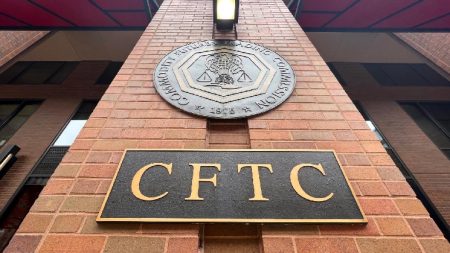
The Kalshi enforcement arrives alongside separate regulatory actions that paint a broader picture of increasing oversight across the prediction market industry. Just days before Kalshi announced its ban on Santos, the Commodity Futures Trading Commission (CFTC) issued its own enforcement order against former White House aide Gabriel Perez, who was fined more than $170,000 and barred from trading for three years.
Perez’s case involved “mention contracts”—a type of prediction market derivative that pays out when specific words or phrases are spoken publicly by designated individuals, typically prominent political figures or celebrities. According to the CFTC’s order, Perez exploited his position and access to non-public information about presidential speech preparation to gain an unfair trading advantage. The regulator noted that Perez’s cooperation during the investigation was exemplary, which likely mitigated what could have been a more severe penalty. Perez had worked as a teleprompter operator, giving him advance knowledge of the exact language that would be used in public addresses.
These parallel enforcement actions suggest a coordinated approach between individual platforms and federal regulators to address the unique risks posed by prediction markets. The CFTC has been actively clarifying its jurisdiction over these products, and the agency’s willingness to pursue individual traders sends a clear message that manipulative conduct will carry real consequences.
Industry Implications: Building Trust Through Enforcement
For Kalshi and other prediction market platforms, the Santos case represents both a challenge and an opportunity. The challenge lies in demonstrating that their markets are not vulnerable to manipulation by insiders who have unique knowledge about the events being predicted. The opportunity is to show that platforms can and will police themselves effectively, potentially forestalling more aggressive government regulation.
Kalshi has sought to position itself as the more establishment-friendly alternative in the prediction market space, working to obtain regulatory approval and build relationships with institutional partners. The exchange recently partnered with Cantor Fitzgerald to offer prediction market products to institutional clients, a move that requires significant credibility and trust. Decisive enforcement actions against prominent figures like Santos could help cement that reputation.
Industry observers note that prediction markets derive their value from the accuracy of their predictions, which in turn depends on market integrity. If traders believe that insiders can manipulate outcomes or that platforms will not enforce their own rules, participation could decline, undermining the entire business model. Strong enforcement, therefore, is not merely a regulatory obligation but a business imperative for these platforms.
The Broader Context: Santos and the Politics of Accountability
The announcement of Santos’s ban comes as no surprise given his tumultuous recent history. The former New York congressman was expelled from the House of Representatives in December 2023 following widespread allegations of financial misconduct and ethical violations, making him one of only a handful of lawmakers in American history to be removed from office by his colleagues. Subsequently, Santos pleaded guilty to federal fraud and identity theft charges, admitting to a scheme that involved stealing credit card information from donors and using campaign funds for personal expenses.
In a development that drew considerable attention, Santos’s prison sentence was commuted by President Trump in December 2024, allowing him to avoid incarceration and instead serve under home confinement. The commutation sparked debate about the intersection of politics and justice, with critics questioning the motivation behind the presidential intervention and defenders arguing that Santos’s cooperation with federal investigations on other matters provided justification for the leniency.
The timing of Santos’s trading activities—specifically, trading on contracts related to an event featuring Trump—adds another layer of complexity to an already strange saga. While there is no indication that Santos’s trading activities were connected to his commutation or any deal with the administration, the optics of a politically connected figure trading on publicly available contracts tied to presidential appearances create uncomfortable questions about the intersection of politics, access, and financial markets.
Looking Ahead: The Future of Prediction Market Regulation
As the prediction market industry continues to evolve and expand, the cases involving Santos and Perez provide valuable lessons about the challenges that lie ahead. These markets offer genuine social utility by aggregating information and providing forecasts that can be more accurate than traditional polling or expert opinion. However, they also create new opportunities for manipulation and insider trading that did not exist in more traditional financial markets.
The approach taken by Kalshi and the CFTC suggests a recognition that prediction markets require specialized oversight approaches that differ from those applied to conventional securities or commodities markets. The unique nature of event contracts—where the underlying “asset” is often a future fact rather than a tradable good—creates novel regulatory questions that have yet to be fully resolved.
State regulators have also begun weighing in, with some jurisdictions moving to restrict or ban prediction market activity altogether. These efforts reflect broader concerns about the potential for these platforms to influence elections, spread misinformation, or facilitate gambling in ways that circumvent existing legal frameworks. The industry’s ability to demonstrate robust self-regulation and cooperation with federal authorities could prove crucial in countering these state-level efforts.
For traders and platforms alike, the message from the Santos enforcement action is clear: participation in prediction markets carries obligations that extend beyond simply making accurate forecasts. Those who attempt to manipulate outcomes or exploit information advantages will face serious consequences, including permanent bans from platforms and potential federal prosecution. As the industry matures, the enforcement actions taken today will likely serve as precedents that shape how these markets operate for years to come.